Epoxy Resin Flooring Bali Villa Kitchens: Humidity Cure Times
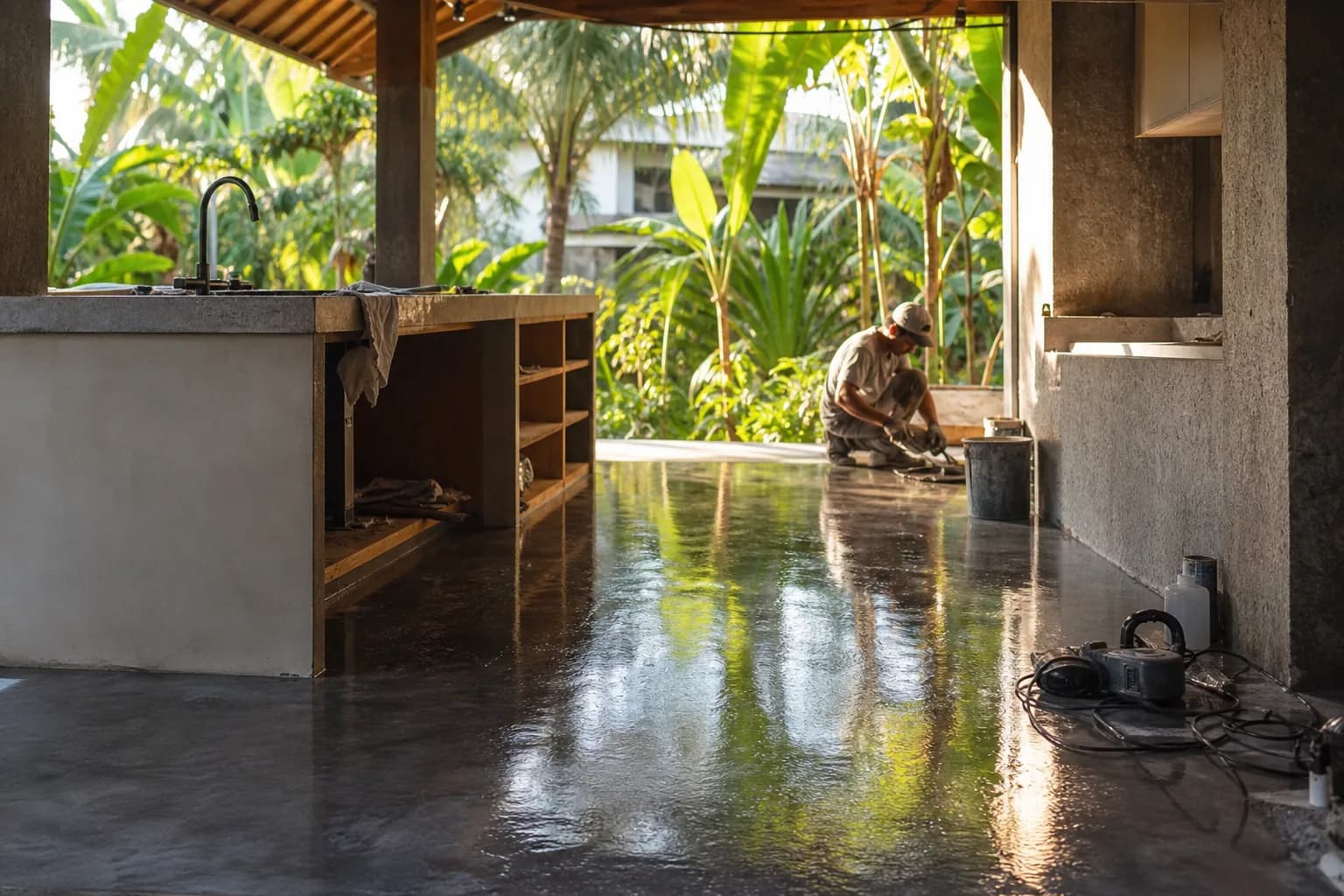
# Epoxy Resin Flooring Installation for Bali Villa Kitchens: Humidity Cure Times
The Critical Challenge of Epoxy Curing in Bali’s Tropical Kitchen Environments
Villa owners and renovation contractors in Bali face a persistent challenge when installing epoxy resin flooring in kitchen spaces: unpredictable cure times caused by the island’s high humidity levels. With ambient humidity regularly exceeding 75-85% during monsoon seasons and kitchen environments generating additional moisture from cooking activities, standard epoxy cure time estimates of 24-72 hours often extend to 96-120 hours or longer. This delay impacts construction schedules, increases labor costs, and risks contamination of uncured surfaces. Understanding how Bali’s specific climatic conditions affect epoxy chemistry is essential for successful interior finishing Bali projects, particularly in high-traffic, moisture-intensive kitchen areas where durability and proper adhesion determine long-term performance.
How Bali’s Humidity Fundamentally Alters Epoxy Resin Chemistry and Cure Dynamics
Epoxy resin flooring systems rely on a precise chemical reaction between resin and hardener components, a process profoundly influenced by ambient moisture levels. In Bali’s tropical climate, humidity doesn’t simply slow drying—it fundamentally alters the curing mechanism itself. When relative humidity exceeds 70%, moisture molecules can interfere with the cross-linking process between epoxy molecules, creating a phenomenon called “amine blush” where a waxy, oily film forms on the surface. This contamination layer prevents proper adhesion of subsequent coats and compromises the final finish quality.
For Bali villa construction projects, this means standard manufacturer specifications developed for temperate climates become unreliable guides. A two-component epoxy system rated for 24-hour light foot traffic in controlled environments may require 72-96 hours in a Sanur beachfront villa kitchen where morning humidity peaks at 88%. The molecular structure of epoxy requires specific temperature ranges (typically 15-30°C) and humidity levels (ideally below 60%) for optimal polymerization. Bali’s consistent 26-32°C temperatures accelerate some aspects of curing while high humidity simultaneously retards others, creating unpredictable cure profiles.
Kitchen environments compound these challenges significantly. Steam from cooking, dishwashing activities, and inadequate ventilation can create localized humidity spikes of 90-95% even when outdoor conditions are moderate. During a typical renovation Bali project at Teville’s villa portfolio, we’ve measured kitchen humidity levels 12-18% higher than adjacent living spaces, even with windows open. This microclimate effect means kitchen epoxy installations require specialized protocols beyond standard flooring applications.
The cure process progresses through distinct phases: initial set (gel time), tack-free surface formation, light foot traffic readiness, and full mechanical cure. In Bali conditions, these phases extend considerably. Initial gel time may occur within 4-8 hours as expected, but the transition to tack-free surface—normally 12-16 hours—can stretch to 36-48 hours when humidity exceeds 80%. The critical light foot traffic phase, when installers can walk on surfaces without damaging them, extends from the standard 24-72 hours to 72-120 hours. Full mechanical cure, when the epoxy achieves maximum hardness and chemical resistance, requires 7-14 days rather than the typical 5-7 days cited in manufacturer literature.
Temperature fluctuations between Bali’s air-conditioned interiors and tropical exterior conditions create additional complications. A kitchen floor surface at 24°C due to air conditioning may experience condensation when ambient air at 30°C with 85% humidity contacts it, depositing microscopic water droplets directly onto uncured epoxy. This moisture contamination can create permanent clouding, poor adhesion, and soft spots that never fully harden. Professional interior finishing Bali contractors must account for these thermal boundary effects when scheduling installations and controlling environmental conditions.
Epoxy Systems and Material Specifications for Tropical Kitchen Applications
Not all epoxy formulations perform equally in Bali’s demanding conditions. Standard decorative epoxy systems designed for residential garages or commercial spaces in temperate climates often fail catastrophically in tropical villa kitchens. Moisture-tolerant epoxy formulations specifically engineered for high-humidity environments are essential. These specialized systems incorporate modified amine hardeners that resist blush formation and maintain proper cure profiles even when humidity exceeds 80%.
For Bali villa construction kitchen projects, Teville specifies 100% solids epoxy systems rather than water-based or solvent-based alternatives. Solvent-based epoxies release volatile organic compounds that evaporate slowly in humid conditions, extending cure times unpredictably. Water-based systems, while environmentally friendly, are particularly vulnerable to humidity interference. The 100% solids formulations contain no solvents or water carriers—only pure resin and hardener—providing the most reliable cure profile in tropical conditions.
Primer selection proves equally critical. Moisture-vapor-blocking primers create an impermeable barrier between the concrete substrate and epoxy topcoat, preventing ground moisture from migrating upward through the slab and interfering with cure. In Bali’s high water table areas—particularly coastal regions like Seminyak, Canggu, and Sanur—concrete slabs continuously absorb ground moisture through capillary action. Without proper moisture mitigation, this substrate humidity can prevent epoxy from ever fully curing, resulting in permanently tacky or soft floors.
Material specifications should include: two-component epoxy with 3-4 hour pot life (slower-reacting formulations better suited to tropical installation pace), shore D hardness rating of 80+ when fully cured, moisture vapor transmission rate (MVTR) tolerance of at least 5 lbs/1000 sq ft/24 hours, and UV stability for kitchens with significant natural light exposure. These technical parameters ensure the installed system can withstand both Bali’s climate and the demanding functional requirements of villa kitchen environments where hot cookware, spills, and frequent cleaning occur daily.
Professional Installation Protocol for Humidity-Controlled Epoxy Application
Successful epoxy installation in Bali villa kitchens requires meticulous environmental control and modified application techniques. The process begins 48-72 hours before actual epoxy application with comprehensive substrate preparation and climate conditioning.
Phase 1: Substrate Assessment and Moisture Testing (Days 1-2)
Professional contractors conduct calcium chloride moisture vapor emission testing on concrete substrates, measuring the rate of moisture transmission from the slab. Readings above 3 lbs/1000 sq ft/24 hours indicate excessive substrate moisture requiring remediation before epoxy application. In Bali’s coastal areas, initial readings frequently exceed 5-7 lbs, necessitating additional moisture barrier treatments. Surface moisture meters verify that concrete moisture content remains below 4% before proceeding. Substrate temperature must be measured and maintained at least 3°C above dew point temperature to prevent condensation during application and cure.
Phase 2: Environmental Conditioning and Surface Preparation (Days 2-3)
The kitchen space is sealed and climate-controlled using commercial dehumidifiers capable of reducing ambient humidity to 55-65%. This conditioning period runs continuously for 24-48 hours before application and throughout the entire cure cycle. Concrete surfaces undergo diamond grinding to achieve CSP-2 to CSP-3 profile (Concrete Surface Profile), creating the mechanical anchor pattern necessary for proper epoxy adhesion. All surface contaminants, oils, and laitance are removed. Cracks and joints receive flexible polyurea or epoxy crack-filling compounds. The prepared surface is thoroughly vacuumed using HEPA filtration to remove all dust particles that could compromise adhesion.
Phase 3: Primer Application and Initial Cure (Day 3-4)
Moisture-blocking epoxy primer is mixed according to manufacturer specifications, with careful attention to mix ratios as humidity can affect viscosity. Application occurs via roller or squeegee at specified coverage rates (typically 200-250 sq ft per gallon). The primer must cure for 12-24 hours in controlled conditions before topcoat application. During this cure window, humidity is maintained below 65% and temperature between 24-28°C. Any amine blush formation is identified and removed through light sanding and solvent wiping before proceeding.
Phase 4: Epoxy Basecoat Installation (Day 4-5)
The primary epoxy coating is mixed in small batches to accommodate the limited working time in tropical temperatures. Application proceeds systematically using notched squeegees to achieve uniform 2-3mm thickness. Back-rolling with spike rollers releases entrapped air bubbles and ensures complete surface coverage. Installers wear spiked shoes to walk on wet epoxy without leaving marks. The basecoat requires 48-72 hours cure time in Bali conditions before topcoat application, significantly longer than the 24-hour interval common in temperate climates.
Phase 5: Topcoat Application and Final Cure (Days 6-7 and beyond)
After verifying proper basecoat cure through adhesion testing, the clear topcoat or pigmented finish coat is applied using similar techniques. This final layer provides UV protection, chemical resistance, and the desired aesthetic finish. Light foot traffic becomes permissible after 72-96 hours, but full furniture installation and normal kitchen use should wait 10-14 days for complete mechanical cure. Throughout this extended cure period, climate control continues, and the space remains well-ventilated while avoiding direct moisture exposure.
Investment Requirements and Project Timeline for Bali Villa Kitchen Epoxy Installations
Material and labor costs for professional epoxy flooring in Bali villa kitchens typically range from IDR 850,000 to IDR 1,800,000 per square meter, depending on system complexity, substrate conditions, and finish specifications. A standard 25-square-meter villa kitchen requires investment of IDR 21,250,000 to IDR 45,000,000 for complete installation. This pricing includes substrate preparation, moisture mitigation treatments, primer systems, base and topcoats, and professional labor with proper climate control equipment.
Premium metallic epoxy finishes or decorative flake systems increase costs by 30-50% due to additional material layers and specialized application techniques. Projects requiring extensive concrete repair, moisture remediation, or working around existing cabinetry during renovation Bali projects add IDR 150,000-300,000 per square meter to baseline costs.
Timeline expectations differ substantially from temperate climate installations. A complete kitchen epoxy project in Bali requires 10-16 days from initial substrate preparation to full cure and kitchen return to service, compared to 5-8 days in controlled environments. This extended schedule accounts for humidity-related cure delays, additional climate conditioning time, and the conservative approach necessary for permanent, high-quality results. Projects scheduled during Bali’s dry season (April-October) generally proceed 20-30% faster than wet season installations when humidity control becomes more challenging and expensive.
For comprehensive project planning and cost estimation specific to your villa kitchen, Teville provides detailed assessments through our construction cost estimation service, accounting for your specific location, substrate conditions, and finish preferences.
Frequently Asked Questions About Epoxy Flooring Cure Times in Bali Kitchens
Why does epoxy take longer to cure in Bali compared to other locations?
Bali’s consistently high humidity (75-90%) interferes with the chemical cross-linking process essential to epoxy curing. Moisture molecules compete with hardener molecules for reaction sites on the resin, slowing polymerization and potentially creating surface contamination called amine blush. Additionally, kitchen environments generate localized humidity spikes from cooking and cleaning activities that further extend cure times. Professional installations account for these factors through climate control and extended cure schedules.
Can I use my kitchen during the epoxy curing process?
Kitchen use must be severely restricted during cure. The first 72-96 hours require complete avoidance of foot traffic, moisture exposure, and any dropped objects that could mar the surface. After initial cure, very light foot traffic becomes acceptable, but cooking activities that generate steam, spills, or heat should be avoided for 10-14 days until full mechanical cure is achieved. Most villa owners arrange temporary kitchen facilities or plan installations during periods when the property is unoccupied. Premature use risks permanent damage requiring complete removal and reinstallation.
What happens if it rains during the curing period?
Rain itself doesn’t directly affect indoor epoxy installations, but it dramatically increases ambient humidity levels, often to 95-100%. This moisture saturation can extend cure times by 50-100% and increase the risk of amine blush formation. Professional installations maintain sealed, climate-controlled environments using commercial dehumidifiers throughout the cure cycle, regardless of exterior weather conditions. Outdoor or semi-outdoor kitchen installations should never proceed during rainy periods, as direct water contact with uncured epoxy causes irreversible damage including clouding, poor adhesion, and soft spots.
How do I know when the epoxy is fully cured and ready for normal use?
Full cure is verified through multiple indicators: surface hardness testing using shore D durometer (readings should reach 75-85), absence of any tackiness or chemical odor, ability to withstand thumbnail pressure without indentation, and completion of the specified cure period (typically 10-14 days in Bali conditions). Professional contractors perform adhesion pull tests to verify b
 3180 m²7 month(s)from 142.000 USD
Vasudeva
 3124 m²6 month(s)from 123.000 USD
TALA 8

Want to calculate?
 3104 m²11 month(s)from 99.000 USD
TALA 100
 172 m²8 month(s)from 120.000 USD
Keshava
 164 m²7 month(s)from 79.000 USD
TALA TWO
 4344 m²16 month(s)from 290.000 USD
Radha
 1from 198.000 USD
Private: Haridas Villas
164 m²7 month(s)from 79.000 USDPrivate: Haridas Villas, Tegallalang
 3127 m²9 month(s)from 177.000 USD
Mukunda
 2144 m²11 month(s)from 104.000 USD
Narayana
 3173 m²6 month(s)from 125.000 USD
TALA FOUR
Start With Real Numbers, Not Guesses
Before finalizing your finishing works plan, check realistic cost ranges for your Bali villa project.
Available lands
 500 m²10 min$ 107143Bali, Tabanan
 515 m²7 min$ 570813Bali, Canggu
 2400 m²7 min$ 496552Bali, Canggu
 1300 m²10 min$ 312192Bali, Kutuh South Bali
 1000 m²5 min$ 350431Bali, Drupadi
 3300 m²15 min$ 449889Bali, Tabanan
 911 m²15 min$ 248217Bali, Pererenan
 2000 m²15 min$ 523000Bali, Canggu
 1950 m²7 min$ 150092Bali, Tabanan
 7250 m²56 min$ 235714Bali, Tabanan
 680 m²15 min$ 110751Bali, Pererenan
 7000 m²36 min$ 284483Bali, Gianyar
 2000 m²5 min$ 1440887Bali, Pecatu
 700 m²20 min$ 90517Bali, Cepaka
 300 m²55 min$ 32475Bali, Tegelalang
Essential Bali build & buy guides
- Bali villa construction cost per m² in 2026
- How much will your villa cost? Calculator
- Building a villa in Bali: the complete guide
- Buying land in Bali: step-by-step for foreigners
- Bali villa investment: yields, risks, returns
- Leasehold vs freehold: what foreigners can own
- Construction defect liability & 10-year warranty
- Bali building codes and construction standards
Related guides
Sanur and Nusa Dua vs Canggu: Stability Plays vs Hype
Canggu gets the headlines; Sanur and Nusa Dua quietly deliver steadier returns to a different kind of buyer. An honest 2026 comparison of the stability markets against the hype market — prices, demand drivers, oversupply risk, and who should buy where.
7 min read
Ubud and the Wellness Market: Buying or Building for Retreats
Ubud is Bali's wellness capital, and retreat-focused property behaves differently from beach villas: longer stays, group bookings, lower volatility. Here is what the market rewards, what zoning allows, and what it costs to buy or build a retreat property in 2026.
8 min read
Buying and Building on the Bukit: Uluwatu, Bingin and Balangan from a Buyer's Seat
A buyer's-seat 2026 guide to the Bukit peninsula — Uluwatu, Bingin and Balangan land prices, the water problem nobody budgets, cliff setbacks after the 2025 Bingin demolitions, and how to build there properly.
7 min read