Coordinated MEP Chase Routing Patching for Bali Renovations
Coordinated MEP Chase Routing & Patching for Bali Renovations
1) Specific Problem/Question
Renovating a Bali villa often reveals a web of uncoordinated conduits and pipes buried inside brick, aerated concrete, or plasterboard partitions. The challenge: how do you re-route mechanical, electrical, and plumbing (MEP) chases cleanly—behind new finishes and furniture—without cracking walls, inviting moisture, or creating future service headaches? This Bali area guide explains Teville’s coordinated approach to chase routing and patching tailored to tropical conditions and premium interior finishing Bali expectations, so your renovation Bali project remains durable, serviceable, and visually seamless.
2) Technical Deep Dive: What “Coordinated MEP Chase Routing & Patching” Means in Bali
In Bali villa construction, “chases” are concealed pathways cut or cast into walls, floors, and ceilings to carry cables, conduits, pipes, and mini-ducts. Renovations complicate this: we must re-route legacy services around new layouts, furniture installation points, and upgraded villa utilities—all while preserving structure, waterproofing, acoustics, and finish quality.
Teville’s coordination starts with survey-grade verification. We laser-scan interiors, mark up existing outlets, map water and drain routes, and use rebar/cable detectors before any cutting. Where as-built drawings are missing (common in legacy villas), we create a rapid MEP scan-drawing so that every run—hot/cold water, waste, power, data, AC refrigerant, and condensate—has a designated corridor with controlled depth and spacing.
Wall substrates in Bali vary: double-brick with cement plaster, AAC/hebels, or lightweight partitions. Each dictates chase limits. For example, in AAC we keep chase depth typically below one-third block thickness and avoid continuous vertical chases near door openings. In reinforced concrete, we do not chase structural beams or columns; we prefer surface-mounted build-ups hidden by cabinetry or a service batten, or we employ ceiling drops instead. All routing decisions are checked against structural logic and site findings.
Electrical coordination emphasizes safety and maintainability under PUIL (Indonesian electrical code) and relevant SNI standards. We separate low-voltage/data from power by at least 50–100 mm in parallel runs, cross at right angles, and specify heavy-duty uPVC or EMT steel conduits for mechanical protection—critical in salt-laden coastal air. Junction boxes are aligned to furniture grids so access remains behind removable panels or inside cabinets, never buried irretrievably beneath marble or microcement.
Plumbing requires tropical-specific detailing. Cold water lines sweat in Bali’s humidity; we insulate with closed-cell elastomeric sleeves, fully vapor sealed. Hot water is typically PEX or copper; we maintain clearances from electrical conduits and protect transitions with sleeves. Waste lines respect gravity: minimum slopes of 1–2% and gentle directional changes to prevent clogging. Where new vanity locations force long horizontal waste runs, we plan ceiling drops with acoustic wraps and cleanouts at changes of direction. AC condensate is treated as a primary service: insulated, positively sloped, with maintenance tees and termination to safe drainage points away from timber thresholds.
Air-conditioning refrigerant lines are grouped with condensate and power in a defined “AC lane.” We maintain minimum bend radii, protect flare connections, and avoid heat sources. At fan-coil units, we provide drip trays with float switches and overflow safeguards. For seaside villas, we isolate copper with UV-resistant wraps and specify anti-corrosion supports, given the aggressive marine environment.
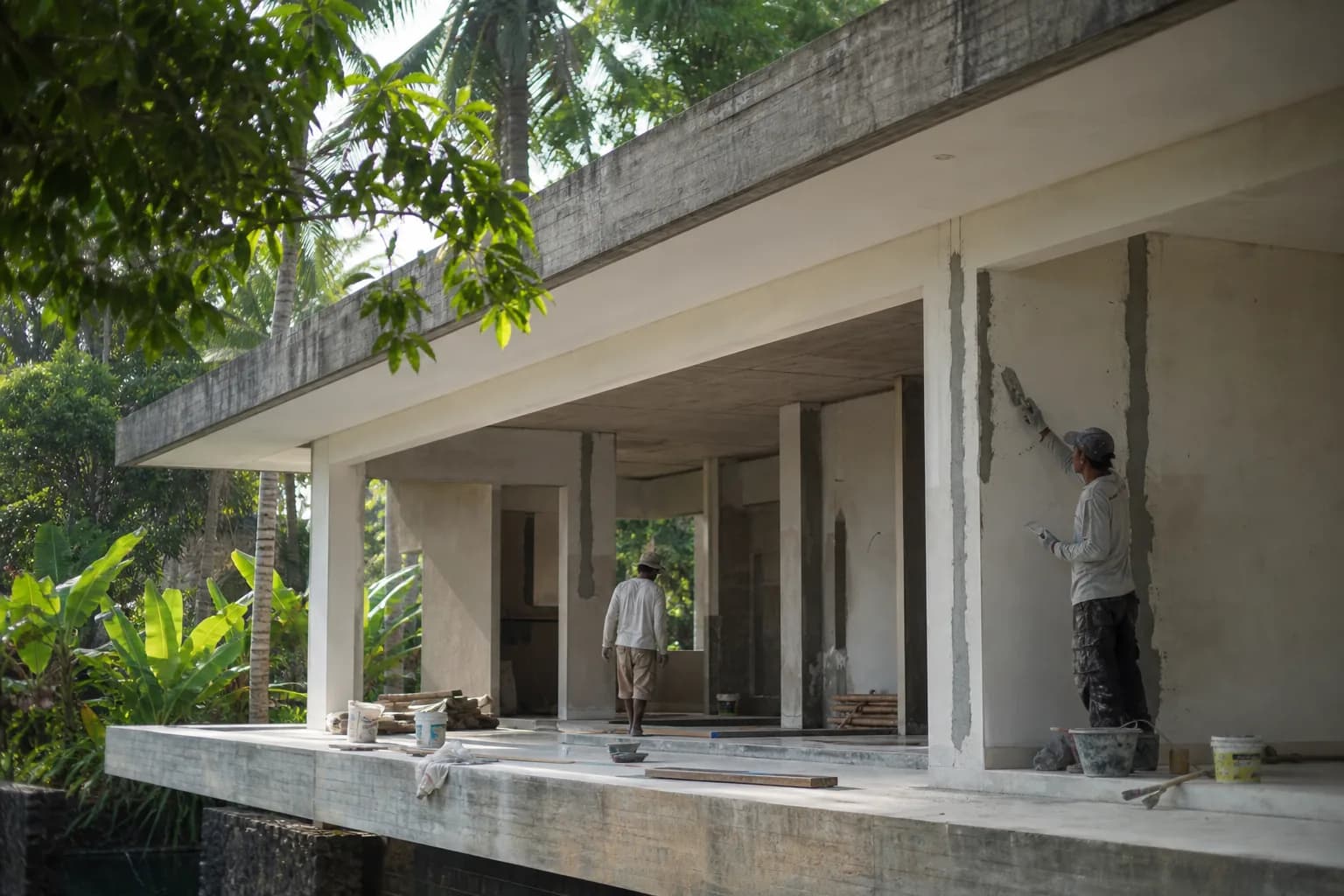
Chase patching is a finishing craft, not an afterthought. We use SBR bonding agents on chase walls, install fiberglass mesh to bridge edges, and pack high-strength, low-shrink repair mortars compatible with the substrate. In wet areas, we reinstate waterproofing with overlapping membranes before replastering. For premium finishes—venetian plaster, microcement, stone cladding—substrate flatness and curing time are controlled meticulously; rapid cover-ups trap moisture and later telegraph as hairline cracks or efflorescence.
Furniture-centric coordination is decisive in renovation Bali projects. Kitchen islands, wardrobes, and vanities must receive power, water, drain, and data points exactly where the cabinet makers expect them. We overlay MEP with shop drawings, set-out lines, and elevation benchmarks so outlets fall into service cavities, never cutting through drawer boxes or stone backs later. Ventilation slots and removable plinths are pre-planned to keep access legal and invisible.
Finally, we balance acoustic and fire requirements. Chases breaching apartment-style separations or stair cores receive firestopping collars and seals suited to the material (PVC, PEX, cable bundles). We add putty pads or acoustic sealant where outlets back onto bedrooms or neighbors, raising comfort in dense resort areas. Everything is documented in a coordinated MEP patch plan, photographed and archived for future service calls—so the next time a mixer leaks, no one blindly chisels into a marble wall.
3) Materials & Standards for Tropical, Salt-Air, and Seismic Reality
Selected materials reflect Bali’s humidity, termites, and coastal exposure:
- Electrical: Heavy-duty uPVC conduit (UV-stable) or EMT steel in impact zones; IP44–IP65 boxes in wet/outdoor locations; tinned copper or properly rated copper conductors; stainless or hot-dip galvanized saddles near the coast.
- Plumbing: PEX with brass fittings or copper for hot water; uPVC or HDPE for waste; Schedule-rated sleeves through slabs; isolation valves at fixtures for serviceability.
- Insulation: Closed-cell elastomeric insulation for cold/AC and chilled lines, all seams vapor-sealed to avoid condensation bleed-through.
- Patching: SBR bonding agents, fiber-reinforced repair mortars, alkali-resistant fiberglass mesh, anti-efflorescence additives, and breathable but dense skim coats to receive paint or decorative plasters.
- Sealants: Neutral-cure silicone for stone, PU sealant for movement joints, and acoustic/fire sealants where required.
- Waterproofing: Cementitious plus membranes in wet zones; chase reinstatement overlaps at least 100 mm beyond cuts.
Standards and references guiding design and QA/QC include PUIL for electrical safety, SNI for materials and installations, and internationally recognized best practices (e.g., NFPA for penetrations, AS/NZS/BS guidelines for complementary methods). We also align with utility norms for PLN supplies and pressure ratings for pumps/filtration. When legacy work is noncompliant, we upgrade to meet current safety expectations.
For casework integration, we follow cabinetmaker tolerances, leave service voids (typically 60–100 mm), and specify corrosion-resistant fixings. In kitchens and laundries, we include anti-siphon traps, appliance isolation valves, and accessible cleanouts disguised within plinth panels.
Explore Teville’s standards in action across our villa projects, broader portfolio, and our documented construction process.
4) Step-by-Step Process Teville Uses on Bali Renovations
Step 1: Discovery and Scan
We begin with a coordinated survey: laser scans for geometry, non-invasive cable/rebar detection, and moisture mapping of wet-area walls. We photograph all existing outlets and fixtures and create a working “as-found” plan.
Step 2: Layout Coordination with Interior/Furniture
We overlay interior design and cabinet shop drawings: kitchens, vanities, wardrobes, media walls. Each MEP point receives a 3D coordinate and elevation so the chase endpoints sit inside service cavities or access panels. We confirm appliance specs (dishwasher, wine cooler, oven) for exact power and drain locations.
Step 3: Routing Strategy and Limits
We define chase corridors: horizontal routes at standardized heights; vertical drops away from door and window edges; ceiling runs for congested lines. Structural no-go zones are locked. We agree on maximum chase depths and spacing (e.g., hot water ≥100 mm from electrical; parallel data separated with dividers).
Step 4: Isolation and Protection
Before cutting, we isolate circuits and temporarily cap live lines. Dust control is critical in Bali’s humid environment: wall chasers with vacuum extraction, containment sheeting, and pressure fans protect nearby finishes and joinery. We remove only the plaster where possible, preserving substrate integrity.
Step 5: Precision Chasing and Sleeve Installation
We cut clean, parallel grooves with radiused corners to avoid stress cracking. Conduits/pipes are installed with compliant saddles/clips at prescribed intervals. Penetrations receive sleeves and annular space for sealants or firestop materials. AC lines are bundled with drip loops and continuous insulation.
Step 6: Testing Before Closure
We pressure-test plumbing (cold/hot) and flood-test wet areas. Electrical insulation resistance and polarity tests are logged. AC systems undergo nitrogen pressure testing and vacuum holds before refrigerant charge. Only after passing tests do we authorize patching.
Step 7: Patching—Build Back Better
We prime chase surfaces with bonding agents, pack structural repair mortar, and embed fiberglass mesh bridging the chase edges by 100–150 mm. In wet areas, we reinstate waterproofing with membrane overlaps. Skim coats are applied in thin, well-cured layers to prevent shrinkage. For refined finishes (e.g., microcement), we add a leveling coat to assure plane and texture continuity.
Step 8: Finishing and Color Matching
We allow proper curing times considering Bali’s humidity, then apply primers and topcoats or reinstall stone/tile with back-buttering for full bedding. We color-match paints using spectrophotometry when tying into existing walls. Movement joints at substrate breaks are honored and sealed.
Step 9: Furniture Integration and Access
Cabinetry is installed after MEP verification. Removable plinths and service panels are checked; outlet placements are validated with templates before final fix. Vent slots are incorporated for appliances and fan-coil units to prevent condensation damage to joinery.
Step 10: Handover Documentation
We photograph all concealed runs and tag major junctions. An updated MEP layout is issued, with shutoff locations and maintenance notes. This living record prevents destructive exploratory works later.
Throughout, our site managers run a coordinated look-ahead with finishing trades. That ensures high-touch surfaces—timber veneers, natural stone, venetian plaster—are not jeopardized by late MEP changes. The result is a clean substrate, silent systems, and finishes that stay crack-free through Bali’s wet and dry cycles.
5) Costs & Timeline: What to Expect
Every villa differs, but coordinated MEP chase routing and patching has predictable components:
- Survey and coordination: Site scans, mark-ups, and MEP set-outs are typically a fixed package for small-to-medium renovations; larger villas require phased scopes tied to zones.
- Chase cutting and conduits/pipes: Commonly measured per meter or per “point” (e.g., a sink set with hot/cold/waste, a power/data cluster, an AC indoor unit set). Complexity, substrate hardness, and access drive variance.
- Patching and reinstatement: Priced by substrate and finish class. Wet-area patching includes waterproofing reinstatement; premium finishing (stone/microcement) carries higher prep allowances.
- Testing and commissioning: Plumbing pressure tests, electrical IR testing, and AC pressure/vacuum checks included before closure.
Typical timeline for a focused apartment-sized zone (kitchen + two bathrooms + AC re-routes) ranges 3–5 weeks: 3–5 days for survey/coordination; 5–8 days for controlled chasing/installation; 3–6 days for tests and staged patching; curing and finishing 7–10 days, weather/humidity dependent. Larger villas phase by floor or wing to maintain habitability.
We do not promise financial returns, but we do safeguard value by protecting finishes from rework and ensuring maintainable, standards-aligned installations. For a tailored scope and budget envelope, use Teville’s cost estimation form.
6) FAQ: Coordinated MEP Chase Routing & Patching in Bali
Q1. Can we avoid chasing entirely?
A1. Often yes—by using ceiling drops, service battens behind new wall linings, or routing inside furniture voids. We evaluate no-chase options first, especially in structural concrete or heritage masonry.
Q2. How do you prevent future leaks from ruining finishes?
A2. We pressure-test before closure, specify isolation valves at fixtures, and provide accessible cleanouts. We also document service routes so targeted repairs are possible without broad demolition.
Q3. Will patched areas crack in Bali’s humidity?
A3. Not if substrates are prepared, bonded, meshed, and allowed to cure properly. We control layer thickness, reinstate waterproofing, and use low-shrink repair mortars to resist hairline movement.
Q4. How do you handle salt air near the coast?
A4. Corrosion-resistant fixings, protected conduits, sealed insulation, and careful choice of metals. We increase maintenance access around AC and electrical terminations where corrosion risk is higher.
Q5. What about noise and acoustics?
A5. We route away from bedrooms, isolate pipe clips, wrap ceiling runs, and use acoustic sealants. Putty pads at back-to-back sockets reduce sound transmission through partitions.
Q6. Is firestopping necessary in villas?
A6. Yes where chases penetrate compartments or floors. We fit compliant collars/sealants matched to pipe and substrate, preserving fire separation and safety.
 2144 m²11 month(s)from 104.000 USD
Narayana
 3124 m²6 month(s)from 123.000 USD
TALA 8

Want to calculate?
 3127 m²9 month(s)from 177.000 USD
Mukunda
 4344 m²16 month(s)from 290.000 USD
Radha
 1from 198.000 USD
Private: Haridas Villas
 164 m²7 month(s)from 79.000 USD
Private: Haridas Villas, Tegallalang
 3180 m²7 month(s)from 142.000 USD
Vasudeva
 3104 m²11 month(s)from 99.000 USD
TALA 100
 172 m²8 month(s)from 120.000 USD
Keshava
164 m²7 month(s)from 79.000 USDTALA TWO
 3173 m²6 month(s)from 125.000 USD
TALA FOUR
Start With Real Numbers, Not Guesses
Before finalizing your finishing works plan, check realistic cost ranges for your Bali villa project.
Available lands
 700 m²15 min$ 90517Bali, Central Bali
 18900 m²2 min$ 6912931Bali, Pecatu
 1200 m²2 min$ 155172Bali, Klungkung
 250 m²15 min$ 40025Bali, Munggu
 2500 m²5 min$ 609606Bali, Kedungu
 3800 m²15 min$ 100616Bali, Pererenan
 1300 m²10 min$ 312192Bali, Kutuh South Bali
 770 m²5 min$ 163578Bali, Kedungu
 800 m²10 min$ 307882Bali, Tibubeneng
 5815 m²5 min$ 815740Bali, Tabanan
 550 m²15 min$ 164594Bali, Mengwi
 420 m²15 min$ 41897Bali, Tabanan
 500 m²2 min$ 175862Bali, Cemagi
 1000 m²8 min$ 134544Bali, Bukit
 2400 m²7 min$ 496552Bali, Canggu
Essential Bali build & buy guides
- Bali villa construction cost per m² in 2026
- How much will your villa cost? Calculator
- Building a villa in Bali: the complete guide
- Buying land in Bali: step-by-step for foreigners
- Bali villa investment: yields, risks, returns
- Leasehold vs freehold: what foreigners can own
- Construction defect liability & 10-year warranty
- Bali building codes and construction standards
Related guides
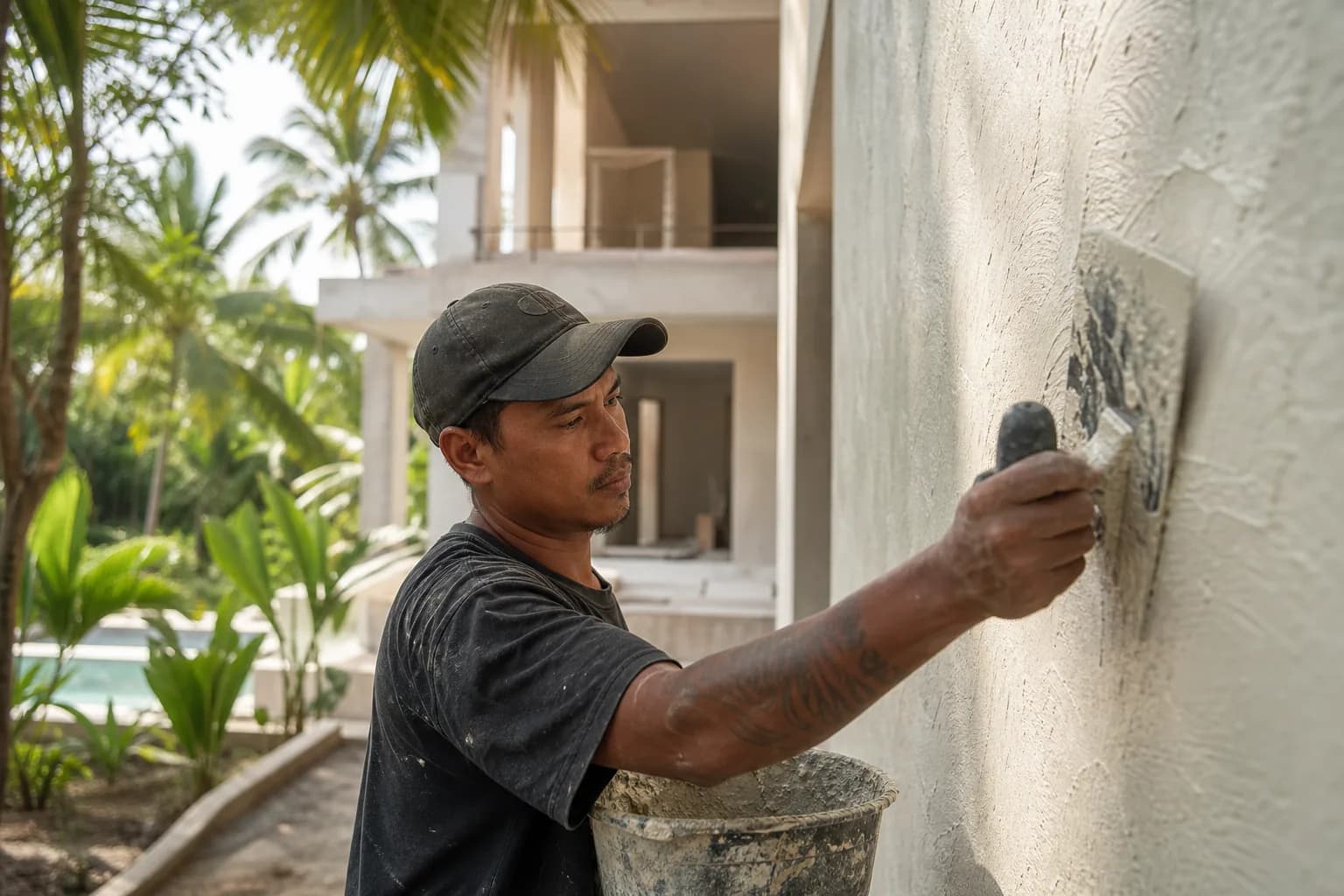
Resin-Infused Plaster Finishes: Anti-Salt Systems Bali
Expert technical guide: Resin-Infused Plaster Finishes: Anti-Salt Systems Bali
8 min read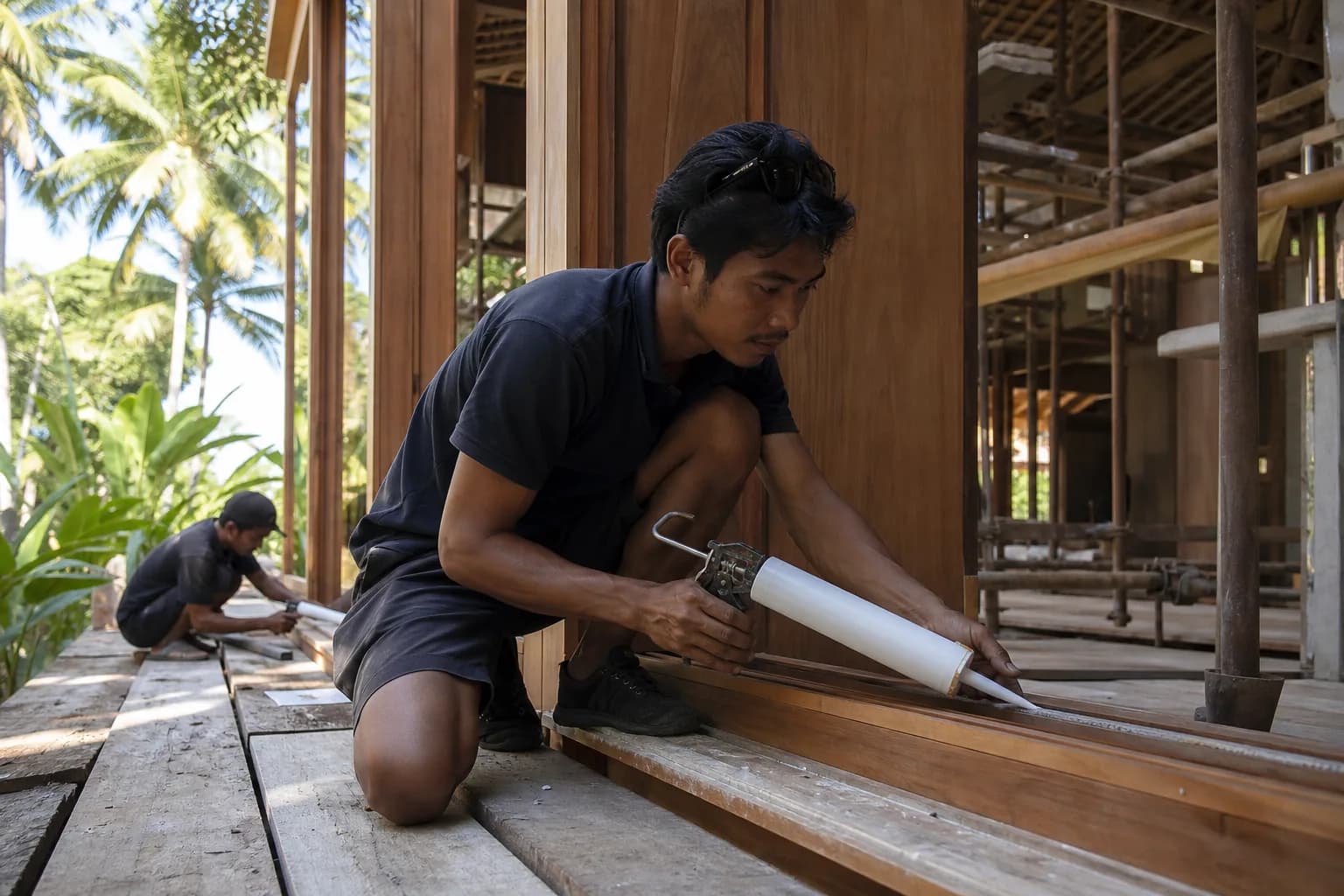
Prefinished Timber Joinery: Silicone Seals Fixings Bali
Professional prefinished timber joinery installation in Bali with silicone seals and fixings for durable weatherproof performance and a premium finish.
10 min read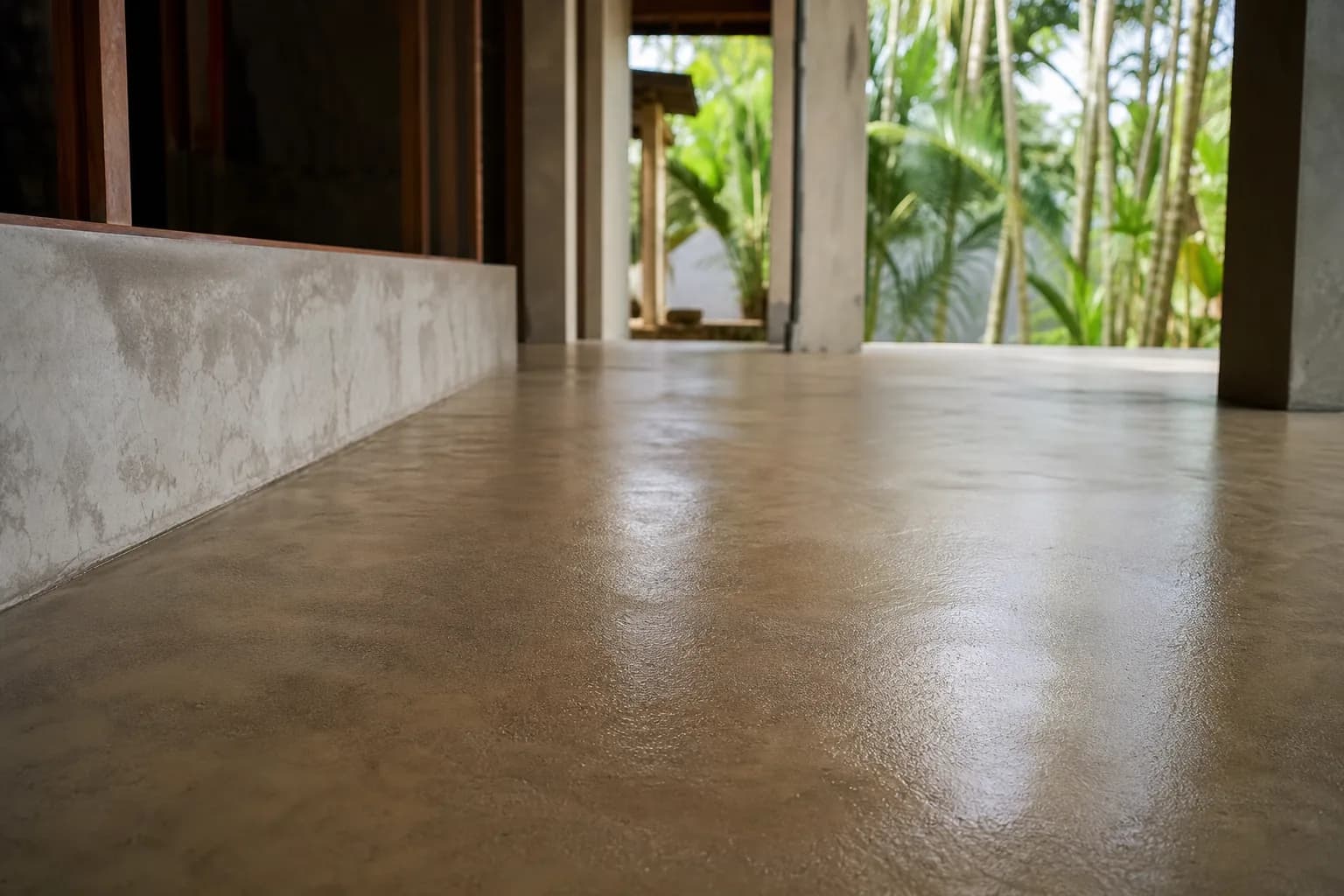
Polished Concrete Microtopping: Surface Prep Sealants Bali
Discover Bali s polished concrete microtopping: expert surface prep, durable sealants, and a flawless finish for modern floors with minimal maintenance.
9 min read