Concrete Screed Floor Leveling Compounds for Bali Tile
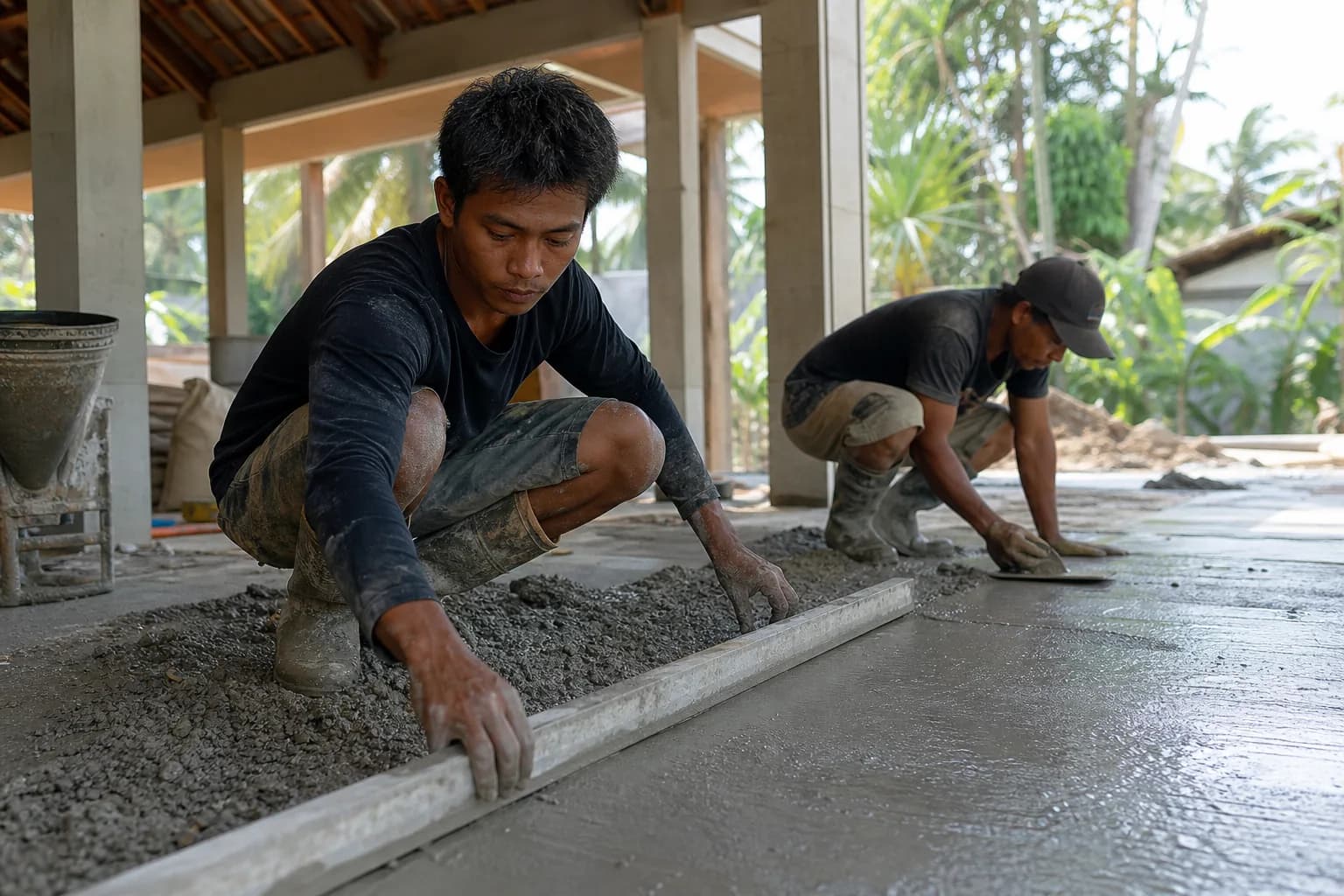
# Concrete Screed Floor Leveling Compounds for Bali Tile Installation
The Critical Foundation Challenge in Bali Tile Installation
When undertaking Bali villa construction or renovation Bali projects, one of the most overlooked yet critical aspects of quality interior finishing Bali work is proper floor preparation. Uneven concrete substrates, residual adhesive from old tiles, and settlement issues common in tropical environments create significant challenges for tile installation. Without proper leveling compounds and screed application, even premium tiles will crack, lippage will occur, and the entire floor system will fail prematurely. The question facing contractors and villa owners is: which concrete screed and floor leveling compounds deliver reliable performance in Bali’s humid, tropical climate while meeting international finishing standards?
Understanding Floor Leveling Compounds in Tropical Construction Environments
Floor leveling compounds represent a specialized category of cementitious materials engineered to create perfectly flat surfaces for tile installation. In Bali villa construction contexts, these products must perform under unique environmental stressors that differ significantly from temperate climate applications.
The fundamental challenge in Bali’s tropical environment involves moisture management. Concrete substrates in island construction absorb atmospheric humidity continuously, creating conditions where standard leveling compounds may experience extended curing times, reduced bond strength, or premature degradation. Modern self-leveling compounds address these issues through polymer modification, rapid-setting formulations, and enhanced adhesion chemistry specifically designed for demanding substrate conditions.
Professional-grade leveling compounds like BAL Level Plus have become industry standards for interior finishing Bali projects due to their versatility across multiple substrate types. These products function through a carefully balanced combination of Portland cement, graded aggregates, flow-control polymers, and setting accelerators. When mixed to manufacturer specifications, they create a pourable slurry that self-levels under gravity, eliminating manual troweling and ensuring consistent thickness across large floor areas.
The technical distinction between screed and leveling compound is important for specification purposes. Traditional sand-cement screeds typically require 25-75mm thickness and are manually compacted, making them suitable for gross leveling over structural slabs. Leveling compounds, conversely, are applied in 2-12mm layers (with some products extending to 80mm) and are designed for fine surface correction immediately beneath tile installations. In renovation contexts where existing floor heights must be maintained, thin-application leveling compounds become essential.
Polymer modification represents the key technological advancement in modern leveling compounds. Latex additives or pre-blended polymer powders enhance flexibility, reduce shrinkage cracking, and improve adhesion to difficult substrates including existing tiles, terrazzo, and moisture-sensitive materials. For villa utilities integration, polymer-modified compounds accommodate underfloor heating systems, electrical conduits, and plumbing penetrations without compromising structural integrity.
The self-leveling mechanism relies on rheology-modifying admixtures that maintain flowability during placement while preventing segregation of aggregates. This ensures uniform density and eliminates weak spots that could telegraph through tile installations. Professional applicators understand that proper mixing—typically 5-6 minutes with paddle mixers at controlled speeds—is critical to activating these flow properties without introducing excessive air that weakens the final matrix.
Material Selection Standards for Bali Climate Conditions
Selecting appropriate leveling compounds for Bali installations requires understanding both product specifications and local environmental factors. The primary material categories include rapid-setting compounds, standard self-leveling products, and heavy-duty screeds for substantial thickness requirements.
Rapid-setting compounds like BAL Level Fast offer 30-minute set times with tile-ready surfaces in 45 minutes. These products are invaluable for fast-track renovation Bali projects where downtime must be minimized. However, their accelerated chemistry demands precise mixing and immediate application—working time is typically limited to 10-15 minutes, requiring experienced installation teams.
Standard self-leveling compounds such as BAL Level Plus provide 4-hour tile-ready times with more forgiving working windows of 20-30 minutes. These represent the optimal balance for most Bali villa construction applications, offering sufficient open time for large-area pours while maintaining same-day tiling schedules. Their compatibility with both water-only and latex-modified mixing makes them adaptable to varying substrate conditions.
Deep-fill leveling compounds like BAL Level Max accommodate bed depths to 80mm, addressing significant level differences in renovation scenarios. These products incorporate larger aggregate gradations and modified binder systems that prevent excessive shrinkage in thick applications. For projects involving furniture installation where floor height coordination with built-in cabinetry is critical, deep-fill compounds provide necessary flexibility.
Material standards for Bali applications should prioritize products meeting EN 13813 specifications for screed materials, with particular attention to compressive strength (minimum C25), flexural strength, and wear resistance classifications. Tropical humidity exposure necessitates compounds with low permeability ratings and enhanced bond strength—minimum 1.5 N/mm² adhesion to concrete substrates.
Professional Installation Process for Leveling Compounds
Proper installation of floor leveling compounds follows a systematic process that directly impacts long-term tile performance. Each phase requires specific attention to technical details that distinguish professional interior finishing Bali work from substandard applications.
Phase 1: Substrate Preparation and Assessment
Begin with comprehensive substrate evaluation using straightedges and laser levels to map elevation variations. Document all deviations exceeding 3mm over 2-meter spans—the maximum tolerance for quality tile installation. Remove all contamination including oils, curing compounds, laitance, and loose material through mechanical grinding or shot blasting. Existing tile installations can serve as substrates if firmly bonded, but require thorough cleaning and profile creation through scarification.
Moisture testing is non-negotiable in Bali’s climate. Use calcium chloride tests or relative humidity probes to verify concrete moisture content below 75% RH before compound application. Elevated moisture levels compromise adhesion and can cause delamination months after installation. Address rising damp issues through moisture barrier systems before proceeding with leveling work.
Phase 2: Priming Application
Apply manufacturer-specified primers to all substrates minimum 1-2 hours before leveling compound placement. Primers serve multiple functions: they seal porous substrates preventing rapid moisture loss from the leveling compound, enhance mechanical bond, and provide visual confirmation of complete coverage. For highly absorbent concrete common in Bali construction, double primer coats may be necessary. Allow primers to become tacky but not fully dry—optimal bonding occurs when primers remain slightly active during compound placement.
Phase 3: Perimeter Preparation
Install expansion foam strips around all room perimeters, columns, and fixed elements. These accommodate thermal movement and prevent stress concentration at restraint points. In tropical environments with significant daily temperature fluctuations, perimeter isolation becomes critical for preventing edge cracking. Seal all penetrations, control joints, and substrate transitions with appropriate sealants to prevent compound migration into unwanted areas.
Phase 4: Mixing and Placement
Mix leveling compounds in clean containers using calibrated water quantities—typically 5-6 liters per 20kg bag, though exact ratios vary by product. Use paddle mixers at 400-600 RPM for 5 minutes minimum, scraping container sides to ensure complete powder incorporation. Avoid over-mixing which introduces air and weakens the matrix. Pour mixed compound immediately, starting from the furthest corner and working toward exits. Use gauge rakes to achieve approximate thickness, allowing the compound’s self-leveling properties to create final surface flatness.
For areas exceeding 40 square meters, work in coordinated teams with continuous mixing and placement to avoid cold joints. Maintain consistent ambient temperatures between 15-25°C during application and curing—challenging in Bali’s climate but manageable through morning installations and climate control in enclosed spaces.
Phase 5: Surface Finishing and Curing
Use spiked rollers to release entrapped air bubbles during the compound’s fluid phase—typically within 10 minutes of placement. This critical step prevents surface pinholes that telegraph through thin tiles. Protect curing compounds from direct airflow, sunlight, and rapid moisture loss using plastic sheeting if necessary. In Bali’s humid environment, surface drying often occurs faster than internal curing, creating weak surface layers. Monitor surface hardness development and restrict foot traffic until manufacturer-specified times.
Cost Analysis and Project Timeline Considerations
Understanding the financial and scheduling implications of leveling compound applications helps villa owners and project managers make informed decisions during Bali villa construction and renovation planning.
Material costs for quality leveling compounds typically range from IDR 180,000-350,000 per 20-25kg bag, with coverage varying by application thickness. At 3mm average depth, a single bag covers approximately 6-8 square meters. For a standard 50-square-meter room requiring leveling, material costs alone reach IDR 1,350,000-2,200,000. Premium rapid-setting or deep-fill products command 20-40% price premiums over standard compounds.
Labor costs for professional installation in Bali range from IDR 75,000-150,000 per square meter depending on project complexity, access conditions, and thickness requirements. This includes substrate preparation, priming, compound application, and surface finishing. Complex renovations with extensive preparation work or difficult access can increase labor costs by 50-100%.
Timeline considerations significantly impact project scheduling. Standard leveling compounds require 4-6 hours before tile installation can commence, meaning morning applications allow same-day tiling. Rapid-setting products reduce this to 45-60 minutes but require premium pricing. Full cure to maximum strength occurs over 7-28 days depending on product chemistry, though tiles can be installed much earlier. For furniture installation coordination, ensure leveling work precedes built-in cabinetry to avoid height conflicts and access restrictions.
Total project duration for comprehensive floor leveling across a typical villa spans 3-7 days including substrate preparation (1-2 days), priming and compound application (1-2 days), curing time (1 day), and tile installation commencement (1-2 days). Fast-track schedules using rapid-setting products can compress this to 2-3 days but require larger installation teams and premium material costs.
Frequently Asked Questions About Floor Leveling in Bali
Can leveling compounds be applied over existing tile floors in renovation projects?
Yes, quality leveling compounds can be applied directly over existing tiles provided they are firmly bonded to the substrate. The existing tile surface must be thoroughly cleaned, deglossed through mechanical abrasion, and primed with appropriate bonding agents. This approach is common in renovation Bali projects where removing existing tiles would be disruptive or damage underlying waterproofing. However, each tile must be tested for bond integrity—any hollow-sounding tiles must be removed and patched before leveling compound application. This method adds minimal height (3-6mm typically) making it ideal for maintaining door clearances and transitions.
How does Bali’s humidity affect leveling compound curing and performance?
Bali’s tropical humidity presents both advantages and challenges for leveling compound applications. High ambient moisture (70-90% RH) slows surface drying, which can actually benefit deep curing by preventing rapid moisture loss that causes surface weakness. However, excessive humidity can extend tile-ready times by 20-50% beyond manufacturer specifications developed in temperate climates. Professional installers compensate through morning applications when temperatures are cooler, use of dehumidification equipment in enclosed spaces, and selection of polymer-modified compounds with enhanced moisture tolerance. The key is maintaining substrate moisture below 75% RH before application while accepting that atmospheric humidity will influence surface curing rates.
What thickness of leveling compound is required for typical Bali villa floors?
Thickness requirements vary based on substrate condition and flatness tolerance needs. Most Bali villa construction projects require 3-6mm applications to correct minor surface irregularities and create tile-ready flatness. Renovation projects often need 6-12mm to address settlement, previous installation errors, or substrate damage. For significant level changes exceeding 12mm, deep-fill compounds or traditional sand-cement screeds become necessary. The critical principle is maintaining minimum thickness—applying compounds below manufacturer minimums (typically 2-3mm) results in weak, crack-prone surfaces. Areas requiring minimal correction should still receive full minimum thickness rather than feathered edges.
Are special leveling compounds required for underfloor heating integration?
Underfl
 3124 m²6 month(s)from 123.000 USD
TALA 8
 4344 m²16 month(s)from 290.000 USD
Radha
 1from 198.000 USD
Private: Haridas Villas

Want to calculate?
 164 m²7 month(s)from 79.000 USD
TALA TWO
 3127 m²9 month(s)from 177.000 USD
Mukunda
164 m²7 month(s)from 79.000 USDPrivate: Haridas Villas, Tegallalang
 172 m²8 month(s)from 120.000 USD
Keshava
 3104 m²11 month(s)from 99.000 USD
TALA 100
 3173 m²6 month(s)from 125.000 USD
TALA FOUR
 3180 m²7 month(s)from 142.000 USD
Vasudeva
 2144 m²11 month(s)from 104.000 USD
Narayana
Start With Real Numbers, Not Guesses
Before finalizing your finishing works plan, check realistic cost ranges for your Bali villa project.
Available lands
 2200 m²3 min$ 183842Bali, Berawa
 1158 m²12 min$ 291996Bali, Mengwi
 3100 m²15 min$ 257697Bali, Tegallalang
 1000 m²8 min$ 134544Bali, Bukit
 500 m²10 min$ 107143Bali, Tabanan
 2115 m²5 min$ 1139547Bali, Pererenan
 13000 m²1 min$ 920567Bali, Pekutatan
 700 m²15 min$ 162500Bali, Tabanan
 7000 m²36 min$ 284483Bali, Gianyar
 800 m²10 min$ 307882Bali, Tibubeneng
 6000 m²30 min$ 55419Bali, Tabanan
 5000 m²8 min$ 424877Bali, Ungasan
 7900 m²25 min$ 413485Bali, Tabanan
 1230 m²15 min$ 132543Bali, Tegallalang
 2850 m²15 min$ 315887Bali, Tabanan
Essential Bali build & buy guides
- Bali villa construction cost per m² in 2026
- How much will your villa cost? Calculator
- Building a villa in Bali: the complete guide
- Buying land in Bali: step-by-step for foreigners
- Bali villa investment: yields, risks, returns
- Leasehold vs freehold: what foreigners can own
- Construction defect liability & 10-year warranty
- Bali building codes and construction standards
Related guides
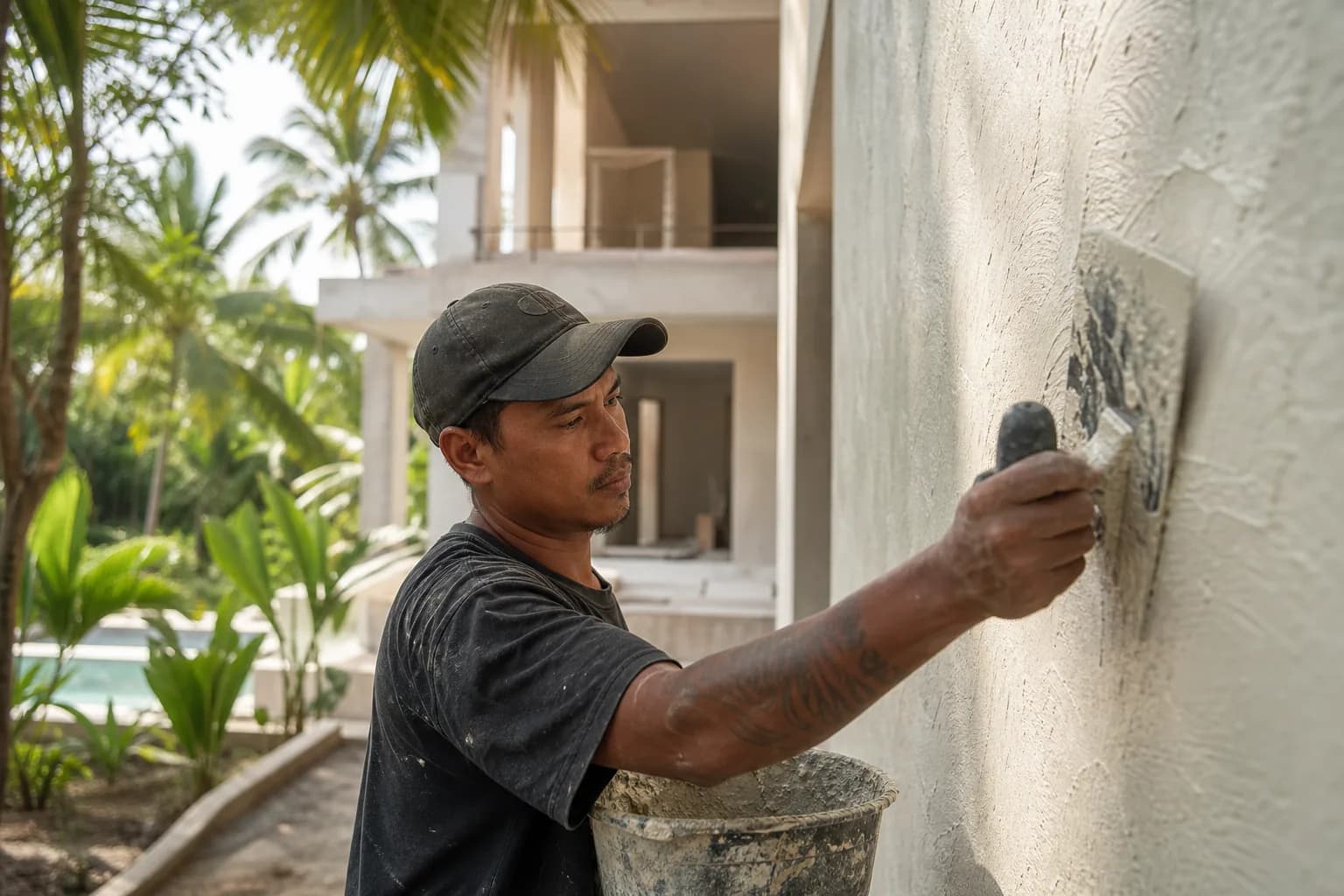
Resin-Infused Plaster Finishes: Anti-Salt Systems Bali
Expert technical guide: Resin-Infused Plaster Finishes: Anti-Salt Systems Bali
8 min read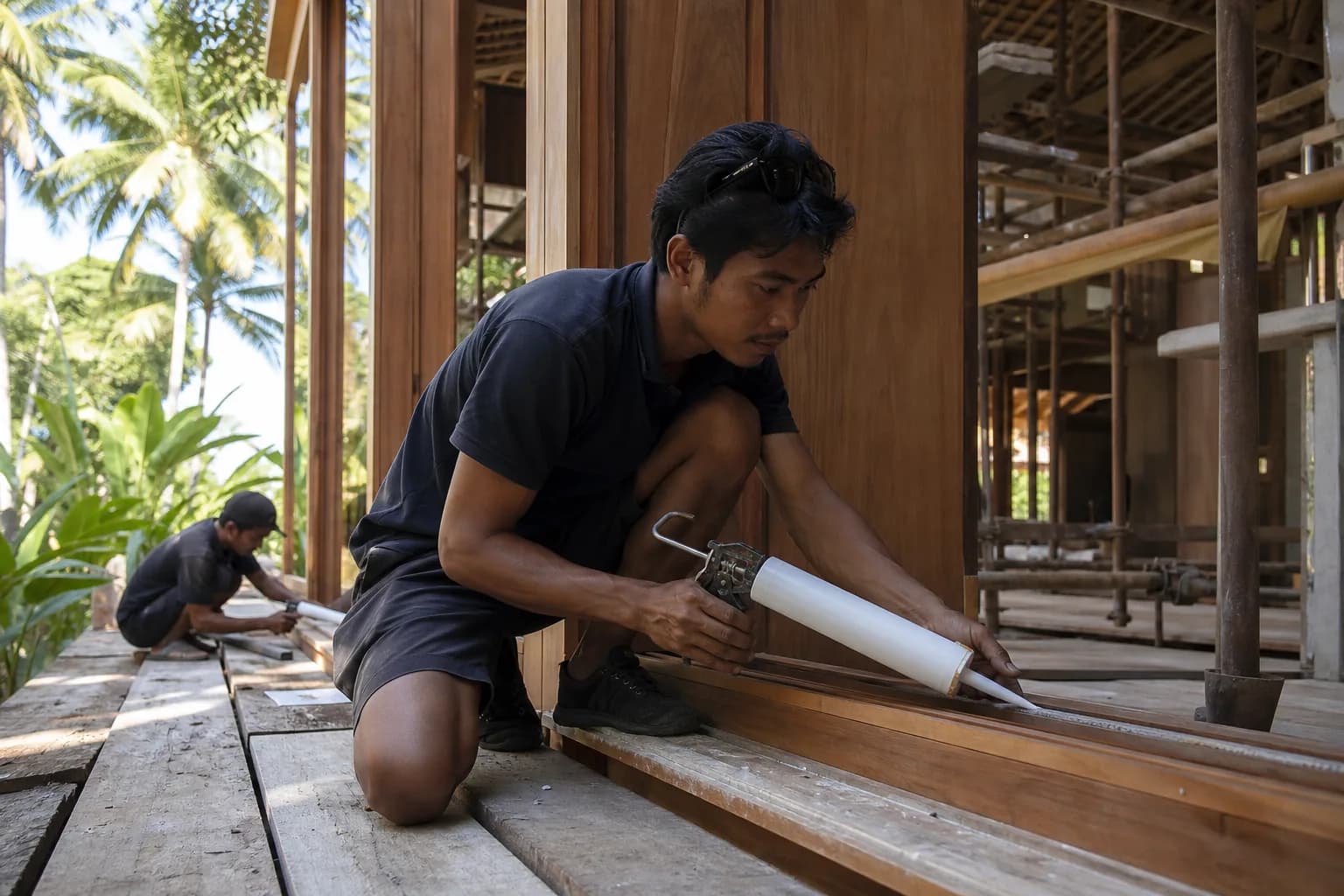
Prefinished Timber Joinery: Silicone Seals Fixings Bali
Professional prefinished timber joinery installation in Bali with silicone seals and fixings for durable weatherproof performance and a premium finish.
10 min read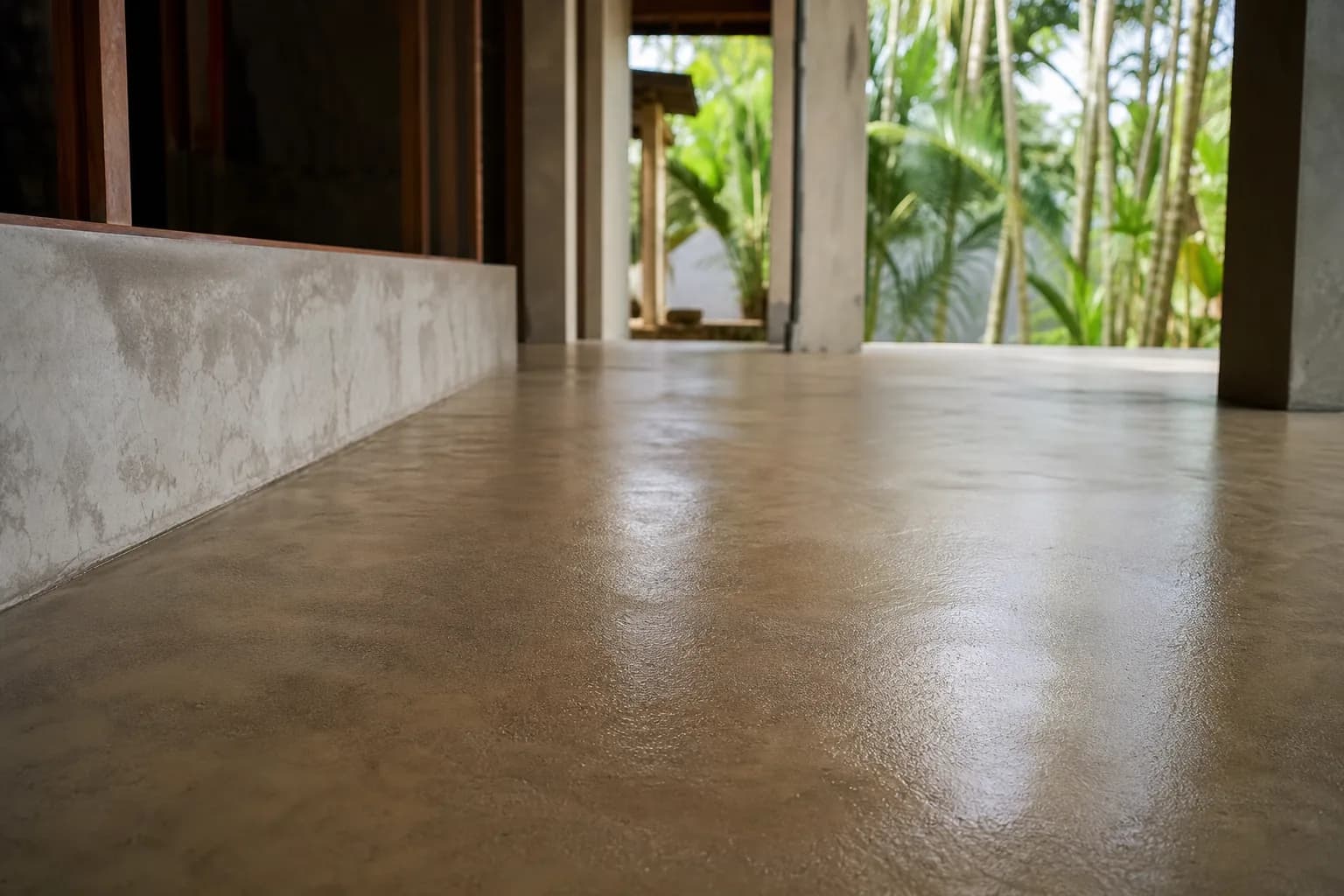
Polished Concrete Microtopping: Surface Prep Sealants Bali
Discover Bali s polished concrete microtopping: expert surface prep, durable sealants, and a flawless finish for modern floors with minimal maintenance.
9 min read