Complete Bali Area Guide: Explore Beaches, Culture Hidden Gems
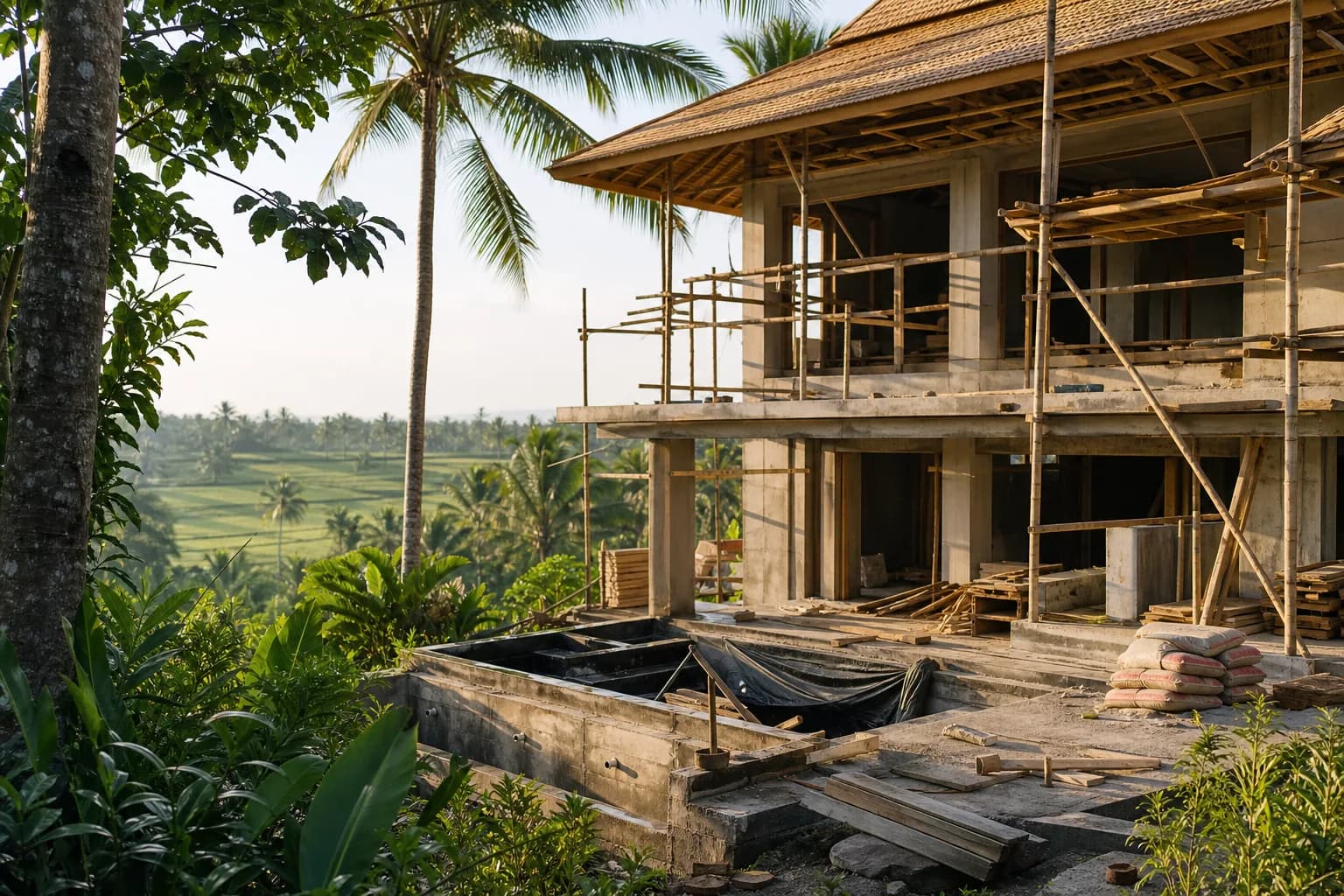
Bali Area Guide: Strategic Location Analysis for Construction Projects in 2026
Selecting the right location in Bali for your construction project is arguably the most critical decision you’ll make in your development journey. As a construction company with extensive experience across the island, Teville understands that each region of Bali presents unique opportunities, challenges, and regulatory considerations that directly impact project feasibility, costs, and long-term value. This comprehensive Bali area guide examines the island’s diverse regions through the lens of construction viability, helping you make informed decisions about where to build your dream villa, commercial property, or investment development in 2026.
The best areas to stay in Bali in 2026 depend on your travel preferences, with South Bali (including Canggu, Kuta, Seminyak, Uluwatu, and Sanur) ideal for beach and party lovers, Ubud in Central Bali perfect for culture and rice terraces, and East Bali offering authentic experiences and day trips. However, from a construction perspective, these same regions present vastly different technical requirements, permit processes, infrastructure availability, and investment potential that must be carefully evaluated before breaking ground.
The Critical Problem: Why Location Selection Makes or Breaks Your Bali Construction Project
Many foreign investors and property developers approach Bali construction with a tourist’s perspective rather than a builder’s analysis. They fall in love with a sunset view in Uluwatu or the rice terraces of Ubud without understanding the profound implications their location choice has on construction feasibility, budget, and timeline. This fundamental misalignment between aesthetic preference and practical construction reality causes countless projects to exceed budgets by 40-60% or face delays of six months to two years.
The location problem manifests in several critical ways. First, infrastructure availability varies dramatically across Bali’s regions. While Seminyak offers reliable three-phase electricity, municipal water connections, and fiber optic internet, a stunning clifftop plot in Uluwatu might require you to invest $15,000-$30,000 in electrical infrastructure alone before construction even begins. Similarly, building in the rice terraces of Ubud means navigating complex agricultural land regulations and potentially limited road access for construction vehicles and material delivery.
Second, regulatory environments differ significantly between regions and even between neighboring villages. Bali’s traditional banjar system means that local community approval processes, customary requirements, and building restrictions can vary within just a few kilometers. A streamlined permit process in one area might take three months, while an adjacent region could require nine months of negotiations, ceremonies, and documentation. Without understanding these regional nuances, developers often find themselves trapped in bureaucratic delays that consume both time and capital.
Third, the construction cost differential between regions can reach 35-50% for identical specifications. Remote areas require premium pricing for material transportation, skilled labor travel, and extended project timelines. Coastal locations demand specialized corrosion-resistant materials and foundations engineered for sandy soils and high water tables. Mountain regions need structural designs that account for increased rainfall, potential landslides, and temperature variations that affect material performance.
Technical Analysis: Construction Considerations Across Bali’s Major Regions
South Bali: Seminyak, Canggu, and Kuta
South Bali represents the most developed construction environment on the island, offering significant advantages in infrastructure and contractor availability. The region benefits from established electrical grids with reliable three-phase power suitable for modern villas with air conditioning, pools, and commercial equipment. Municipal water systems exist in most areas, though quality and pressure vary, typically requiring supplementary filtration and storage tanks with 5,000-10,000 liter capacity.
From a soil engineering perspective, South Bali presents challenges with predominantly sandy coastal soils and high water tables ranging from 1-4 meters below surface level. This necessitates specialized foundation systems, typically employing reinforced concrete raft foundations or mini-pile systems extending 6-12 meters deep for multi-story structures. Waterproofing becomes critical, requiring tanking systems for basements and comprehensive damp-proofing for ground-floor slabs. Budget an additional 15-20% for foundation work compared to inland locations.
The regulatory environment in South Bali is relatively streamlined due to established processes and experienced local administrators familiar with foreign investment. IMB (building permit) processing typically takes 2-4 months in Seminyak and Canggu, compared to 6-12 months in less developed areas. However, land prices reflect this convenience, with construction-ready plots ranging from $800-$2,500 per square meter depending on proximity to the beach and existing infrastructure.
Canggu specifically has emerged as a construction hotspot, with excellent contractor availability and competitive pricing due to market saturation. However, rapid development has strained infrastructure, with frequent power fluctuations requiring voltage stabilizers and backup generators for sensitive equipment. Traffic congestion also impacts material delivery schedules, requiring careful logistics planning to avoid delays during peak tourist seasons.
Uluwatu and Bukit Peninsula
The Bukit Peninsula offers dramatic clifftop locations and ocean views but presents significant construction challenges that substantially impact budgets and timelines. The region’s limestone geology creates both opportunities and obstacles. While limestone provides excellent bearing capacity for foundations, the terrain’s dramatic topography often requires extensive cut-and-fill operations, retaining walls, and specialized access roads that can add $50,000-$150,000 to project costs before construction begins.
Infrastructure limitations represent the primary challenge in Uluwatu. Electrical supply often requires new transformer installations and line extensions costing $10,000-$30,000. Water scarcity is acute, with no municipal supply in most areas. Projects depend entirely on drilled wells (requiring 40-80 meter depths at $3,000-$8,000) or water trucking at ongoing costs of $30-$50 per delivery. During dry season (April-October), water tables drop significantly, sometimes requiring well deepening or supplementary trucking even with existing wells.
The clifftop locations that make Uluwatu desirable also create engineering complexities. Wind loads increase significantly in exposed coastal positions, requiring structural designs that account for cyclonic conditions with wind speeds up to 180 km/h. Corrosion from salt spray accelerates dramatically, necessitating marine-grade stainless steel fixtures, specialized protective coatings, and concrete mixes with reduced permeability. These specifications typically add 20-30% to material costs compared to inland construction.
Access logistics in Uluwatu require careful planning. Narrow roads and steep gradients limit delivery vehicle sizes, sometimes requiring material transfers to smaller trucks or even manual handling for the final approach. This increases labor costs and extends timelines. For clifftop sites, crane access for lifting materials may be impossible, requiring alternative solutions like material hoists or cable systems that add both cost and complexity.
Ubud and Central Bali
Ubud’s appeal lies in its cultural richness and stunning rice terrace landscapes, but construction here involves navigating complex agricultural land regulations and unique environmental considerations. Much of the desirable land in Ubud falls under agricultural zoning, requiring conversion processes that can take 6-18 months and involve multiple government agencies. The conversion itself isn’t always guaranteed, depending on local food security policies and the specific subak (traditional irrigation cooperative) governing the land.
From a technical standpoint, Ubud’s clay-rich soils and elevated rainfall (2,000-3,000mm annually versus 1,000-1,500mm in South Bali) create distinct engineering requirements. Clay soils exhibit significant expansion and contraction with moisture changes, requiring flexible foundation designs with proper drainage systems to prevent differential settlement. Retaining walls need robust drainage to prevent hydrostatic pressure buildup during monsoon periods. Budget an additional $8,000-$15,000 for comprehensive drainage systems including French drains, catch basins, and proper grading.
The cooler climate in Ubud (averaging 2-4°C lower than coastal areas) affects material selection and construction techniques. Concrete curing times extend due to lower temperatures and higher humidity, potentially adding 1-2 weeks to structural timelines. However, the climate reduces the need for air conditioning, allowing for more natural ventilation designs that can reduce long-term operational costs by 40-60% compared to coastal villas.
Infrastructure in Ubud is improving but remains inconsistent. Electrical supply is generally adequate for residential construction, though voltage fluctuations are common, requiring stabilization equipment. Internet connectivity has improved significantly with fiber optic availability in central areas, though remote locations may still depend on cellular or satellite solutions. Water supply typically comes from mountain springs or wells, with good availability but requiring filtration systems to address mineral content and occasional turbidity during heavy rains.
Sanur: The Balanced Option
Sanur represents a middle ground between South Bali’s development intensity and more remote areas’ challenges. The region offers mature infrastructure with reliable utilities, established contractor networks, and relatively streamlined permitting, while maintaining a more relaxed atmosphere than Seminyak or Canggu. From a construction perspective, Sanur provides excellent value with lower land costs ($500-$1,200 per square meter) than Seminyak while offering comparable infrastructure quality.
Soil conditions in Sanur are similar to other coastal areas, with sandy compositions and water tables at 2-5 meters depth. However, the protected reef offshore means less wave action and coastal erosion compared to west-facing beaches, reducing long-term maintenance concerns for beachfront properties. Foundation requirements remain substantial, with raft foundations or pile systems necessary for multi-story construction, but the stable coastal environment reduces corrosion rates by approximately 30% compared to more exposed locations.
The regulatory environment in Sanur benefits from experienced local administration and established precedents for foreign investment properties. IMB processing typically completes within 3-5 months, and the local banjar communities have well-defined processes for obtaining necessary approvals and conducting required ceremonies. This predictability allows for more accurate timeline and budget projections compared to emerging development areas.
East Bali: Amed, Candidasa, and Beyond
East Bali offers authentic experiences and lower land costs ($200-$600 per square meter) but presents significant construction challenges that often offset initial savings. Infrastructure limitations are substantial, with unreliable electrical supply requiring solar systems with battery backup ($15,000-$40,000 for a typical villa) for consistent power. Water availability varies dramatically by location, with some areas offering good well water at 20-40 meter depths, while others require 60-100 meter drilling or complete dependence on trucked water.
Contractor and skilled labor availability is limited in East Bali, requiring workers to travel from South Bali or Ubud. This adds 20-35% to labor costs and complicates project management, as workers typically return home on weekends, extending timelines. Material availability is also constrained, with most supplies requiring transportation from Denpasar, adding delivery costs and limiting options for specialty items or quick replacements when issues arise.
The volcanic soil in much of East Bali provides excellent bearing capacity and drainage, reducing foundation costs compared to coastal areas. However, seismic considerations become more significant due to proximity to Mount Agung and the active volcanic zone. Structural designs should incorporate seismic-resistant features including reinforced concrete frames, proper tie-beam systems, and flexible connections that can accommodate ground movement without catastrophic failure.
Risk Assessment: Location-Specific Challenges and Mitigation Strategies
Every Bali construction location carries inherent risks that must be identified, quantified, and mitigated through proper planning and design. Understanding these location-specific risks allows for realistic budgeting and timeline development, preventing the cost overruns and delays that plague poorly planned projects.
Coastal Corrosion and Environmental Degradation
Properties within 500 meters of the ocean face accelerated corrosion that can reduce the lifespan of standard materials by 50-70%. Salt-laden air attacks metal fixtures, reinforcement steel, and even concrete surfaces. Mitigation requires specifying marine-grade stainless steel (316 grade minimum) for all exposed metalwork, increasing fixture costs by 150-200%. Concrete mixes should incorporate corrosion inhibitors and achieve minimum 30 MPa compressive strength with reduced permeability. External metalwork requires specialized protective coatings reapplied every 2-3 years at costs of $2,000-$5,000 per application for a typical villa.
Flooding and Drainage Challenges
Low-lying areas in South Bali and some parts of Sanur face flooding risks during peak monsoon periods, particularly as climate change intensifies rainfall events. Properties should be elevated minimum 50cm above the highest recorded flood level in the area, requiring fill material and proper compaction that adds $8,000-$15,000 to site preparation costs. Comprehensive drainage systems with adequate capacity for 100-year storm events are essential, including perimeter drains, sump pumps with battery backup, and proper grading to direct water away from structures.

Want to calculate?
 4344 m²16 month(s)from 290.000 USD
Radha
 1from 198.000 USD
Private: Haridas Villas
 3173 m²6 month(s)from 125.000 USD
TALA FOUR
 3104 m²11 month(s)from 99.000 USD
TALA 100
 3124 m²6 month(s)from 123.000 USD
TALA 8
 3127 m²9 month(s)from 177.000 USD
Mukunda
 164 m²7 month(s)from 79.000 USD
Private: Haridas Villas, Tegallalang
164 m²7 month(s)from 79.000 USDTALA TWO
 3180 m²7 month(s)from 142.000 USD
Vasudeva
 2144 m²11 month(s)from 104.000 USD
Narayana
 172 m²8 month(s)from 120.000 USD
Keshava
Start With Real Numbers, Not Guesses
Before buying land or finalizing a design, check the realistic build cost range for your project in Bali.
Our team reviews your inputs and gives a grounded estimate.
Available lands
 2230 m²15 min$ 410573Bali, Padonan
 1158 m²12 min$ 291996Bali, Mengwi
 1533 m²5 min$ 165666Bali, Cepaka
 700 m²15 min$ 90517Bali, Central Bali
 750 m²15 min$ 187038Bali, Kerobokan
 700 m²15 min$ 109052Bali, Buduk
 5000 m²8 min$ 424877Bali, Ungasan
 2800 m²2 min$ 713793Bali, Kedungu
 325 m²15 min$ 44472Bali, Ungasan
 250 m²15 min$ 40025Bali, Munggu
 3900 m²10 min$ 432266Bali, Tabanan
 515 m²7 min$ 570813Bali, Canggu
 585 m²8 min$ 165702Bali, Mengwi
 3000 m²15 min$ 1246921Bali, Tabanan
 700 m²20 min$ 90517Bali, Cepaka
Essential Bali build & buy guides
- Bali villa construction cost per m² in 2026
- How much will your villa cost? Calculator
- Building a villa in Bali: the complete guide
- Buying land in Bali: step-by-step for foreigners
- Bali villa investment: yields, risks, returns
- Leasehold vs freehold: what foreigners can own
- Construction defect liability & 10-year warranty
- Bali building codes and construction standards
Related guides
Resin-Infused Plaster Finishes: Anti-Salt Systems Bali
Expert technical guide: Resin-Infused Plaster Finishes: Anti-Salt Systems Bali
8 min read
Prefinished Timber Joinery: Silicone Seals Fixings Bali
Professional prefinished timber joinery installation in Bali with silicone seals and fixings for durable weatherproof performance and a premium finish.
10 min read
Polished Concrete Microtopping: Surface Prep Sealants Bali
Discover Bali s polished concrete microtopping: expert surface prep, durable sealants, and a flawless finish for modern floors with minimal maintenance.
9 min read