Ceramic Tile Grout Remediation: Anti-Mould Epoxy in Bali
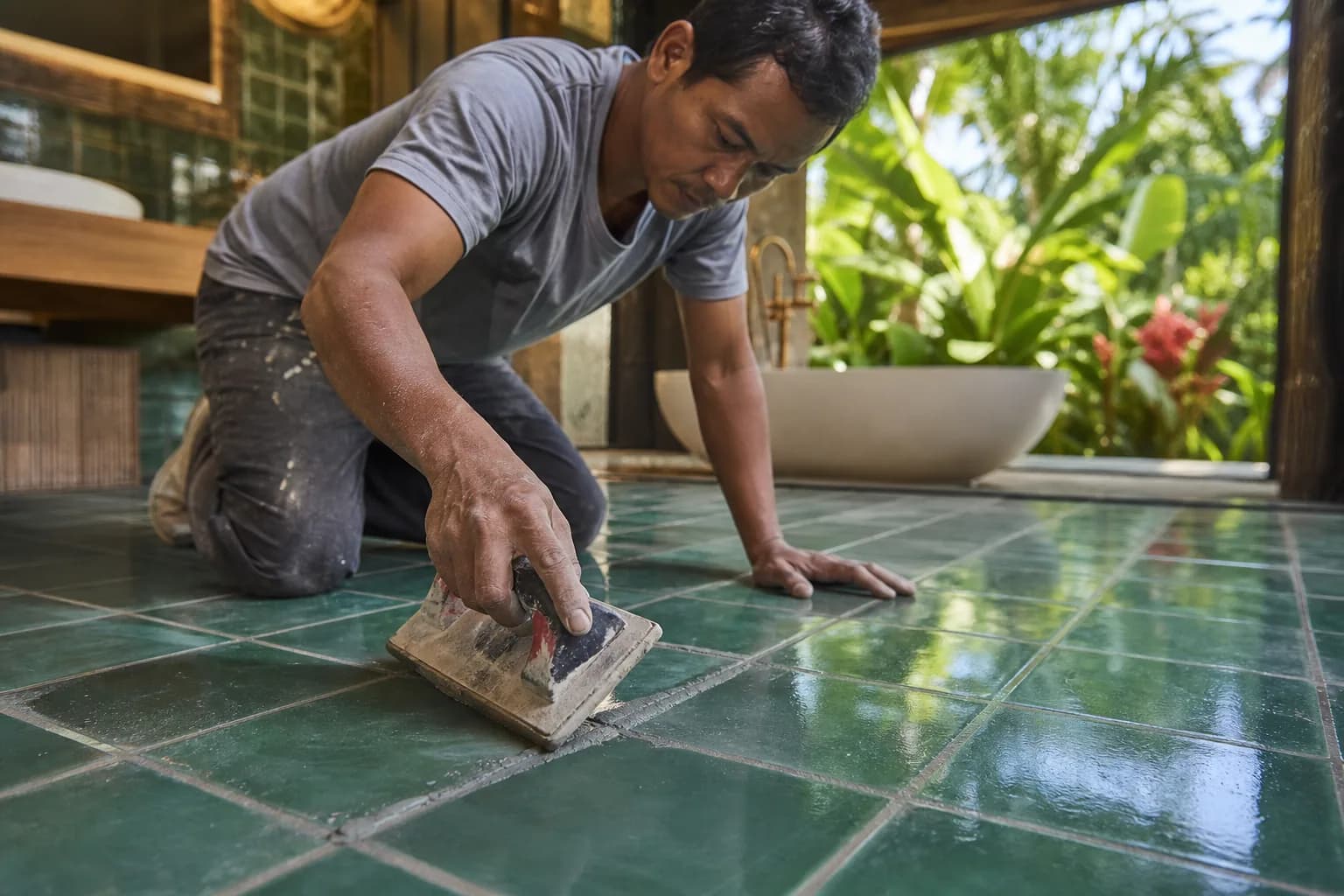
Ceramic Tile Grout Remediation: Anti-Mould Epoxy Methods Bali
1) Specific Problem/Question
Bali’s tropical climate—high humidity, warm temperatures, salt-laden coastal air, and frequent wet-dry cycles—accelerates grout staining, mold colonization, and joint deterioration in bathrooms, kitchens, spas, and pool decks. Traditional cementitious grout absorbs moisture, trapping biofilm and discolouration that scrubbing cannot fully remove. The practical question for renovation Bali projects is: how do we restore tiled surfaces to a hygienic, durable, low-maintenance standard that resists mold under tropical conditions without replacing the tile? The answer is targeted ceramic tile grout remediation using anti-mould epoxy methods—an expert finishing process Teville applies across Bali villa construction and interior finishing Bali works to deliver clean, long-lasting joints.
2) Technical Deep Dive: Why Anti‑Mould Epoxy and How It Performs in Bali
Epoxy grout is a two- or three-component system of epoxy resins, hardeners, and graded fillers. Unlike cement grout, it is non-porous, waterproof, and highly resistant to staining, harsh cleaners, and biofilm. Reputable manufacturers document superior chemical and biological resistance that outperforms cementitious grout in wet areas (Laticrete; epoxygroutingsg.com), and regrouting with epoxy is a recognized remediation strategy for showers and wet rooms (TrustDALE).
In Bali, mold pressure is elevated. Bathrooms seldom fully dry between uses; kitchens face oils, spice pigments, and steam; exterior decks absorb salt spray; and pool surrounds live in chlorinated splash. Epoxy’s closed microstructure blocks moisture uptake, starving mold of a porous host. This is the core of “anti-mould” performance: prevention by design, not repeated chemical treatment.
Key technical considerations for Bali conditions and high-end finishing:
- Joint width and tile anatomy: Most epoxy grouts are suitable for 1.5–12 mm joints. On rectified porcelain with 2–3 mm joints, epoxy can be tooled flush and crisp; on textured ceramics or mosaics, we use high-coverage floats and sequencing to avoid resin smears in surface relief.
- Substrate movement and expansion: Humidity swings and thermal gain (especially sun-exposed terraces and steam rooms) require compliant movement joints. We replace rigid grout at perimeters, changes of plane, and around penetrations with 100% silicone or hybrid sealants to ASTM C920/TCNA EJ171 practice, ensuring epoxy is not forced to “bridge” live joints.
- Vapor drive and waterproofing: Epoxy is water-impervious but does not replace a membrane. We verify existing waterproofing at wet zones, shower niches, and thresholds; where failures appear (efflorescence, hollow tiles), we propose corrective scope before regrouting.
- Thermal comfort and villa utilities: Where hot water loops, steam generators, or heated towel rails add local heat, epoxy’s thermal stability (typically up to ~70–80°C service) exceeds cement grout. For spa-grade applications, we confirm manufacturer limits and coordinate with MEP to prevent overheating at joints.
- Working climate: Epoxy pot life shortens in Bali’s warmth. We stage small batches, chill components when necessary, and tool in tight windows to keep joints dense and color consistent. Site ventilation and RH control (dehumidifiers) are planned to maintain predictable cure.
- Color control and UV: Premium epoxies offer fade-resistant pigments. In strong coastal UV, we select outdoor-rated shades and brief clients on realistic color ageing for sun-exposed grout lines, especially on white or very dark tones.
- Cleanability and hygiene: Epoxy’s slick surface limits soap scum anchoring. In kitchens, turmeric and oil wipes off before setting. For pools and spas, chemical resistance reduces bleaching or yellowing when sanitizer is balanced.
- Interface with finishes and furniture installation: In vanity kickers, kitchen plinths, and built-in cabinetry touchlines, we mask meticulously to protect joinery. We coordinate sequencing so furniture installers return after cure for precise silicone scribe lines and accessory refits.
- Acid and solvent exposure: Unlike cement grout, epoxy tolerates neutral cleaners and many alkalines; avoid strong solvents and unapproved acids. We provide a maintenance matrix matched to your tile and epoxy brand.
- Stone caution: Polished limestone, marble, and porous stones can stain from epoxy resins. We test inconspicuous areas, edge-seal stones, or specify stone-safe epoxy variants and rinsing protocols.
The outcome, when correctly specified and executed, is a dense, smooth joint that resists mold colonization, blocks water ingress, and holds color—aligning with Teville’s focus on technical quality in finishing and renovation Bali works.
3) Materials & Standards
We specify only professional-grade, anti-mould epoxy systems meeting recognized standards:
- Grout classification: ANSI A118.3 (Epoxy Grouts), EN 13888 RG. These standards underpin water absorption, chemical resistance, and strength metrics appropriate for bathrooms, kitchens, spa zones, and pools.
- Movement joint sealants: 100% silicone or hybrid sealants conforming to ASTM C920; movement design per TCNA EJ171 guidance for changes of plane, perimeters, and transitions.
- Representative epoxy brands: LATICRETE SpectraLOCK/”Pro Premium,” MAPEI Kerapoxy/Kerapoxy CQ, ARDEX EG 15, or equivalent meeting above standards and offering anti-microbial or anti-mould claims from the manufacturer.
- Ancillary materials: Alkaline degreasers approved for pre-clean, isopropyl alcohol for wipe-downs, non-scratch pads, microfibre sponges, epoxy floats, and two-bucket wash systems with additive packets as specified by the grout brand.
- Tools & controls: Oscillating tools with grout blades, diamond hand saws for delicate tiles, HEPA vacuums, moisture meters, hygrometers, masking systems, and negative-pressure dust control for occupied villas.
Local compliance: while Indonesia’s SNI covers tiling works broadly, epoxy grout performance is most consistently evaluated against ANSI/EN standards above. Teville documents brand data sheets, Safety Data Sheets, and mock-up signoffs for every Bali villa construction or interior finishing Bali project to verify compatibility with substrates, waterproofing, and tile type before site-wide application.
4) Step-by-Step Process We Follow in Bali Villas
4.1 Assessment and Planning
- Survey mold patterns, discoloration, soft joints, loose tiles, and water staining. Identify areas where grout remediation suffices versus where tile replacement or waterproofing repair is necessary.
- Moisture reading at suspect walls/floors; inspect perimeters, niches, and penetrations. Confirm expansion joint strategy.
- Create a protection plan for fixtures, glass, stone tops, and built-in furniture. Coordinate temporary removal of trims, shower accessories, and kick plinths.
- Approve a small mock-up area for color, texture, and finish sheen.
4.2 Site Preparation
- Mask edges and sensitive finishes; erect dust control and ventilation. Where necessary, isolate villa utilities (water to showers) and schedule access windows with occupants.
- Set up mixing area with temperature control (shade, chilled components if required) to stabilize pot life.
4.3 Removal and Cleaning
- Mechanically remove existing grout to a minimum of 2/3 tile thickness (or as manufacturer specifies), avoiding tile edge chipping. Vacuum with HEPA and brush clean.
- Degrease and de-biofilm joints and tile edges using approved cleaners. Rinse thoroughly; allow to dry per product data, using dehumidifiers where RH is high.
4.4 Mixing and Placement
- Weigh components by manufacturer ratio. Mix small batches to match tropical pot life (typically 30–45 minutes at 25–30°C).
- Pack grout firmly with an epoxy float diagonally across joints to eliminate voids. Work in 1–2 m² sections for mosaics or textured tile, 3–4 m² for large-format smooth tile.
- Tool joints to a consistent profile; remove excess promptly.
4.5 Wash and Finish
- First clean: within the specified window using brand-approved wash solution and non-scratch pads. Two-bucket method; change water frequently.
- Final clean: microfibre wipe to remove resin haze before it sets. Conduct raking light inspection to confirm clarity on glossy tiles.
- Replace cement grout at movement zones with color-matched silicone after epoxy has reached initial set; detail neat, concave profiles.
4.6 Cure, QA, and Handover
- Protect from water, steam, and cleaning for 24–72 hours depending on the product. Maintain space ventilation; control RH to promote cure.
- Quality checks: pinholes, color uniformity, joint density, perimeter compliance. Address punch-list immediately while working crew remains mobilized.
- Reinstall trims and accessories; coordinate with furniture installation team for final scribing/seal at vanities and cabinetry.
- Client care pack: maintenance guide, approved cleaners, and reservice schedule.
Our approach mirrors controlled finishing in how we build full villas: mock-ups, protection, climate control, and documented QA, scaling from single bathrooms to entire spas or pool decks.
5) Costs & Timeline (Guidance for Bali Projects)
Costs vary by tile sensitivity, joint width, access, and area size. As a Bali area guide, typical 2026 ranges for professional epoxy regrouting and remediation (materials, labor, protection, and QA) may fall in the mid to premium tier versus cement regrout, but significantly less than full tile replacement. Influencers of cost:
- Delicate stone or handmade tile (slower removal, extra masking)
- Textured/mosaic surfaces (increased cleaning cycles)
- High RH work windows and dehumidification needs
- Occupied villa phasing and night/weekend access
- Extent of movement joint correction and silicone works
Timeline examples (excluding major waterproofing repairs):
- Powder room (4–6 m² tiled area): 1 day removal/clean + 0.5 day grouting + 24–48 h cure.
- Master shower (12–18 m² walls/floor): 2 days removal/clean + 1 day epoxy + 48 h cure before service.
- Kitchen splashback (3–5 m²): same-day turn with overnight cure.
- Pool waterline and deck band: scope-dependent; allow staged zones and water chemistry stabilization after cure.
For a tailored estimate and program integration with renovation Bali works or villa utilities shutdowns, contact Teville via our cost estimation form. We provide line-item scopes and sequencing compatible with live-occupancy villas.
6) FAQ: Anti‑Mould Epoxy Grout in Bali
Q1. How does epoxy grout stop mold?
It’s non-porous and waterproof, denying mold the moisture-holding pores cement grout provides. Regular ventilation and proper movement joints complete the system, preventing trapped moisture and biofilm growth.
Q2. Can you regrout over existing grout?
No. We remove old grout to an adequate depth, clean edges, and then install epoxy. Overlays trap contamination and lead to bond failure.
Q3. Will epoxy make floors slippery?
The grout itself does not change tile friction, but flush, smooth joints can feel cleaner. Slip resistance is governed by the tile surface; for wet areas we assess R-rating and recommend mats or surface treatments if required.
Q4. Is epoxy safe around natural stone?
Yes, with controls. We perform test patches, edge-seal porous stones, and use stone-safe epoxy variants and wash protocols to prevent staining or resin film.
Q5. Do I still need to seal epoxy grout?
No sealer is required. Epoxy is inherently stain and water resistant. Use only manufacturer-approved cleaners; avoid strong solvents and unapproved acids.
Q6. How long before I can use the shower?
Most systems allow light use after 24–48 hours at 25–30°C. We confirm based on the selected product and site RH/temperature.
Q7. What about color consistency?
Because epoxy cures chemically, it is more color-stable than cement grout. We mix by weight, batch track, and maintain uniform wash timing to keep tone consistent, especially on whites and charcoals.
Q8. Will epoxy crack?
Not when movement is correctly managed. Epoxy is strong but not elastic; we design compliant silicone joints at perimeters, corners, and transitions to absorb building and thermal movement.
Q9. Is epoxy suitable for pools and spas?
Yes. Epoxy’s chemical and water resistance make it ideal for waterlines, spas, and splash zones. We coordinate with pool contractors on water chemistry and cure time before refilling.
Q10. Can you work in an occupied villa?
Yes. We stage rooms, run dust control and ventilation, and schedule water shutdowns. Our crews protect finishes, built-ins, and move/return accessories
 3124 m²6 month(s)from 123.000 USD
TALA 8
 3104 m²11 month(s)from 99.000 USD
TALA 100
 3173 m²6 month(s)from 125.000 USD
TALA FOUR
 3127 m²9 month(s)from 177.000 USD
Mukunda
 3180 m²7 month(s)from 142.000 USD
Vasudeva
 4344 m²16 month(s)from 290.000 USD
Radha
 2144 m²11 month(s)from 104.000 USD
Narayana

Want to calculate?
 164 m²7 month(s)from 79.000 USD
Private: Haridas Villas, Tegallalang
164 m²7 month(s)from 79.000 USDTALA TWO
 1from 198.000 USD
Private: Haridas Villas
 172 m²8 month(s)from 120.000 USD
Keshava
Start With Real Numbers, Not Guesses
Before finalizing your finishing works plan, check realistic cost ranges for your Bali villa project.
Available lands
 1410 m²15 min$ 390702Bali, Tabanan
 422 m²15 min$ 93547Bali, Kerobokan
 3000 m²15 min$ 1246921Bali, Tabanan
 1000 m²10 min$ 280788Bali, Pecatu
 1000 m²10 min$ 303571Bali, Tabanan
 5028 m²10 min$ 361000Bali, Ubud
 600 m²10 min$ 206897Bali, Canggu
 515 m²7 min$ 570813Bali, Canggu
 800 m²8 min$ 113300Bali, Ungasan
 3254 m²5 min$ 631800Bali, All
 2400 m²7 min$ 496552Bali, Canggu
 1660 m²10 min$ 343448Bali, Kerobokan
 400 m²15 min$ 67192Bali, Tabanan
 300 m²55 min$ 32475Bali, Tegelalang
 1000 m²8 min$ 134544Bali, Bukit
Essential Bali build & buy guides
- Bali villa construction cost per m² in 2026
- How much will your villa cost? Calculator
- Building a villa in Bali: the complete guide
- Buying land in Bali: step-by-step for foreigners
- Bali villa investment: yields, risks, returns
- Leasehold vs freehold: what foreigners can own
- Construction defect liability & 10-year warranty
- Bali building codes and construction standards
Related guides
Sanur and Nusa Dua vs Canggu: Stability Plays vs Hype
Canggu gets the headlines; Sanur and Nusa Dua quietly deliver steadier returns to a different kind of buyer. An honest 2026 comparison of the stability markets against the hype market — prices, demand drivers, oversupply risk, and who should buy where.
7 min read
Ubud and the Wellness Market: Buying or Building for Retreats
Ubud is Bali's wellness capital, and retreat-focused property behaves differently from beach villas: longer stays, group bookings, lower volatility. Here is what the market rewards, what zoning allows, and what it costs to buy or build a retreat property in 2026.
8 min read
Buying and Building on the Bukit: Uluwatu, Bingin and Balangan from a Buyer's Seat
A buyer's-seat 2026 guide to the Bukit peninsula — Uluwatu, Bingin and Balangan land prices, the water problem nobody budgets, cliff setbacks after the 2025 Bingin demolitions, and how to build there properly.
7 min read