Ceiling Fan Electrical Box Reinforcement Bali Villa

# Ceiling Fan Electrical Box Reinforcement for Bali Villa Renovations
The Hidden Structural Risk in Bali Villa Ceiling Fan Installations
During villa renovations across Bali’s humid tropical environment, one of the most overlooked yet critical safety concerns involves ceiling fan electrical box reinforcement. Many existing Bali villas, particularly those built before 2015, feature standard electrical boxes never designed to support the dynamic weight and continuous vibration of modern ceiling fans. When a 15-20 kilogram ceiling fan operates at high speed in Bali’s constant humidity, inadequate box mounting creates dangerous scenarios: progressive loosening of ceiling attachments, electrical connection stress, and potential catastrophic failure. This finishing works challenge becomes especially acute in open-plan villa designs where large-diameter fans are essential for tropical climate comfort, yet the existing ceiling infrastructure lacks proper structural support integration.
Technical Requirements for Tropical Climate Fan Box Reinforcement
Ceiling fan electrical box reinforcement in Bali villa construction demands understanding the unique structural and environmental factors that differentiate tropical installations from standard applications. The primary technical challenge involves creating a load-bearing anchor point within ceiling assemblies that may include traditional timber joists, modern steel trusses, or hybrid construction methods common in Bali villa renovations.
Standard electrical boxes rated for lighting fixtures typically support only 2-3 kilograms, while ceiling fans generate both static weight loads of 15-25 kilograms and dynamic vibrational forces that multiply effective stress on mounting points. In Bali’s high-humidity environment, this stress intensifies as timber framing members experience seasonal expansion and contraction, gradually loosening inadequate fastening systems. Professional reinforcement addresses three critical load vectors: vertical static weight, rotational torque from fan operation, and lateral wobble forces that increase with blade diameter and ceiling height.
The reinforcement system must account for Bali’s specific construction characteristics. Many villa renovations involve ceilings with limited attic access, requiring retrofit solutions rather than new construction approaches. Traditional Balinese timber ceiling joists, often spaced at 60-80 centimeter intervals rather than standard 40-centimeter spacing, may not align with desired fan placement locations. Additionally, decorative ceiling treatments popular in villa finishing works—including exposed beam designs, tongue-and-groove paneling, and integrated lighting systems—complicate access and installation pathways.
Modern fan-rated electrical boxes designed for renovation applications utilize several reinforcement methodologies. Pancake-style boxes mount directly to solid framing members when joists align with fan locations, providing the most robust support through direct wood-to-metal contact secured with minimum 8-millimeter lag screws. When joist alignment proves impossible, adjustable retrofit braces become essential—these expandable metal bars span between adjacent joists, creating an independent structural bridge that supports the electrical box without relying on ceiling finish materials.
For Bali villa renovations, the tropical climate introduces additional technical considerations. High humidity levels accelerate corrosion in standard steel components, making stainless steel or hot-dip galvanized hardware essential for long-term durability. Timber framing members in older villas may show moisture damage or termite activity that compromises holding strength, requiring sister joist installation or structural reinforcement before electrical box mounting. The constant temperature and humidity also affect electrical connections—proper box reinforcement must include strain relief systems that prevent wire stress as mounting hardware experiences thermal cycling.
Teville’s approach to ceiling fan box reinforcement in villa renovations prioritizes structural integration over cosmetic shortcuts. Each installation begins with comprehensive ceiling structure assessment, including moisture meter readings of timber members, joist spacing documentation, and load path analysis. This technical evaluation determines whether existing framing provides adequate support or requires supplementary reinforcement before electrical box installation proceeds.
Materials and Standards for Bali Villa Fan Box Systems
Selecting appropriate materials for ceiling fan electrical box reinforcement in Bali’s tropical environment requires balancing structural performance, corrosion resistance, and compatibility with local construction standards. The electrical box itself must carry UL listing or equivalent international certification specifically rating it for ceiling fan support—typically designated as “fan-rated” or “suitable for fan support up to X kilograms.” Standard octagonal boxes measuring 10 centimeters across provide adequate mounting surface for most residential ceiling fans, while larger fans may require 12-centimeter boxes or specialized saddle-style mounting plates.
Metal boxes fabricated from 16-gauge galvanized steel offer superior strength compared to plastic alternatives, with stainless steel versions providing maximum corrosion resistance for Bali’s coastal villa locations. The box must include integrated mounting ears or brackets designed for secure attachment to structural members, with minimum four mounting points distributing load across the support system. Deep boxes, extending 5-7 centimeters from the ceiling surface, accommodate the additional wiring volume required for fan installations with integrated lighting and remote control receivers.
Retrofit brace systems represent the critical reinforcement component for renovation applications. Quality braces feature telescoping steel construction that extends from 40 to 150 centimeters, allowing installation between joists at various spacings common in Bali villa construction. The brace must include a threaded center stud or mounting plate specifically designed for electrical box attachment, with load ratings clearly marked—minimum 35-kilogram capacity ensures adequate safety margin for residential ceiling fans. Premium retrofit braces incorporate anti-rotation features preventing the brace from twisting within the ceiling cavity during fan operation.
Fastening hardware selection proves equally critical in tropical environments. Stainless steel lag screws measuring minimum 8 millimeters diameter and 75 millimeters length provide necessary holding power in solid timber joists, while structural wood screws offer easier installation with comparable strength. For steel truss systems increasingly common in modern Bali villa construction, self-drilling metal screws or through-bolted connections ensure proper load transfer. All fasteners should carry corrosion-resistant coatings suitable for high-humidity applications, with hot-dip galvanizing providing minimum acceptable protection.
Step-by-Step Reinforcement Installation Process
Professional ceiling fan electrical box reinforcement for Bali villa renovations follows a systematic process ensuring structural integrity and electrical safety. The installation sequence varies based on ceiling access availability, but fundamental principles remain consistent across different villa configurations.
Phase 1: Structural Assessment and Access Preparation
Begin by determining ceiling structure type and access availability. For villas with attic spaces, access from above simplifies installation significantly. When ceiling access proves limited, create a strategic inspection opening at the proposed fan location—typically a 30-centimeter square opening provides adequate working space while minimizing ceiling repair requirements. Use a stud finder or probing techniques to locate ceiling joists, marking their positions and measuring spacing intervals. Inspect timber condition using a moisture meter and visual examination, checking for rot, termite damage, or structural deficiencies that require remediation before proceeding.
Phase 2: Existing Box Removal and Wiring Preparation
Disconnect electrical power at the circuit breaker and verify power absence using a non-contact voltage tester. Remove the existing light fixture and electrical box, carefully preserving wiring for reuse. Examine wire condition—Bali’s humidity often degrades insulation on older wiring, requiring replacement if cracking or brittleness appears. If existing wiring proves inadequate, install new cable from the switch location to the fan position, ensuring proper gauge for fan amperage requirements (typically 14-gauge wire for standard residential fans). Leave minimum 20 centimeters of wire extending from the ceiling opening for connection convenience.
Phase 3: Retrofit Brace Installation
When joist alignment permits direct mounting, skip to Phase 4. For locations between joists, insert the retrofit brace through the ceiling opening at an angle, rotating it perpendicular to joist direction once inside the ceiling cavity. Extend the brace until end feet contact both adjacent joists firmly. The brace’s integrated ratcheting or screw mechanism allows precise adjustment—continue extending until the brace achieves solid compression between joists without bowing. Most quality braces include built-in level indicators; adjust until the mounting plate sits perfectly horizontal. Secure the brace feet to joists using provided fasteners, driving screws at slight downward angles to maximize holding power in timber members.
Phase 4: Electrical Box Mounting
Position the fan-rated electrical box over the brace’s center mounting stud or plate, threading wiring through the box’s cable entry point. Secure the box to the mounting system using provided hardware—typically machine screws threading into the brace’s center stud. Tighten fasteners progressively in a cross pattern, ensuring even pressure distribution and preventing box distortion. The box’s bottom edge should sit flush with or slightly recessed from the finished ceiling surface, accounting for any ceiling finish thickness. Install appropriate cable clamps within the box, securing incoming wiring and providing strain relief that prevents wire stress during fan operation.
Phase 5: Ceiling Finish Restoration and Final Verification
Repair ceiling openings using materials matching existing finishes—gypsum board patches for modern ceilings, timber infill for traditional designs. In Bali villa renovations, maintaining aesthetic continuity proves essential; carefully blend repair work with surrounding surfaces using appropriate joint compound, sanding, and finishing techniques. After ceiling restoration cures completely, perform final verification: gently pull downward on the installed box with 15-20 kilograms force, checking for movement or deflection. Any detected movement indicates inadequate reinforcement requiring correction before fan installation proceeds. Document the installation with photographs showing structural attachment points for future reference during villa maintenance.
Cost Analysis and Project Timeline for Bali Villa Applications
Ceiling fan electrical box reinforcement costs in Bali villa renovations vary based on access complexity, existing structure condition, and material specifications. For straightforward installations with good attic access and sound structural framing, material costs typically range from 800,000 to 1,500,000 IDR per location, including fan-rated electrical box, retrofit brace system, stainless steel fasteners, and wiring materials. Labor costs for professional installation by experienced finishing works specialists add 1,200,000 to 2,500,000 IDR per location, reflecting the technical expertise required for proper structural integration.
Complex scenarios increase costs proportionally. Limited ceiling access requiring extensive opening creation and restoration adds 500,000 to 1,200,000 IDR per location. Structural remediation for damaged joists or inadequate framing members can add 2,000,000 to 5,000,000 IDR depending on repair extent. Coastal villa locations requiring premium stainless steel components throughout increase material costs by approximately 30-40 percent compared to standard galvanized hardware. For comprehensive villa renovations addressing multiple fan locations simultaneously, economies of scale typically reduce per-location costs by 15-20 percent.
Project timelines for individual ceiling fan box reinforcement installations range from 4 to 8 hours per location when performed by qualified professionals. This duration includes structural assessment, access preparation, reinforcement installation, electrical work, and ceiling finish restoration. Multiple locations within a single villa can be addressed more efficiently—a typical 3-bedroom villa requiring reinforcement at 5-6 fan locations generally completes within 2-3 working days. Timeline extensions occur when structural issues require remediation or when custom ceiling finishes demand specialized restoration techniques.
Teville’s villa renovation projects integrate ceiling fan box reinforcement within comprehensive finishing works schedules, coordinating electrical upgrades with painting, ceiling treatments, and furniture installation phases. This integrated approach minimizes disruption and ensures proper sequencing—reinforcement occurs after rough electrical work but before final ceiling finishing, allowing seamless aesthetic integration. For detailed cost estimation specific to your Bali villa renovation project, Teville provides comprehensive assessment services through our project evaluation process.
Frequently Asked Questions About Ceiling Fan Box Reinforcement
Can existing electrical boxes in older Bali villas support modern ceiling fans safely?
Most electrical boxes in Bali villas built before 2015 were designed only for lightweight lighting fixtures and cannot safely support ceiling fan installations. Standard octagonal boxes mounted with single-point ceiling attachments lack the structural reinforcement necessary for fan weight and vibration. Attempting to install ceiling fans on inadequate boxes creates serious safety risks—progressive loosening can lead to sudden failure, potentially causing injury and property damage. Professional assessment determines whether existing boxes meet fan-rated specifications; in most r
 164 m²7 month(s)from 79.000 USD
Private: Haridas Villas, Tegallalang
 1from 198.000 USD
Private: Haridas Villas
 3104 m²11 month(s)from 99.000 USD
TALA 100
 2144 m²11 month(s)from 104.000 USD
Narayana
 3124 m²6 month(s)from 123.000 USD
TALA 8
164 m²7 month(s)from 79.000 USDTALA TWO
 3127 m²9 month(s)from 177.000 USD
Mukunda
 3180 m²7 month(s)from 142.000 USD
Vasudeva
 4344 m²16 month(s)from 290.000 USD
Radha
 172 m²8 month(s)from 120.000 USD
Keshava
 3173 m²6 month(s)from 125.000 USD
TALA FOUR

Want to calculate?
Start With Real Numbers, Not Guesses
Before finalizing your finishing works plan, check realistic cost ranges for your Bali villa project.
Available lands
 660 m²10 min$ 175567Bali, Mengwi
 5000 m²8 min$ 424877Bali, Ungasan
 10000 m²19 min$ 232759Bali, Buleleng
 3700 m²15 min$ 738177Bali, Tabanan
 29000 m²6 min$ 3857143Bali, Tabanan
 420 m²15 min$ 41897Bali, Tabanan
 1660 m²10 min$ 343448Bali, Kerobokan
 2000 m²5 min$ 738916Bali, Ungasan
 1410 m²15 min$ 390702Bali, Tabanan
 2000 m²10 min$ 243842Bali, Mengwi
 750 m²15 min$ 187038Bali, Kerobokan
 1000 m²10 min$ 230911Bali, Kerobokan
 1000 m²10 min$ 184729Bali, Kutuh South Bali
 700 m²15 min$ 109052Bali, Buduk
 3000 m²15 min$ 738916Bali, Cepaka
Essential Bali build & buy guides
- Bali villa construction cost per m² in 2026
- How much will your villa cost? Calculator
- Building a villa in Bali: the complete guide
- Buying land in Bali: step-by-step for foreigners
- Bali villa investment: yields, risks, returns
- Leasehold vs freehold: what foreigners can own
- Construction defect liability & 10-year warranty
- Bali building codes and construction standards
Related guides
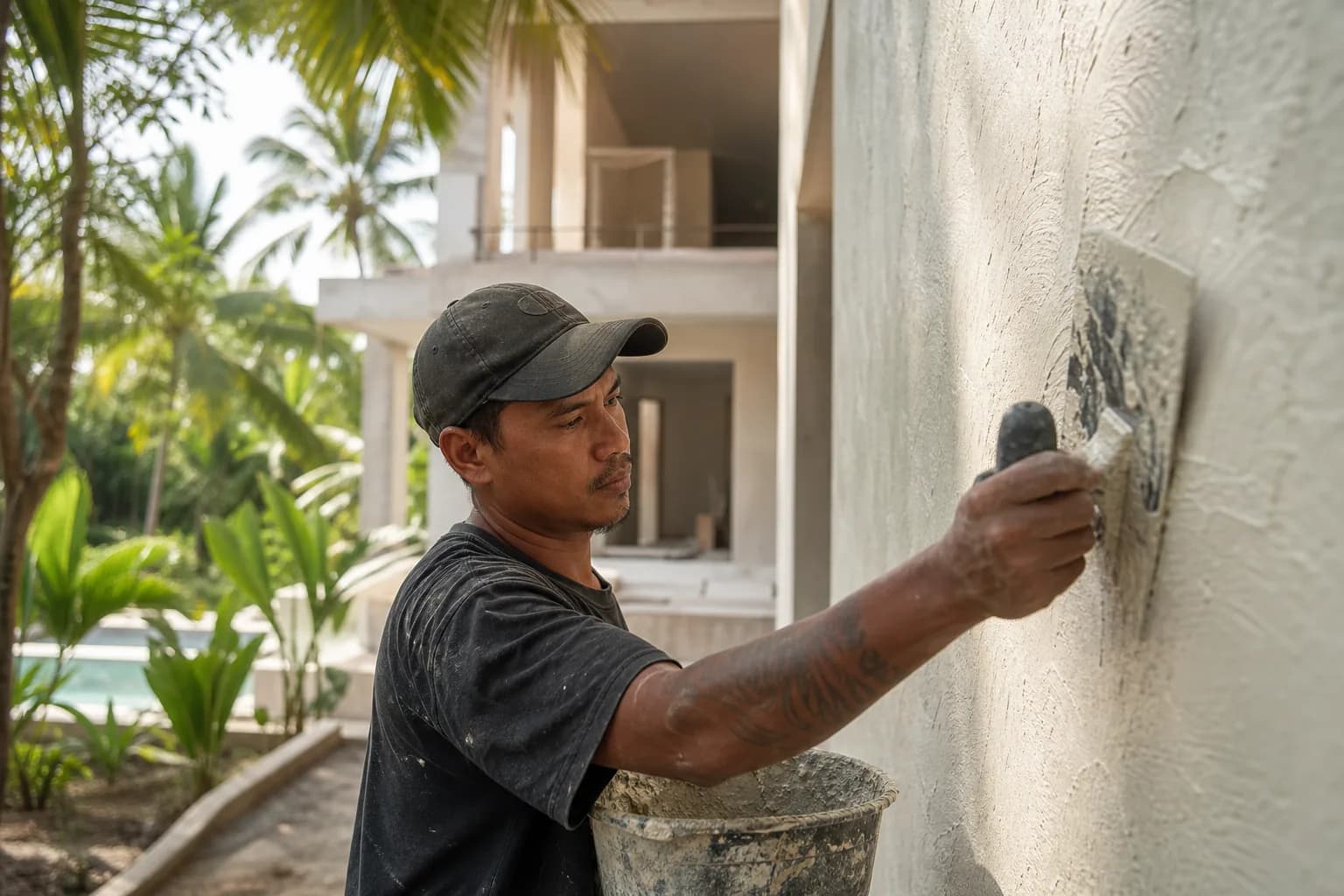
Resin-Infused Plaster Finishes: Anti-Salt Systems Bali
Expert technical guide: Resin-Infused Plaster Finishes: Anti-Salt Systems Bali
8 min read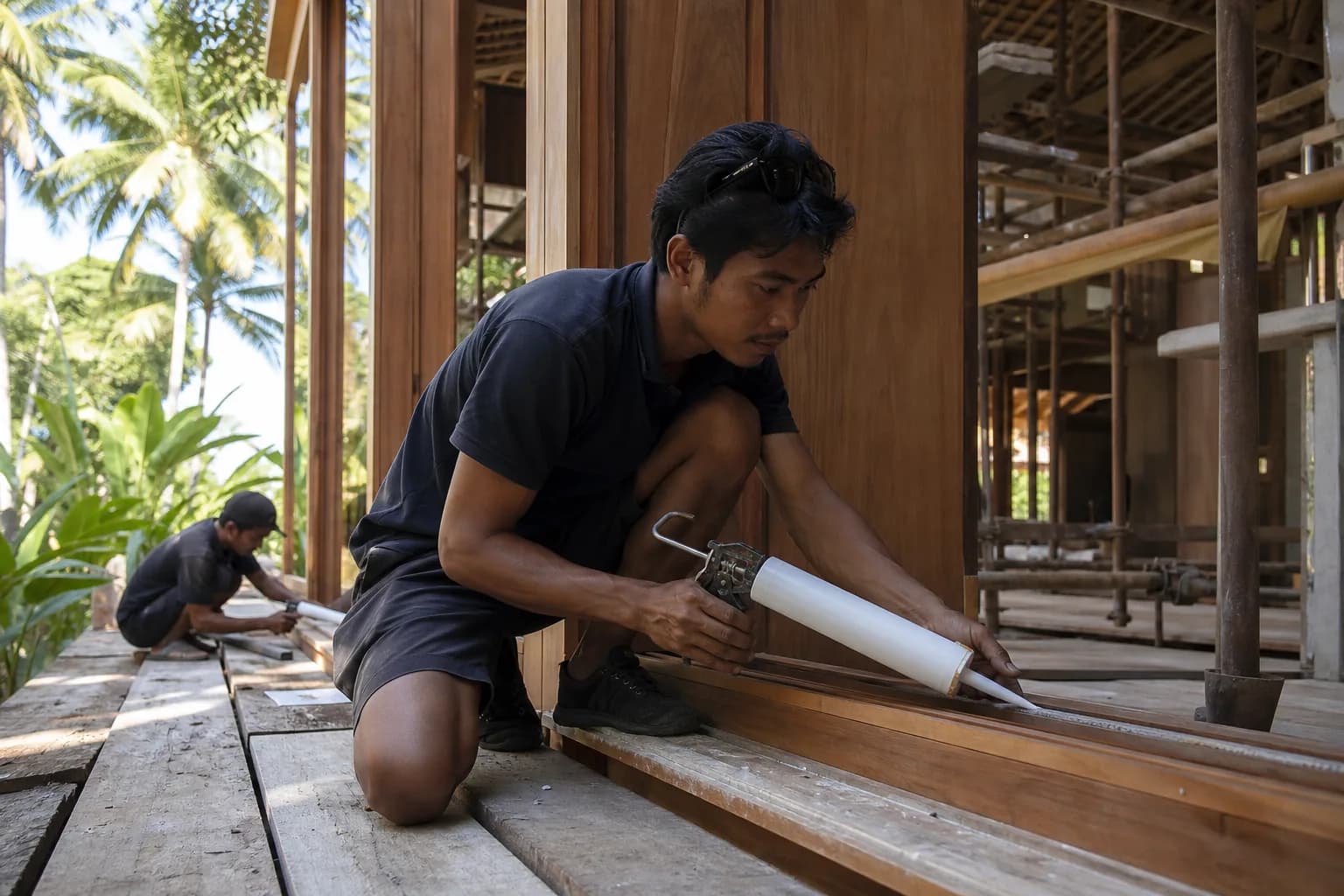
Prefinished Timber Joinery: Silicone Seals Fixings Bali
Professional prefinished timber joinery installation in Bali with silicone seals and fixings for durable weatherproof performance and a premium finish.
10 min read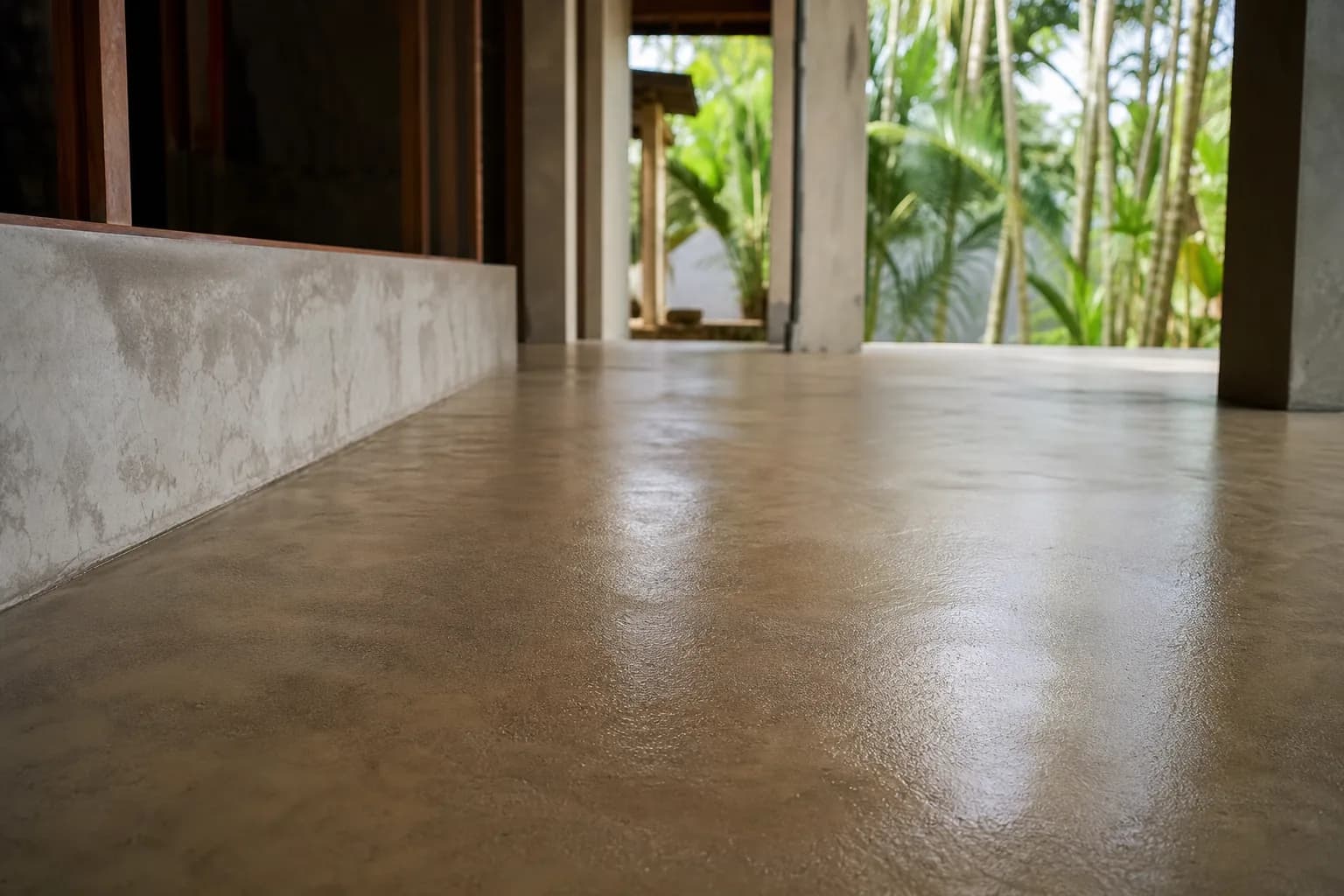
Polished Concrete Microtopping: Surface Prep Sealants Bali
Discover Bali s polished concrete microtopping: expert surface prep, durable sealants, and a flawless finish for modern floors with minimal maintenance.
9 min read