Canggu Tidal Flood Zone: Foundation Elevation Requirements Bali
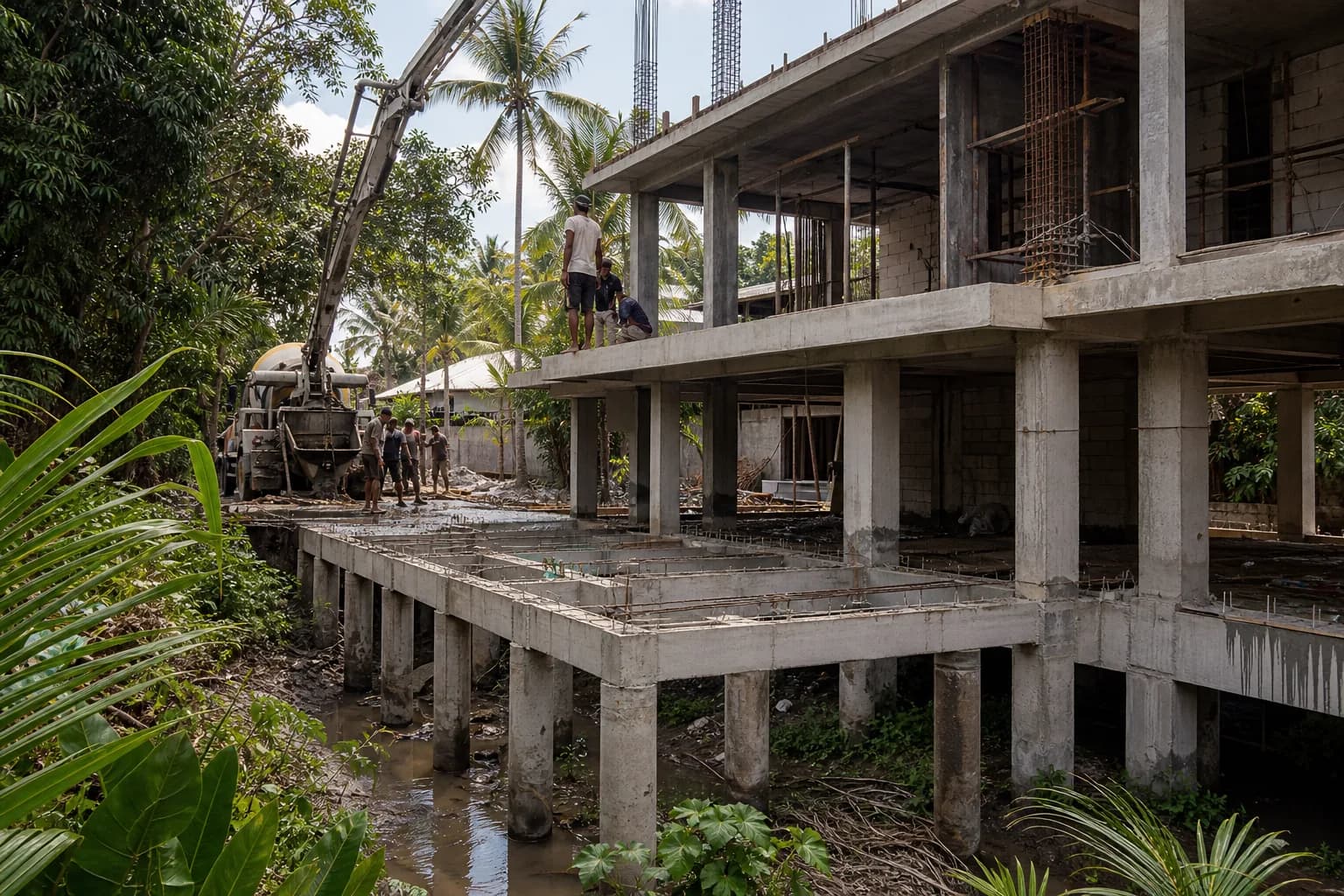
Canggu’s Coastal Foundation Challenge: Engineering Above Tidal Flood Risk
Canggu’s beachfront and near-coastal zones face a critical engineering challenge that many foreign buyers discover only after land purchase: tidal flood vulnerability requiring elevated foundation systems that can add $18,000–$45,000 to construction budgets. Properties within 300 meters of Canggu’s coastline—particularly in Berawa, Batu Bolong, and Echo Beach areas—sit in zones where seasonal king tides, monsoon storm surges, and rising water tables create foundation flooding risks that standard slab-on-grade systems cannot address. Indonesia’s coastal building regulations, combined with Bali’s 100-meter setback enforcement and local Perbekel (village head) requirements, mandate specific foundation elevation standards that vary by distance from high-tide lines and local flood history, yet these requirements remain undocumented in English-language resources, leaving international villa developers vulnerable to costly mid-construction redesigns or long-term structural failure.
Technical Foundation Elevation Standards for Canggu Tidal Zones
Canggu’s tidal flood zone foundation requirements operate under a three-tier regulatory framework that combines national coastal protection laws, Badung Regency building codes, and customary village (adat) construction standards. The Indonesian Ministry of Public Works and Housing (PUPR) classifies coastal areas within 500 meters of the high-tide line as “coastal influence zones” requiring elevated habitable floor levels, though specific elevation minimums are determined by local government technical teams (Tim Teknis) during the IMB (Izin Mendirikan Bangunan) building permit review process.
For Canggu properties between 100–300 meters from the coastline, foundation elevation requirements typically mandate habitable floor levels at minimum 80–120 centimeters above existing grade, measured from the highest recorded seasonal water table or documented flood event within the past decade. This standard applies to all primary living spaces, bedrooms, and electrical/mechanical systems, though non-habitable spaces like parking, storage, or open pavilions may be constructed at grade level with proper drainage systems.
The engineering rationale centers on three distinct flood mechanisms affecting Canggu’s coastal strip: (1) seasonal king tides occurring during December–February full moon cycles that can raise sea levels 40–60 centimeters above mean high tide, (2) monsoon-driven storm surge events that push seawater inland through Canggu’s porous volcanic sand substrate, and (3) rising groundwater tables during peak rainy season (January–March) when inland runoff saturates the coastal aquifer. Properties in Berawa’s low-lying rice field conversion zones face additional risk from blocked historical drainage channels, where water tables can rise to within 30 centimeters of surface grade during heavy rainfall periods.
Foundation elevation is achieved through three primary structural systems, each with distinct cost and performance characteristics. Raised slab systems utilize engineered fill (typically crushed volcanic stone or stabilized sand) compacted in 20-centimeter lifts to create an elevated building pad, topped with a reinforced concrete slab foundation. This approach works for elevations up to 100 centimeters and costs $45–$75 per square meter of building footprint including geotextile separation layers and perimeter retaining structures. Pier-and-beam systems employ reinforced concrete columns (typically 30×30 centimeters) extending 150–200 centimeters below grade to stable bearing strata, supporting a suspended reinforced concrete floor slab—this system handles elevations of 80–150 centimeters and costs $85–$120 per square meter. Hybrid systems combine perimeter pier foundations with interior engineered fill, optimizing cost while maintaining structural integrity for elevations in the 100–120 centimeter range at $65–$95 per square meter.
Critical to Canggu’s coastal construction is the geotechnical reality of Bali’s volcanic sand substrate. Standard soil bearing capacity tests (sondir/CPT testing) in near-coastal Canggu typically reveal 15–25 meters of loose to medium-dense sand before reaching competent bearing strata, with groundwater encountered at 1.5–4 meters depth depending on season and distance from shore. This soil profile creates two engineering challenges: (1) settlement risk if fill materials are inadequately compacted, potentially causing 3–8 centimeters of differential settlement over 2–5 years, and (2) capillary rise of saline groundwater through foundation elements, requiring waterproofing membranes and corrosion-resistant reinforcement detailing.
The IMB permit process for elevated foundations in Canggu’s tidal zone requires submission of a structural engineering calculation package (perhitungan struktur) stamped by an Indonesian-licensed civil engineer (Insinyur Sipil), including soil investigation reports, foundation design drawings showing elevation benchmarks tied to local datum points, and drainage plans demonstrating positive surface water flow away from structures. Badung Regency’s technical review team cross-references proposed elevations against their coastal flood risk mapping (peta rawan banjir), which incorporates historical flood data from village records and BMKG (Indonesian meteorology agency) tidal predictions.
Hidden Risks Buyers Miss in Canggu’s Coastal Construction Zone
The most costly oversight in Canggu tidal zone construction is purchasing land without verifying the elevation requirement during due diligence, then discovering mid-design that an additional 100 centimeters of foundation height is mandatory—transforming a planned single-story villa into a structure requiring extensive stair access and potentially violating the buyer’s aesthetic vision. This scenario is particularly common in Berawa’s former rice field parcels, where land is sold at grade level 60–80 centimeters below adjacent road elevation, necessitating even greater fill heights to achieve required elevations above existing grade.
Drainage infrastructure represents another critical failure point. Elevated foundations create a vertical transition between building floor level and surrounding grade that must be managed through engineered surface drainage systems—typically French drains, perimeter swales, or subsurface drainage networks. Properties that elevate buildings without addressing site-wide drainage often experience water pooling around foundation perimeters during rainy season, leading to soil saturation, foundation undermining, and moisture infiltration through floor slabs. The cost to retrofit proper drainage after construction completion typically runs $8,000–$15,000 for a standard villa footprint.
Coastal groundwater salinity poses a long-term durability threat that standard construction specifications don’t address. Canggu’s near-coastal groundwater contains 3,000–8,000 ppm dissolved salts (compared to <500 ppm for inland areas), which accelerates corrosion of steel reinforcement in concrete foundations. Without specifying epoxy-coated rebar, increased concrete cover (5–7 centimeters instead of standard 3–4 centimeters), and waterproofing membranes, foundation elements can experience reinforcement corrosion within 5–8 years, manifesting as concrete spalling and structural capacity loss. Upgrading to marine-grade foundation detailing adds $12–$18 per square meter but prevents expensive remediation.
Step-by-Step Process: Navigating Canggu Tidal Zone Foundation Requirements
Step 1: Pre-Purchase Elevation Assessment (Before Land Acquisition)
Before committing to land purchase in Canggu’s coastal zone, commission a preliminary site assessment that includes: (1) topographic survey establishing existing grade elevations tied to a known benchmark (typically the adjacent road centerline), (2) verification of distance from the legal high-tide line (garis pantai) using official coastal boundary maps from the Badung Marine and Fisheries Office, and (3) consultation with the local Perbekel office to determine if the specific land parcel has documented flood history or village-level elevation requirements. This assessment costs $400–$700 and should be completed before signing any land purchase agreement or lease, as it may reveal elevation requirements that make the project financially unviable.
Step 2: Geotechnical Investigation and Foundation Design
Once land is secured, engage a qualified geotechnical consultant to perform soil investigation including CPT (sondir) testing to 15–20 meters depth and groundwater monitoring during wet season months. The geotechnical report should specifically address: bearing capacity at various depths, groundwater elevation and salinity, settlement predictions for different fill scenarios, and foundation system recommendations. This data feeds into structural engineering design by an Indonesian-licensed Insinyur Sipil who prepares foundation drawings showing required elevations, structural details, and material specifications. Combined geotechnical investigation and foundation engineering costs $2,200–$3,800 for a typical 200–300 square meter villa.
Step 3: IMB Permit Submission with Elevation Documentation
The building permit (IMB) application to Badung Regency must include the structural engineering package with clear documentation of proposed foundation elevations and compliance with coastal setback regulations. The technical review team (Tim Teknis) will verify that habitable floor elevations meet their flood risk criteria—this review adds 2–4 weeks to the standard IMB timeline. If the proposed elevation is deemed insufficient, the team will issue a correction notice (perbaikan) requiring design revision before permit approval. Working with a construction company experienced in Canggu coastal projects, like Teville’s engineering team, ensures that initial submissions meet technical requirements and avoid costly revision cycles.
Step 4: Foundation Construction with Quality Control
Foundation construction in Canggu’s tidal zone requires strict quality control protocols: engineered fill must be placed in maximum 20-centimeter lifts with compaction testing (typically sand cone density tests) achieving 95% modified Proctor density, concrete must use sulfate-resistant cement (Type V) with maximum 0.4 water-cement ratio for durability in saline conditions, and reinforcement must maintain specified cover distances verified before concrete placement. The foundation contractor should provide compaction test certificates and concrete cylinder test results (minimum 25 MPa at 28 days) as quality documentation. Foundation work for an elevated system typically requires 3–5 weeks including fill placement, curing time, and quality testing.
Step 5: Drainage Integration and Long-Term Monitoring
As foundation work completes, install the site drainage system designed to manage the elevation transition—this includes perimeter drains, surface grading directing water away from the building, and connection to street drainage infrastructure or on-site infiltration systems. Post-construction, establish a monitoring protocol during the first two rainy seasons to verify drainage performance and check for any settlement indicators (cracks in floor slabs, separation at wall-floor junctions). Early detection of drainage or settlement issues allows for corrective action before major damage occurs.
Realistic Cost Ranges for Canggu Tidal Zone Foundation Systems
Foundation elevation costs in Canggu’s tidal zone vary significantly based on required height, soil conditions, and structural system selection. For a typical 250-square-meter villa footprint requiring 100-centimeter elevation above existing grade, expect the following cost ranges:
- Raised slab system (engineered fill + reinforced slab): $11,000–$18,500 including geotextile layers, compacted volcanic stone fill, perimeter retaining walls, and 15-centimeter reinforced concrete slab with waterproofing membrane
- Pier-and-beam system (suspended slab): $21,000–$30,000 including soil investigation, pier foundations to competent bearing strata, tie beams, and suspended reinforced concrete floor system
- Hybrid system (perimeter piers + interior fill): $16,000–$24,000 combining perimeter structural support with cost-effective interior fill zones
Additional costs specific to tidal zone construction include: marine-grade concrete specifications and epoxy-coated reinforcement ($3,000–$5,500 premium for 250 sqm footprint), comprehensive site drainage system ($6,500–$12,000 depending on site size and complexity), geotechnical investigation and foundation engineering ($2,200–$3,800), and extended construction timeline costs due to fill compaction and curing requirements (typically adding 3–4 weeks to the foundation phase).
These foundation costs represent 8–12% of total construction budget for investment-grade villas in Canggu’s coastal zone, where complete turnkey construction typically ranges $1,200–$1,800 per square meter. Properties requiring elevations exceeding 120 centimeters or facing particularly challenging soil conditions may see foundation costs reach 15% of total budget. For detailed cost estimation specific to your Canggu coastal project, request a technical build cost assessment with site-specific parameters.
Frequently Asked Questions: Canggu Tidal Flood Zone Foundations
How do I determine if my Canggu land parcel requires elevated foundations?
Foundation elevation requirements depend on three factors: distance from the legal high-tide line (properties within 300 meters typically require elevation), documented flood history in village records (available from the local Perbekel office), and site-specific groundwater conditions during wet season. Commission a pre-purchase site assessment including topographic survey and Perbekel consultation before land acquisition. Properties in Berawa’s former rice field areas and within 200 meters of Batu Bolong or Echo Beach coastlines almost always require 80–120 centimeter elevation for habitable spaces. The Badung Regency technical review team makes the final determination during IMB permit review based on their coastal flood risk mapping.
Can I build a ground-level villa in Canggu’s coastal zone to avoid elevation costs?
No—if your property falls within the designated tidal flood zone and the Tim Teknis determines elevation is r
 3124 m²6 month(s)from 123.000 USD
TALA 8
 3173 m²6 month(s)from 125.000 USD
TALA FOUR
 3180 m²7 month(s)from 142.000 USD
Vasudeva
 164 m²7 month(s)from 79.000 USD
TALA TWO
 3104 m²11 month(s)from 99.000 USD
TALA 100
 1from 198.000 USD
Private: Haridas Villas
 2144 m²11 month(s)from 104.000 USD
Narayana
 4344 m²16 month(s)from 290.000 USD
Radha
 3127 m²9 month(s)from 177.000 USD
Mukunda
164 m²7 month(s)from 79.000 USDPrivate: Haridas Villas, Tegallalang

Want to calculate?
 172 m²8 month(s)from 120.000 USD
Keshava
Start With Real Numbers, Not Guesses
Before buying land or finalizing a design, check the realistic build cost range for your project in Bali.
Our team reviews your inputs and gives a grounded estimate.
Available lands
 3100 m²20 min$ 272968Bali, Tabanan
 550 m²15 min$ 164594Bali, Mengwi
 18900 m²2 min$ 6912931Bali, Pecatu
 1000 m²10 min$ 303571Bali, Tabanan
 422 m²15 min$ 93547Bali, Kerobokan
 204 m²5 min$ 40899Bali, Kedungu
 400 m²15 min$ 67192Bali, Tabanan
 2000 m²15 min$ 523000Bali, Canggu
 1362 m²15 min$ 335468Bali, Tumbak
 3900 m²10 min$ 432266Bali, Tabanan
 5000 m²8 min$ 424877Bali, Ungasan
 325 m²15 min$ 44472Bali, Ungasan
 6000 m²10 min$ 1330049Bali, Kutuh South Bali
 1700 m²10 min$ 632257Bali, Kuta
 1000 m²10 min$ 280788Bali, Pecatu
Essential Bali build & buy guides
- Bali villa construction cost per m² in 2026
- How much will your villa cost? Calculator
- Building a villa in Bali: the complete guide
- Buying land in Bali: step-by-step for foreigners
- Bali villa investment: yields, risks, returns
- Leasehold vs freehold: what foreigners can own
- Construction defect liability & 10-year warranty
- Bali building codes and construction standards
Related guides
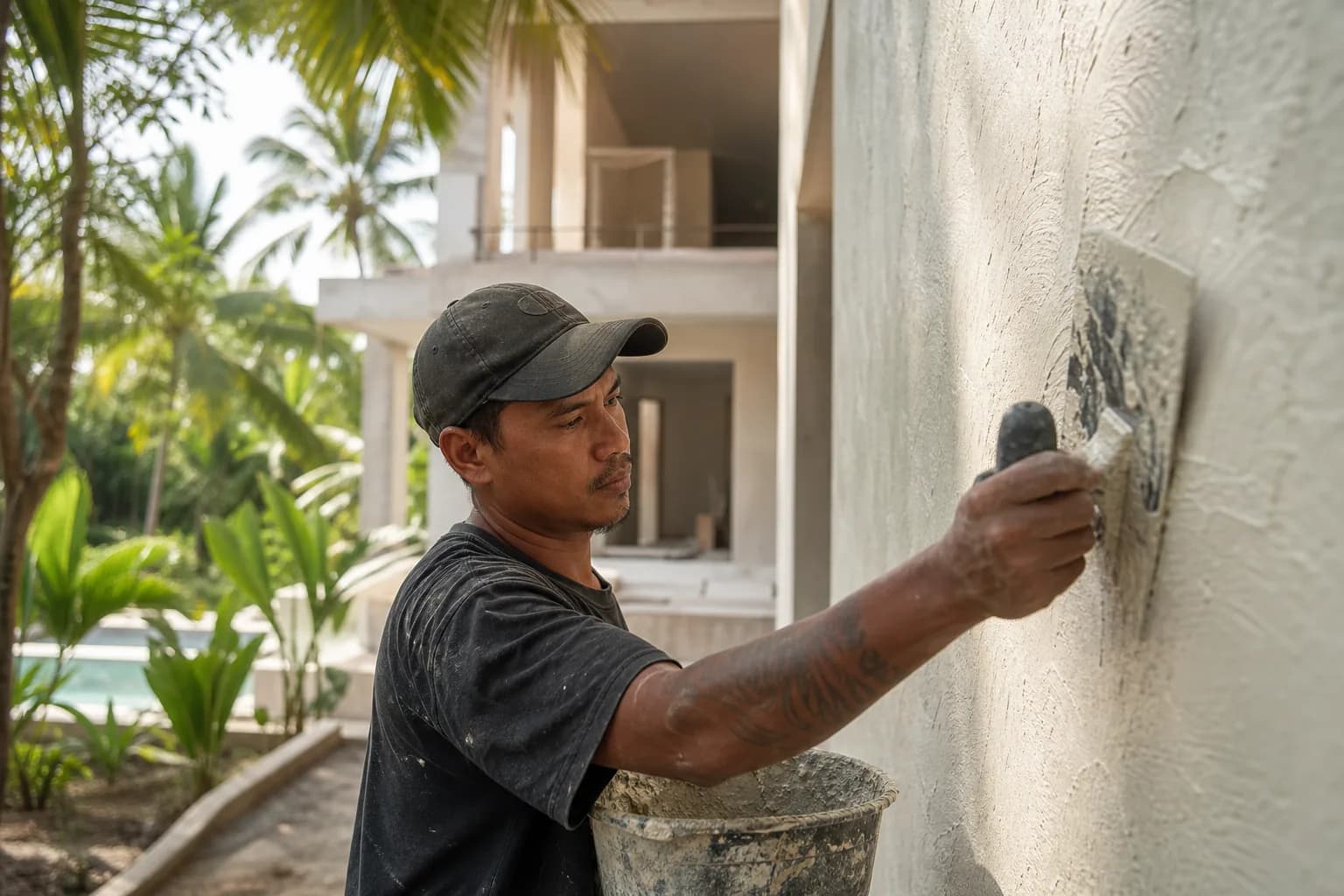
Resin-Infused Plaster Finishes: Anti-Salt Systems Bali
Expert technical guide: Resin-Infused Plaster Finishes: Anti-Salt Systems Bali
8 min read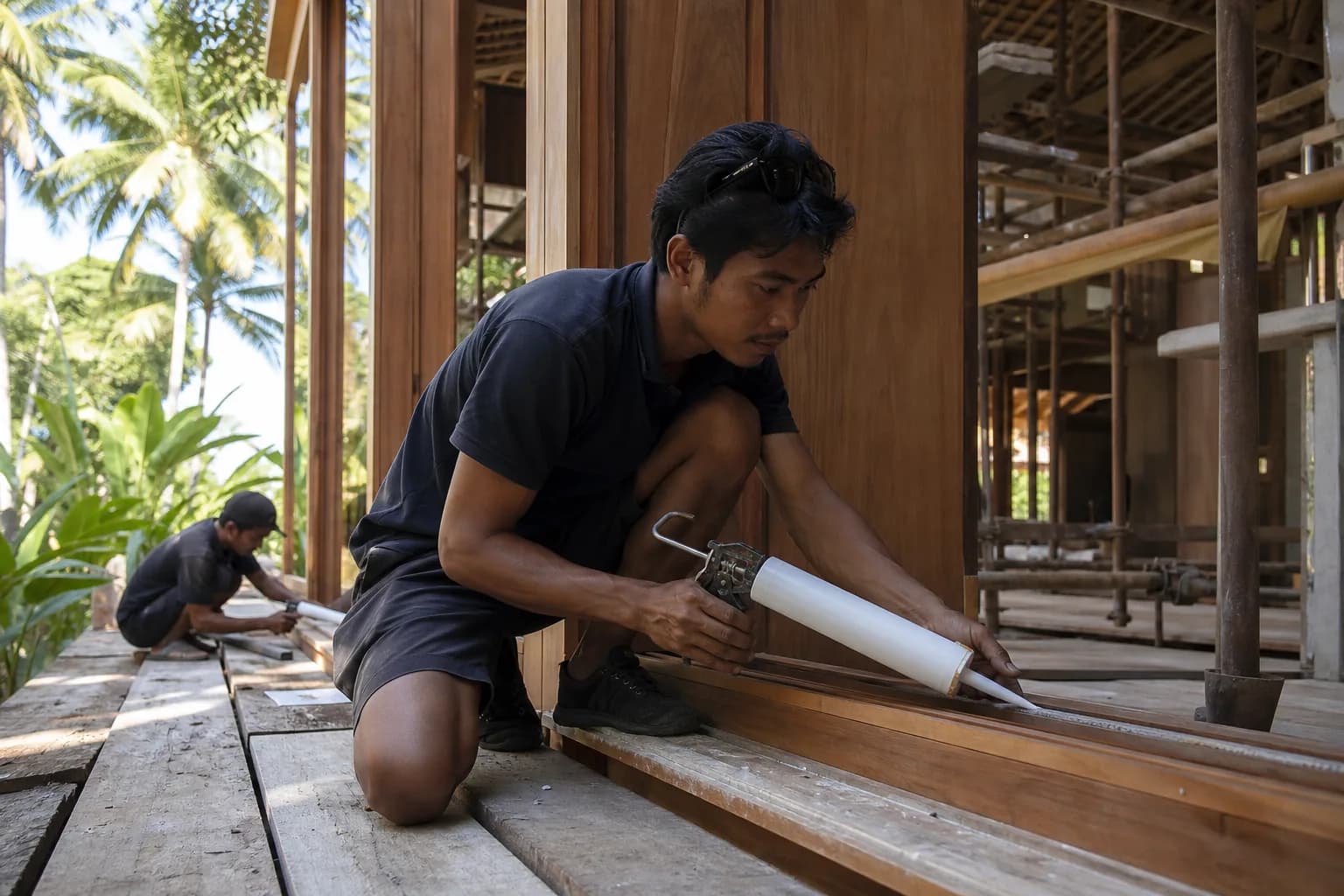
Prefinished Timber Joinery: Silicone Seals Fixings Bali
Professional prefinished timber joinery installation in Bali with silicone seals and fixings for durable weatherproof performance and a premium finish.
10 min read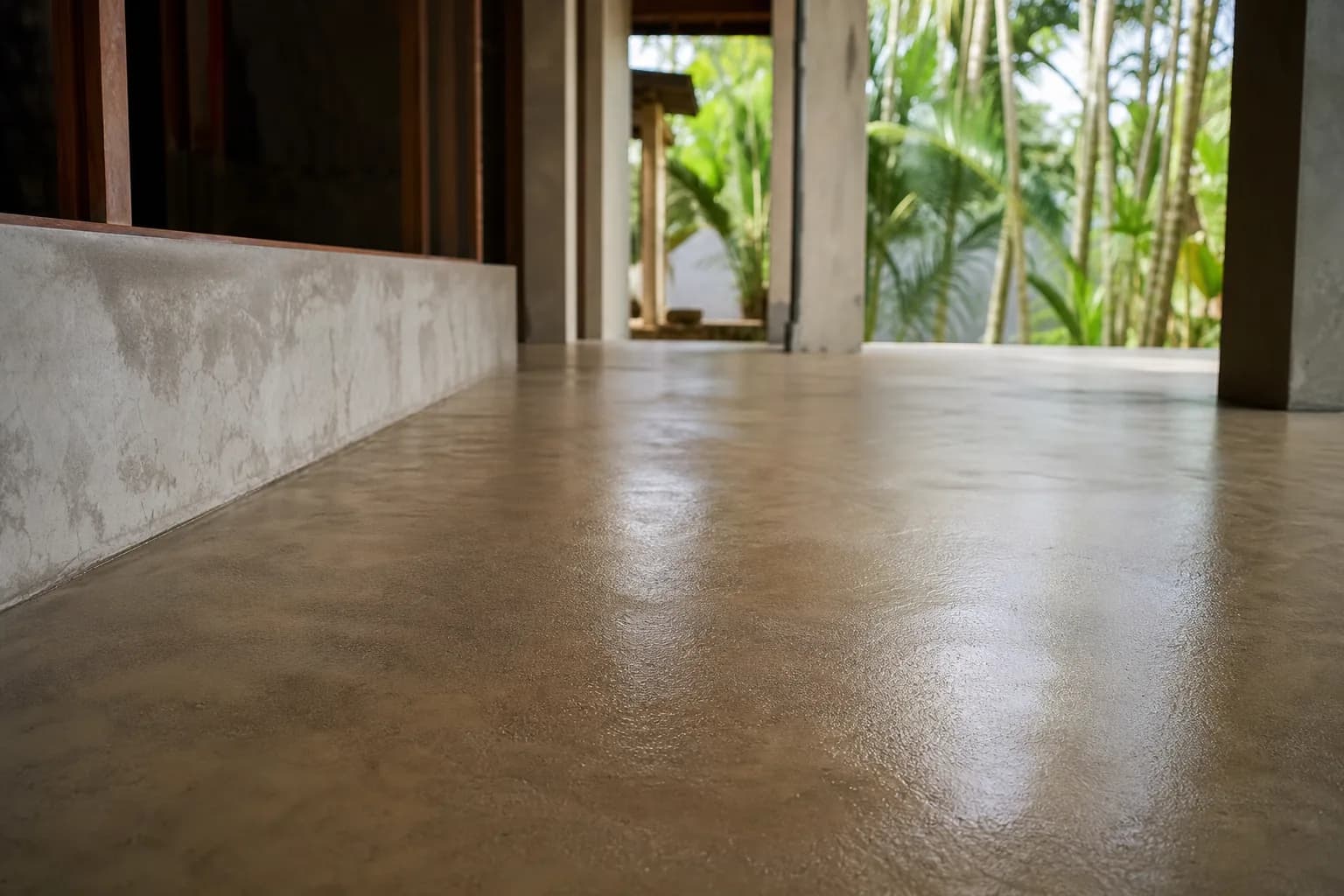
Polished Concrete Microtopping: Surface Prep Sealants Bali
Discover Bali s polished concrete microtopping: expert surface prep, durable sealants, and a flawless finish for modern floors with minimal maintenance.
9 min read