Bukit Peninsula Limestone Foundation Anchoring Costs Bali
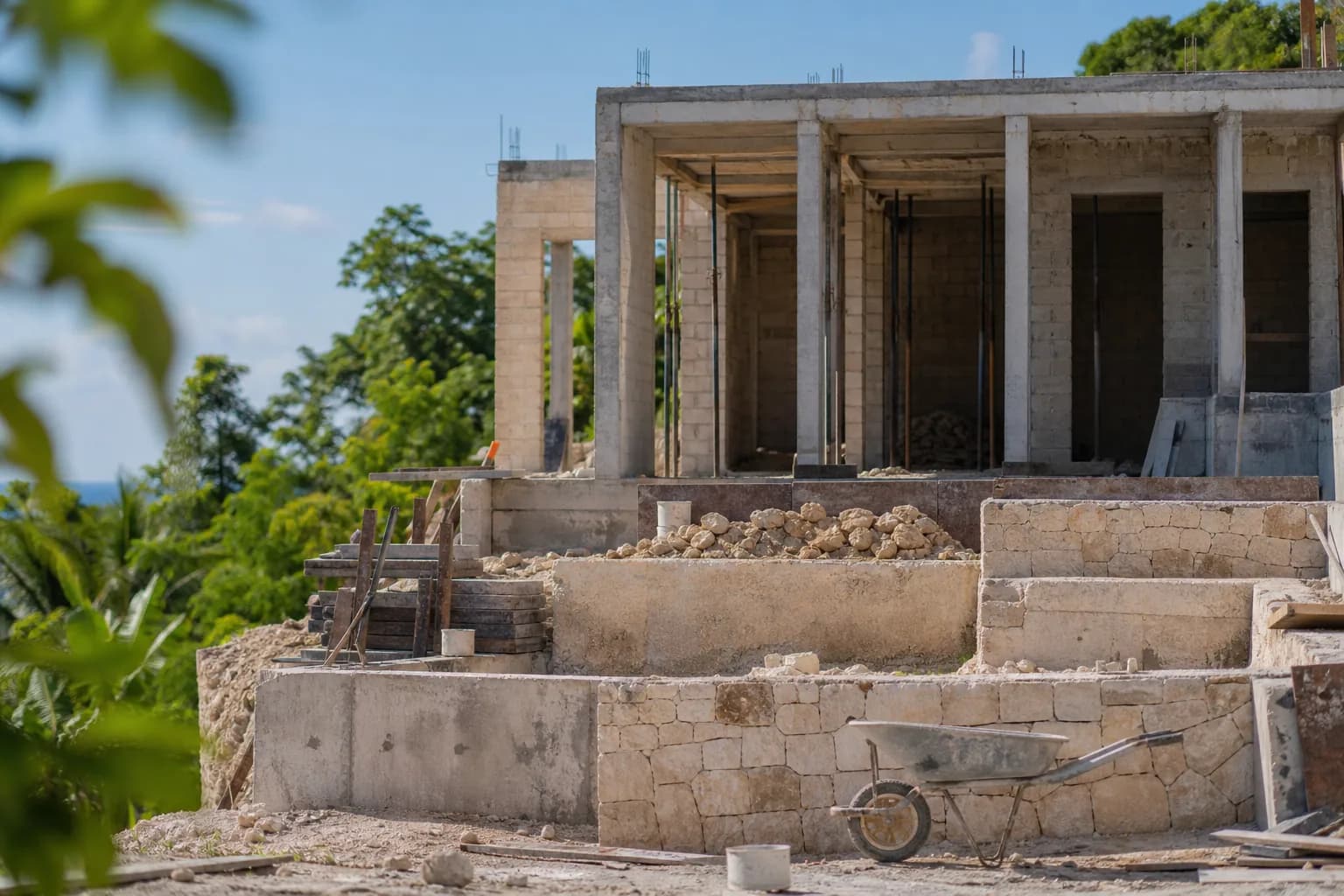
Why Limestone Foundation Anchoring on Bukit Peninsula Demands Specialized Engineering
Building on Bukit Peninsula’s limestone substrate presents a unique structural challenge that separates amateur construction from engineered resilience. The porous, karstic limestone formations underlying Uluwatu, Pecatu, Ungasan, and Jimbaran create foundation conditions fundamentally different from Bali’s volcanic soil regions. When developers underestimate the specialized anchoring requirements and seismic load calculations specific to limestone bedrock, they risk catastrophic foundation failure, progressive settlement, and non-compliance with Indonesia’s evolving seismic codes. The question isn’t whether limestone foundations require specialized treatment—it’s whether your construction partner understands the geotechnical testing protocols, chemical anchor specifications, and seismic design parameters that distinguish compliant structures from liability risks in Bali’s most prestigious coastal development zone.
Technical Engineering Requirements for Limestone Foundation Systems in Bukit
Bukit Peninsula’s geological composition consists primarily of Miocene-era coral limestone with variable density, porosity ranging from 15-40%, and compressive strength between 5-25 MPa depending on weathering exposure. This heterogeneous substrate requires foundation engineering approaches that differ substantially from standard Bali villa construction on volcanic soils.
Geotechnical Investigation Protocols
Before any foundation design begins, proper limestone site assessment requires core sampling at minimum 3-meter intervals across the building footprint, extending to depths of 8-12 meters or until competent bedrock is reached. Standard SPT (Standard Penetration Test) methods used in soil analysis provide insufficient data for limestone formations. Instead, rock quality designation (RQD) testing, unconfined compression testing, and permeability analysis through Lugeon tests become essential baseline requirements.
The limestone’s dissolution features—including subsurface voids, solution channels, and weathered zones—create unpredictable bearing capacity variations within single building plots. A geotechnical investigation that costs $2,500-4,500 for a 500-square-meter site isn’t an optional expense; it’s the foundation data that determines whether your anchoring system will perform as engineered or fail progressively over 5-10 years as differential settlement occurs.
Anchor System Specifications for Seismic Loads
Indonesia’s seismic design code SNI 1726:2019 classifies Bali within seismic zone 4, requiring structures to resist horizontal ground accelerations up to 0.5g. When combined with limestone’s brittle failure characteristics, this necessitates chemical anchor systems rather than mechanical expansion anchors for critical structural connections.
Epoxy-based chemical anchors with minimum embedment depths of 12-15 times the anchor diameter provide the pull-out resistance required for seismic load transfer. For M16 anchors (16mm diameter), this translates to 192-240mm embedment into competent limestone. The anchor spacing must account for edge distances (minimum 10 times diameter) and inter-anchor spacing (minimum 4 times embedment depth) to prevent cone failure during seismic events.
Hilti HIT-HY 200 or equivalent two-component hybrid mortar systems rated for seismic category C2 applications represent the minimum specification for structural anchoring in Bukit limestone. These systems achieve design bond strengths of 18-22 MPa in medium-density limestone, but installation quality control becomes critical—hole cleaning procedures, injection techniques, and curing protocols directly impact ultimate capacity.
Foundation Design Approaches
Three primary foundation systems prove viable for Bukit limestone conditions, each with distinct cost and performance profiles. Drilled pier foundations with rock sockets extending 1.5-2.5 meters into competent limestone provide the highest bearing capacity (800-1,200 kN per pier) and best resistance to differential settlement. The drilling process requires specialized rock augers and experienced operators who can identify void spaces and adjust pier locations accordingly.
Grade beam systems supported on rock anchors offer a middle-ground solution where limestone quality is consistent. This approach uses chemical anchors at 1.2-1.8 meter spacing to secure reinforced concrete beams directly to bedrock, eliminating the need for deep excavation. However, this system demands thorough void detection through ground-penetrating radar or seismic refraction surveys before anchor placement.
Raft foundations with perimeter anchoring provide the most conservative approach for sites with variable limestone quality. The monolithic concrete slab distributes loads across the entire building footprint while perimeter anchors prevent lateral displacement during seismic events. This system typically requires 150-200mm slab thickness with dual-layer reinforcement (top and bottom mats) and perimeter anchors at 600-900mm centers.
Seismic Detailing Requirements
Beyond anchor specifications, seismic-compliant construction in limestone areas requires specific structural detailing. Column-to-foundation connections must incorporate anchor groups (minimum 4 anchors per column) with supplementary confinement reinforcement extending 500mm above the foundation level. This detailing prevents brittle failure at the critical structure-foundation interface during ground motion.
The limestone’s inability to provide passive lateral resistance comparable to cohesive soils means that tie beams connecting isolated footings or piers become mandatory rather than optional. These grade-level beams, typically 300x400mm minimum section, must be designed for tension and compression forces equal to 10% of the supported vertical load—a requirement often overlooked in non-engineered construction.
Hidden Risks in Limestone Foundation Construction
The most dangerous assumption in Bukit construction is treating limestone as uniform bedrock. Developers who skip comprehensive geotechnical investigation discover foundation problems only after construction begins—when drilling reveals unexpected voids, weathered zones, or variable rock quality that invalidates the original foundation design. Remediation at this stage costs 3-5 times more than proper initial investigation.
Chemical anchor installation quality represents another critical vulnerability. Unlike mechanical anchors where installation errors are immediately visible, improperly installed chemical anchors appear identical to correctly installed systems until load testing or actual seismic events reveal inadequate capacity. Common installation failures include insufficient hole cleaning (leaving limestone dust that prevents bond), incorrect mixing ratios, inadequate injection depth, and premature loading before full cure. These errors reduce anchor capacity by 40-70% while remaining invisible during visual inspection.
The interaction between limestone chemistry and reinforcement corrosion creates long-term durability risks specific to coastal Bukit locations. Limestone’s alkaline nature (pH 8-9) provides some corrosion protection, but chloride penetration from sea spray combined with moisture infiltration through limestone’s porous structure accelerates reinforcement corrosion in inadequately covered concrete. Minimum concrete cover of 50mm for foundations and 40mm for grade beams becomes non-negotiable, yet many contractors default to 30mm cover standards appropriate for interior elements.
Void migration presents a unique long-term risk in karstic limestone. Subsurface water flow through solution channels can progressively enlarge existing voids or create new cavities over 10-20 year timeframes. Foundation systems that don’t account for potential void development—through conservative safety factors, redundant load paths, or monitoring provisions—may perform adequately initially but develop distress as geological conditions evolve. This risk intensifies in areas with modified drainage patterns from adjacent development.
Step-by-Step Foundation Engineering Process for Limestone Sites
Phase 1: Site Investigation and Geological Assessment (3-4 Weeks)
Engage a geotechnical consultant licensed in Indonesia to conduct subsurface investigation. For typical villa sites (400-600 square meters), this requires minimum 4-6 boreholes with continuous core sampling to 10-meter depth. The investigation must include laboratory testing: unconfined compression tests on representative samples, RQD calculation for each core run, and permeability testing if groundwater is encountered. Request ground-penetrating radar survey as supplementary investigation to identify shallow voids between borehole locations.
The deliverable—a geotechnical investigation report—must include specific foundation recommendations with allowable bearing pressures, anchor embedment requirements, and seismic design parameters. This document becomes the basis for structural engineering and should be completed before architectural design is finalized, as foundation requirements may influence building placement, footprint, or structural system selection.
Phase 2: Foundation Engineering Design (2-3 Weeks)
Provide the geotechnical report to a structural engineer experienced in limestone foundation design and Indonesian seismic codes. The engineer develops foundation drawings specifying: pier locations and depths, anchor specifications and layouts, reinforcement detailing, concrete specifications (minimum K-300 grade for foundations in limestone), and construction sequence requirements.
Critical design outputs include anchor schedules detailing chemical anchor type, diameter, embedment depth, edge distances, and installation procedures. For seismic design, request explicit load calculations showing how seismic forces transfer through anchors into bedrock, including safety factors applied. The design should address construction tolerances—how much deviation in anchor location or embedment depth remains acceptable before structural capacity is compromised.
Phase 3: Permit Submission and IMB Approval (6-12 Weeks)
Submit foundation drawings as part of the IMB (Izin Mendirikan Bangunan) application to the local building authority. Bukit Peninsula falls under Badung Regency jurisdiction, where building permit review includes structural engineering verification. The geotechnical report and seismic design calculations must accompany the application. Budget 8-10 weeks for standard review, longer if design revisions are required.
During permit review, prepare for potential technical questions regarding anchor specifications or seismic detailing. Having the structural engineer available for clarification expedites approval. Some jurisdictions require additional review by regional technical committees for structures exceeding certain heights or complexity thresholds.
Phase 4: Foundation Construction and Quality Control (4-6 Weeks)
Foundation construction begins with precise layout surveying—anchor locations must be positioned within ±25mm tolerance to maintain design edge distances. Drilling operations require experienced operators using appropriate equipment: rotary percussion drills for limestone, not standard soil augers. Each drilled hole requires inspection before anchor installation to verify depth, diameter, and absence of voids or weak zones.
Chemical anchor installation follows manufacturer protocols exactly: hole cleaning with compressed air and wire brush (minimum 3 cycles), injection from hole bottom to prevent air pockets, anchor insertion with rotation to ensure complete mortar coverage, and cure time compliance before loading (typically 24-72 hours depending on temperature). Document each anchor installation with photographs and installation records—this documentation proves invaluable if future structural modifications require anchor capacity verification.
Concrete placement for foundations requires continuous pours to prevent cold joints, proper vibration to ensure complete consolidation around reinforcement and anchors, and adequate curing (minimum 7 days wet curing or curing compound application). In Bukit’s coastal environment, specify concrete with supplementary cementitious materials (fly ash or slag) to improve chloride resistance and reduce permeability.
Phase 5: Load Testing and Verification (1 Week)
For critical structures or where limestone quality varies significantly, conduct pull-out testing on sacrificial test anchors (typically 2-3 anchors per project). Load test anchors to 150% of design load to verify installation quality and actual capacity. This testing, while adding $800-1,200 to project costs, provides definitive confirmation that anchor systems will perform as designed during seismic events.
Realistic Cost Ranges for Limestone Foundation Systems
Foundation costs in Bukit Peninsula’s limestone areas range from $1,000 to $1,800 per square meter of building footprint, significantly higher than the $400-700 per square meter typical for volcanic soil foundations in Canggu or Ubud. This cost differential reflects specialized investigation, engineering, materials, and construction expertise required for limestone conditions.
Geotechnical investigation costs $2,500-4,500 for standard villa sites, with pricing scaling based on site area and investigation depth. Structural engineering fees for foundation design range from $1,800-3,500 depending on building complexity and whether seismic analysis requires advanced modeling. These upfront engineering costs represent 8-12% of total foundation expenditure but determine whether the remaining 88-92% delivers adequate performance.
Material costs for limestone-specific foundation systems include: chemical anchor systems at $15-28 per anchor installed (including mortar, anchor rod, installation labor), specialized drilling at $80-150 per linear meter for pier holes, and higher concrete volumes due to deeper embedments. A typical 200-square-meter villa foundation requires 120-180 chemical anchors, 40-60 cubic meters of concrete, and 2,800-3,500 kg of reinforcement steel.
Construction timeline for limestone foundations extends 4-6 weeks compared to 2-3 weeks for standard soil foundations. This duration accounts for drilling time (limestone drilling proceeds at 1-2 meters per hour versus 4-6 meters per hour in soil), anchor cure times between installation and loading, and additional quality control inspections. Attempting to compress t
 3104 m²11 month(s)from 99.000 USD
TALA 100
 3124 m²6 month(s)from 123.000 USD
TALA 8
 1from 198.000 USD
Private: Haridas Villas

Want to calculate?
 3180 m²7 month(s)from 142.000 USD
Vasudeva
 3127 m²9 month(s)from 177.000 USD
Mukunda
 4344 m²16 month(s)from 290.000 USD
Radha
 164 m²7 month(s)from 79.000 USD
TALA TWO
 172 m²8 month(s)from 120.000 USD
Keshava
164 m²7 month(s)from 79.000 USDPrivate: Haridas Villas, Tegallalang
 3173 m²6 month(s)from 125.000 USD
TALA FOUR
 2144 m²11 month(s)from 104.000 USD
Narayana
Start With Real Numbers, Not Guesses
Before buying land or finalizing a design, check the realistic build cost range for your project in Bali.
Our team reviews your inputs and gives a grounded estimate.
Available lands
 2000 m²5 min$ 1440887Bali, Pecatu
 750 m²15 min$ 187038Bali, Kerobokan
 1000 m²10 min$ 123154Bali, Jimbaran
 1000 m²5 min$ 350431Bali, Drupadi
 585 m²8 min$ 165702Bali, Mengwi
 7500 m²5 min$ 206281Bali, Kedungu
 204 m²5 min$ 40899Bali, Kedungu
 500 m²2 min$ 175862Bali, Cemagi
 6000 m²10 min$ 1330049Bali, Kutuh South Bali
 3000 m²15 min$ 738916Bali, Cepaka
 2000 m²15 min$ 523000Bali, Canggu
 1000 m²10 min$ 230911Bali, Kerobokan
 1200 m²2 min$ 155172Bali, Klungkung
 3100 m²15 min$ 257697Bali, Tegallalang
 2000 m²15 min$ 261700Bali, Babakan
Essential Bali build & buy guides
- Bali villa construction cost per m² in 2026
- How much will your villa cost? Calculator
- Building a villa in Bali: the complete guide
- Buying land in Bali: step-by-step for foreigners
- Bali villa investment: yields, risks, returns
- Leasehold vs freehold: what foreigners can own
- Construction defect liability & 10-year warranty
- Bali building codes and construction standards
Related guides
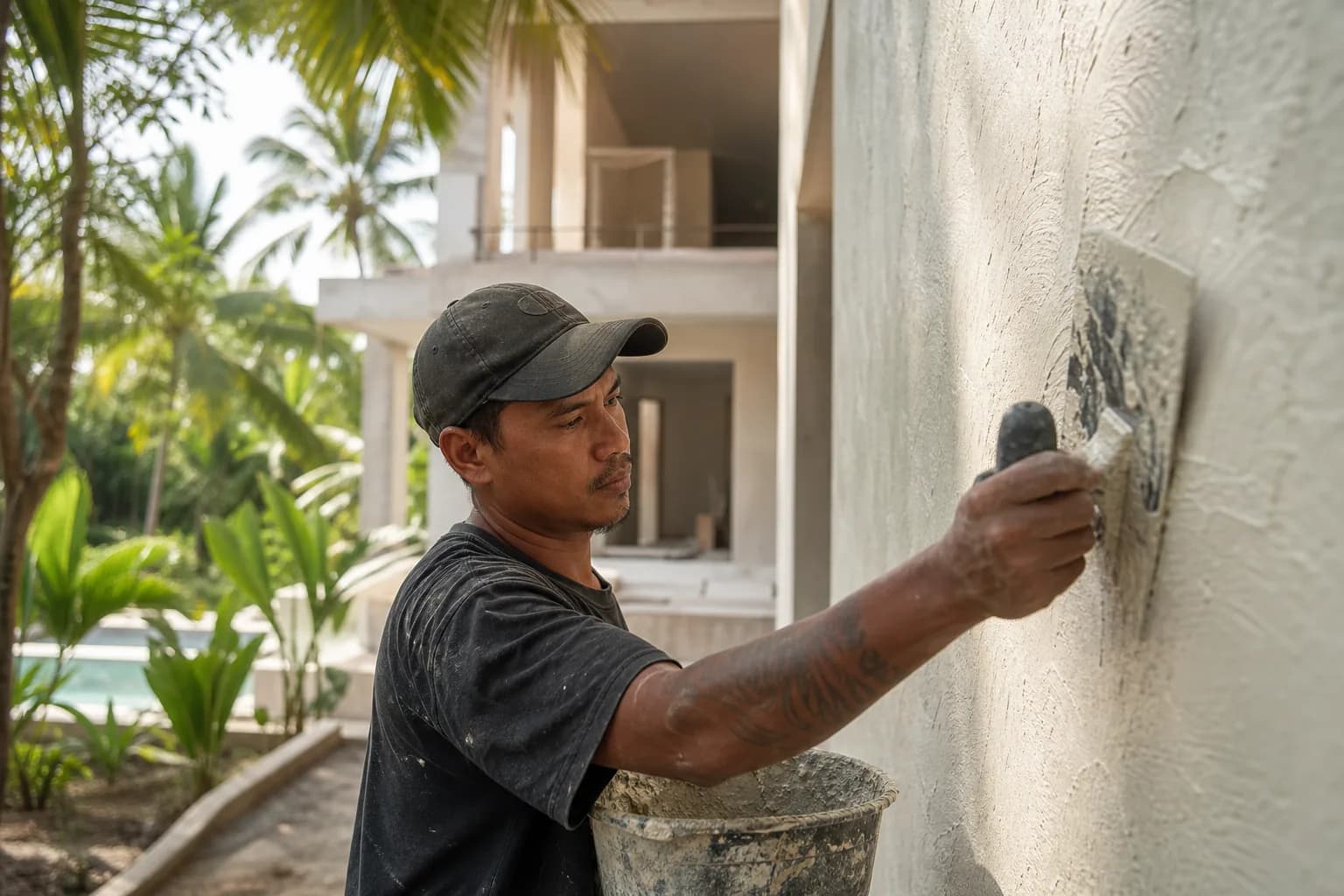
Resin-Infused Plaster Finishes: Anti-Salt Systems Bali
Expert technical guide: Resin-Infused Plaster Finishes: Anti-Salt Systems Bali
8 min read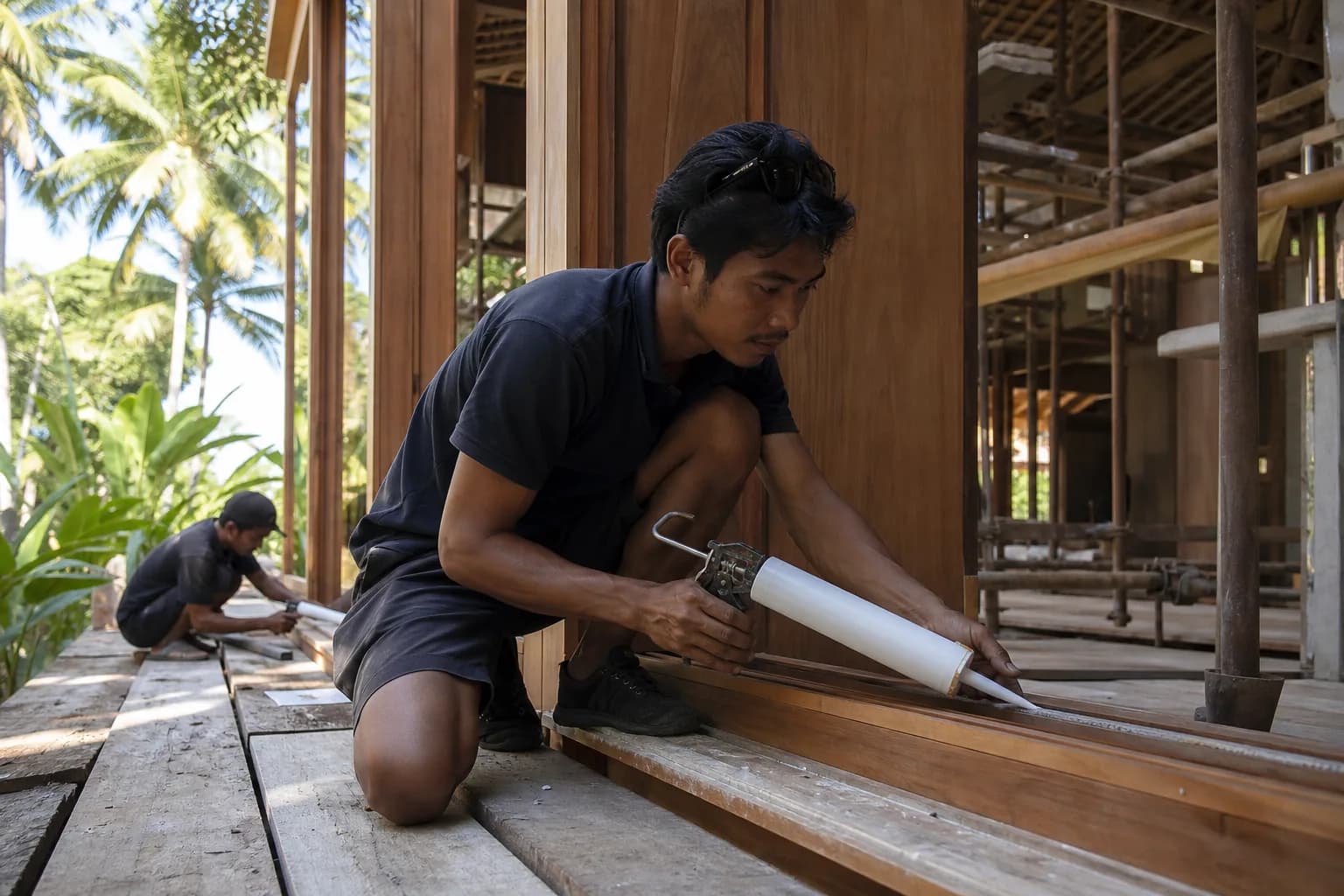
Prefinished Timber Joinery: Silicone Seals Fixings Bali
Professional prefinished timber joinery installation in Bali with silicone seals and fixings for durable weatherproof performance and a premium finish.
10 min read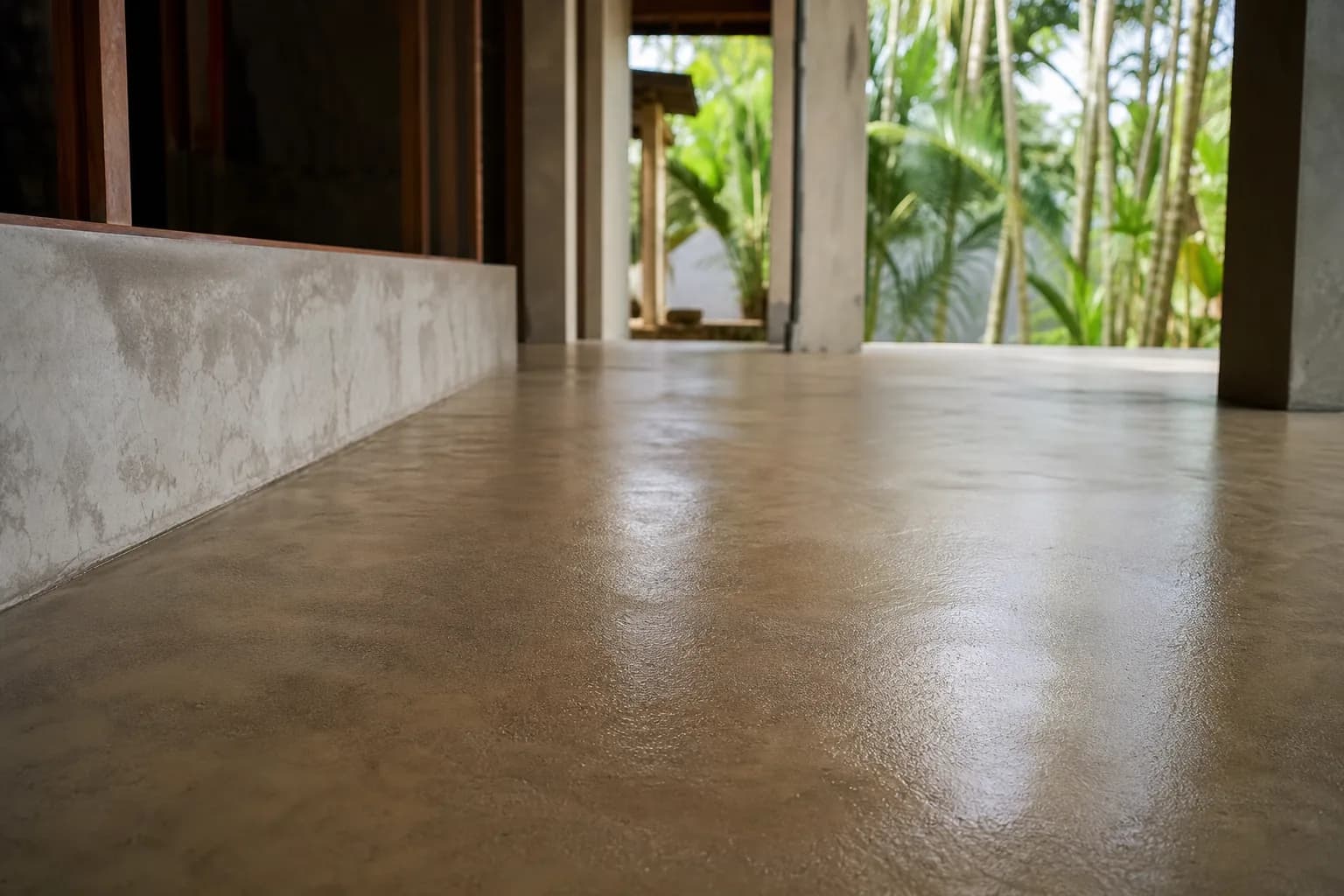
Polished Concrete Microtopping: Surface Prep Sealants Bali
Discover Bali s polished concrete microtopping: expert surface prep, durable sealants, and a flawless finish for modern floors with minimal maintenance.
9 min read