Bali Villa Ceiling Height: 3m vs 3.5m Impact on Resale
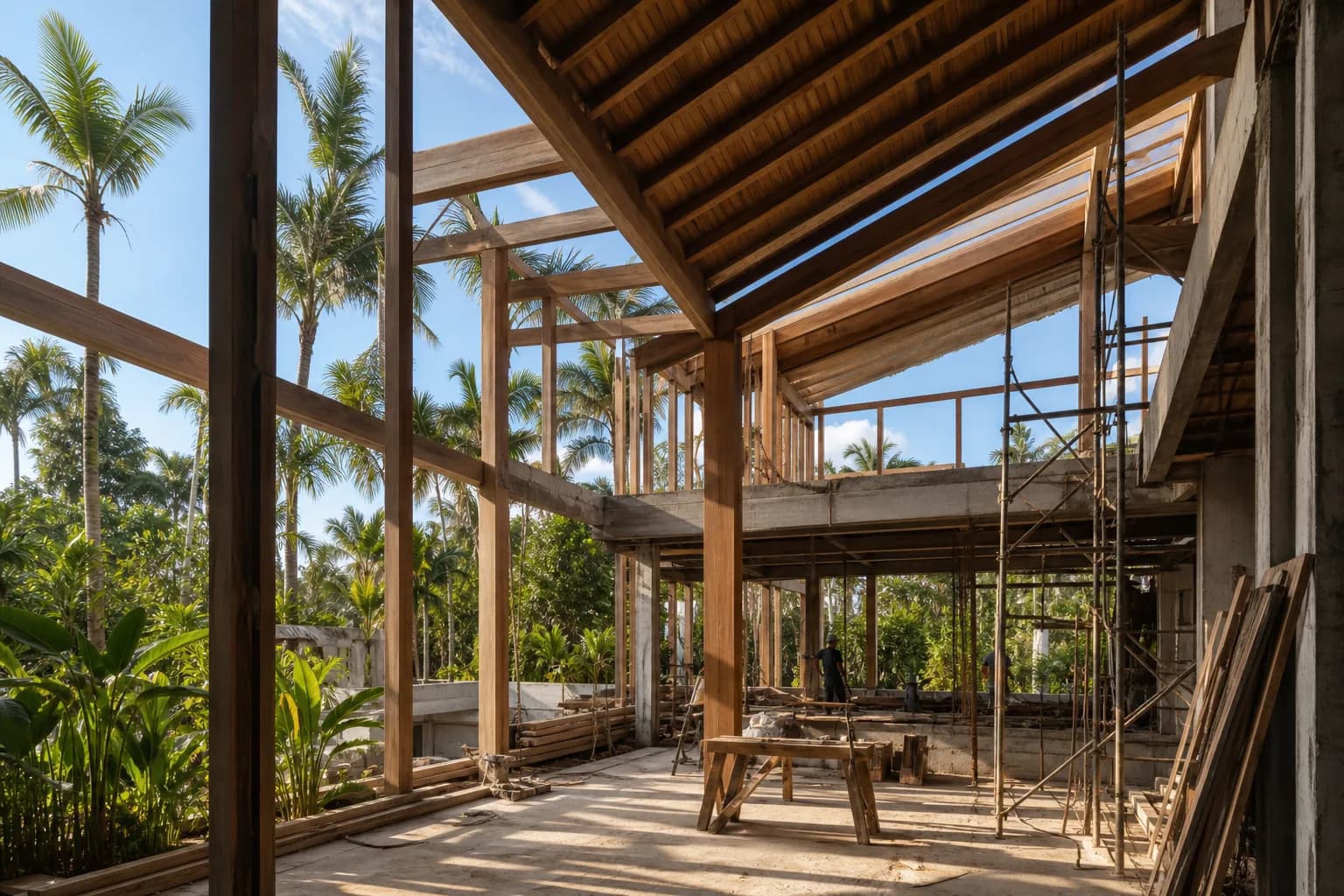
The 50cm Decision That Determines Your Bali Villa’s Market Position
When finalizing architectural plans for a Bali villa, the choice between 3-meter and 3.5-meter ceiling heights appears minor—just 50 centimeters of vertical space. Yet this single specification cascades through structural engineering, thermal performance, regulatory compliance, and ultimately resale positioning in ways most developers discover too late. The technical reality: this half-meter difference affects foundation load calculations, HVAC capacity requirements, material quantities, and whether your villa enters the luxury market segment or remains in standard inventory. For villa construction cost Bali projections in 2026, this decision represents a 12-18% variance in total build cost while potentially creating a 25-35% gap in resale valuation within competitive micro-markets like Canggu, Uluwatu, and Ubud’s premium zones.
Engineering Specifications: What 50cm Actually Means Structurally
The ceiling height specification directly impacts structural load paths and material engineering in tropical construction. A 3.5-meter ceiling height requires column reinforcement calculations that account for increased lateral wind loads—critical in Bali’s coastal exposure zones where wind speeds during monsoon season regularly exceed 60 km/h. The additional vertical dimension increases the moment arm on structural columns, requiring either larger cross-sections (typically moving from 20x20cm to 25x25cm columns) or higher-grade steel reinforcement (upgrading from Grade 40 to Grade 60 rebar).
From a thermal engineering perspective, the 50cm difference creates a 16.7% increase in interior air volume per square meter of floor space. In Bali’s tropical climate with average temperatures of 26-30°C and humidity levels consistently above 75%, this volume increase demands recalculated HVAC specifications. A standard 100-square-meter villa with 3-meter ceilings contains 300 cubic meters of air; at 3.5 meters, this becomes 350 cubic meters—requiring air conditioning units with approximately 1.5 additional tons of cooling capacity to maintain equivalent thermal comfort and cycle efficiency.
The structural implications extend to roof framing systems. Bali villa construction predominantly uses either traditional timber trusses or modern steel frame systems. With 3.5-meter ceilings, the roof pitch angle often requires adjustment to maintain aesthetic proportions—typically increasing from 30-35 degrees to 35-40 degrees. This steeper pitch adds 8-12% to roofing material quantities (tiles, underlayment, battens) and increases the complexity of waterproofing details at ridge and valley intersections where tropical rainfall intensity (up to 300mm in single storm events) tests every junction.
Wall construction costs scale linearly with height, but the engineering considerations are non-linear. The additional 50cm requires an extra course of concrete blocks or bricks (typically 4-5 additional rows depending on unit height), but more significantly, it affects the wall’s slenderness ratio—the relationship between height and thickness that determines lateral stability. Walls exceeding certain slenderness thresholds require additional horizontal reinforcement bands or pilasters, particularly for external walls exposed to wind pressure. For building permits Bali compliance, structural engineers must certify that wall designs meet Indonesian National Standard (SNI) requirements, which become more stringent as wall heights increase.
The foundation system must also accommodate the increased structural loads. While the additional dead load from 50cm of wall height is modest (approximately 120-150 kg per linear meter for standard masonry), the combined effect of taller walls, larger columns, and steeper roof structures can increase total vertical loads by 8-10%. In Bali’s variable soil conditions—ranging from volcanic clay in Ubud to sandy substrates in coastal Seminyak—this may necessitate deeper pile foundations or wider spread footings, particularly in areas with lower bearing capacities below 150 kPa.
Hidden Compliance Risks in Ceiling Height Specifications
The most critical oversight in ceiling height decisions involves the interaction between internal ceiling height and total building height regulations. Bali’s zoning laws, enforced through local building permits Bali processes, typically limit total structure height to 15 meters in general residential zones, with stricter 12-meter limits near temples and cultural heritage sites. Developers often calculate ceiling height without accounting for the cumulative effect: floor slab thickness (15-20cm), raised floor systems for plumbing (10-15cm), suspended ceiling depth for services (20-30cm), and roof structure height above the ceiling plane.
A two-story villa with 3.5-meter ceiling heights consumes 7 meters of the height budget for habitable space alone, compared to 6 meters with 3-meter ceilings. When you add ground floor elevation (typically 40-60cm above natural grade for flood protection), structural slabs, and roof height, the 3.5-meter specification can push total building height dangerously close to regulatory limits, leaving insufficient margin for architectural features like roof overhangs, decorative ridge elements, or rooftop terraces that significantly enhance resale appeal.
Another hidden risk emerges in fire safety compliance. Indonesian building codes require specific egress calculations based on room volume and occupancy. Larger room volumes from higher ceilings may trigger requirements for additional fire exits, upgraded fire suppression systems, or enhanced smoke detection networks—costs rarely included in preliminary budgets. For commercial-zoned villas intended for rental operations, these requirements become mandatory and subject to inspection before occupancy permits are issued.
The thermal performance gap between 3-meter and 3.5-meter ceilings creates long-term operational cost implications that affect resale value beyond the initial construction premium. The increased air volume requires not just larger HVAC units but also higher ongoing electricity consumption—approximately 15-20% more energy for equivalent cooling performance. In Bali’s electricity market where rates average IDR 1,450-1,650 per kWh for residential properties, this translates to an additional IDR 800,000-1,200,000 monthly for a typical three-bedroom villa running air conditioning 8-10 hours daily.
Strategic Implementation Process for Ceiling Height Decisions
The ceiling height specification should be determined during the preliminary design phase, integrated with site analysis and regulatory review. Begin with a comprehensive site survey that documents not just topography but also proximity to cultural heritage zones, temple boundaries (typically requiring 100-meter setbacks with height restrictions), and existing neighborhood building profiles. This context determines whether 3.5-meter ceilings will position your villa as a premium outlier or create regulatory conflicts.
Step one involves engaging a licensed Indonesian structural engineer to perform load calculations for both ceiling height scenarios. Request comparative analysis showing foundation requirements, column specifications, and total structural material quantities for each option. This engineering assessment should include soil bearing capacity testing—particularly critical for land purchase Bali decisions in areas with variable geology. The structural report becomes essential documentation for building permit applications and provides the technical foundation for accurate cost estimation.
Step two requires thermal modeling specific to your site’s microclimate. Coastal locations like Seminyak experience different thermal loads than inland Ubud properties at 300-meter elevation. A qualified mechanical engineer should calculate cooling loads for both ceiling heights, accounting for orientation, window-to-wall ratios, insulation specifications, and local climate data. This analysis determines HVAC system sizing and provides realistic operational cost projections that affect long-term resale value positioning.
Step three involves regulatory pre-consultation with the local DPMPTSP office (Investment and One-Stop Integrated Service Office) before finalizing architectural plans. Submit preliminary drawings showing both ceiling height options with total building height calculations. This early engagement identifies potential compliance issues before significant design investment occurs. For properties near cultural sites or in tourist zones with special regulations, this step is non-negotiable and can save months of redesign work.
Step four requires market positioning analysis specific to your target resale segment. Review comparable villa sales data in your micro-market, focusing on properties sold within the past 12-18 months. Analyze ceiling heights, total construction quality, and price per square meter to identify whether 3.5-meter ceilings command measurable premiums in your specific location. This data-driven approach prevents over-building for markets that don’t value the additional investment. Resources like Teville’s completed villa projects provide benchmarks for construction specifications across different market segments.
Step five involves detailed cost modeling that captures all cascading effects of the ceiling height decision. Beyond obvious material quantity increases, include structural upgrades, HVAC capacity additions, extended construction timeline (typically 2-3 additional weeks for taller structures), and increased labor costs for work at height. Request itemized quotations from contractors for both scenarios, ensuring specifications are identical except for ceiling height. This comparative analysis reveals the true investment differential and supports informed decision-making.
Construction Cost Realities for Ceiling Height Variations
For a standard 150-square-meter single-story Bali villa, upgrading from 3-meter to 3.5-meter ceilings typically adds USD 8,500-12,000 to total construction costs in 2026 pricing. This breaks down approximately as: structural materials (additional concrete, steel, masonry) USD 3,200-4,500; increased labor costs for work at height USD 2,100-3,000; upgraded HVAC systems USD 1,800-2,400; additional roofing materials and steeper pitch engineering USD 1,400-2,100.
For two-story villas in the 250-300 square meter range, the cost differential increases to USD 15,000-22,000, as the ceiling height specification affects both levels plus the increased structural demands of supporting taller walls across two floors. These figures assume standard construction quality with reinforced concrete frame, brick infill walls, and tile roofing—the predominant tropical construction engineering approach in Bali.
Timeline implications are often underestimated. The additional height requires more formwork setup and striking time, extended curing periods for taller concrete pours, and additional safety measures for work at elevation. Expect 2-3 weeks added to a typical 8-10 month construction schedule for single-story villas, and 3-4 weeks for two-story structures. In Bali’s monsoon season (November-March), work at height faces more weather delays, potentially extending this timeline further.
The resale value differential is market-dependent but measurable. In premium segments like Uluwatu clifftop properties or Ubud jungle villas where luxury positioning is essential, 3.5-meter ceilings contribute to 15-25% higher resale values compared to equivalent villas with standard 3-meter heights. However, in mid-market areas like Sanur or Denpasar suburbs, the premium narrows to 5-10%, often insufficient to justify the construction cost increase. Detailed market analysis through professional cost estimation services helps quantify these location-specific value differentials.
Frequently Asked Questions: Ceiling Height Engineering and Resale Impact
Do Bali building regulations specify minimum ceiling heights for residential villas?
Indonesian building codes (SNI 03-1733-2004) specify minimum ceiling heights of 2.8 meters for habitable rooms in residential structures, with 2.4 meters acceptable for service areas like bathrooms and storage. However, local Bali regulations enforced through building permits Bali processes focus more on total building height limits (typically 15 meters) and setback requirements than internal ceiling specifications. The 3-meter versus 3.5-meter decision is primarily market-driven rather than regulatory-mandated, though both exceed minimum code requirements. The critical compliance issue involves ensuring your chosen ceiling height doesn’t push total building height beyond zoning limits when combined with foundation elevation, floor slabs, and roof structure.
How does ceiling height affect structural engineering requirements for tropical wind loads?
Taller walls create larger surface areas exposed to lateral wind pressure, increasing the overturning moment on structural columns and foundations. In Bali’s coastal zones classified as Wind Zone 3 under Indonesian standards (wind speeds up to 35 m/s), the additional 50cm of wall height increases lateral load by approximately 12-15% per linear meter of wall. This typically requires upgrading column reinforcement from 4D16 to 4D19 rebar, or increasing column cross-sections from 200x200mm to 250x250mm. For villa construction cost Bali calculations, these structural upgrades add USD 2,200-3,500 to a typical 150-square-meter villa. Structural engineers must certify these calculations as part of the building permit application process.
Can I modify ceiling height after construction begins without permit amendments?
No. Ceiling height is a structural specification documented in approved building permits and engineering calculations. Modifying ceiling height mid-construction requires permit amendments submitted to the local DPMPTSP office, including revised structural drawings stamped by a licensed engineer, recalculated load analyses, and updated total building height certifications. The amendment process typically requires 3-4 weeks for approval and incurs fees of IDR 2,500,000-4,000,000 depending on the scope of changes. More critically, increasing ceiling height after foundations are poured may reveal that existing structural elements are under-specified, requiring costly remediation. This scenario is common when developers attempt to upgrade specifications without proper engineering review, resulting in construction delays of 6-8 weeks and cost
 3180 m²7 month(s)from 142.000 USD
Vasudeva
 164 m²7 month(s)from 79.000 USD
Private: Haridas Villas, Tegallalang
164 m²7 month(s)from 79.000 USDTALA TWO
 2144 m²11 month(s)from 104.000 USD
Narayana
 3104 m²11 month(s)from 99.000 USD
TALA 100
 3124 m²6 month(s)from 123.000 USD
TALA 8

Want to calculate?
 3173 m²6 month(s)from 125.000 USD
TALA FOUR
 172 m²8 month(s)from 120.000 USD
Keshava
 3127 m²9 month(s)from 177.000 USD
Mukunda
 1from 198.000 USD
Private: Haridas Villas
 4344 m²16 month(s)from 290.000 USD
Radha
Start With Real Numbers, Not Guesses
Before buying land or finalizing a design, check the realistic build cost range for your project in Bali.
Our team reviews your inputs and gives a grounded estimate.
Available lands
 1600 m²32 min$ 266010Bali, Tabanan
 444 m²10 min$ 111000Bali, Tabanan
 660 m²10 min$ 175567Bali, Mengwi
 3100 m²20 min$ 272968Bali, Tabanan
 1158 m²12 min$ 291996Bali, Mengwi
 2680 m²10 min$ 1732759Bali, Pererenan
 1700 m²10 min$ 392549Bali, Nusadua
 5815 m²5 min$ 815740Bali, Tabanan
 889 m²15 min$ 145612Bali, Cepaka
 400 m²15 min$ 67192Bali, Tabanan
 750 m²15 min$ 187038Bali, Kerobokan
 1350 m²5 min$ 283467Bali, Pecatu
 1230 m²15 min$ 132543Bali, Tegallalang
 300 m²55 min$ 32475Bali, Tegelalang
 422 m²15 min$ 93547Bali, Kerobokan
Essential Bali build & buy guides
- Bali villa construction cost per m² in 2026
- How much will your villa cost? Calculator
- Building a villa in Bali: the complete guide
- Buying land in Bali: step-by-step for foreigners
- Bali villa investment: yields, risks, returns
- Leasehold vs freehold: what foreigners can own
- Construction defect liability & 10-year warranty
- Bali building codes and construction standards
Related guides
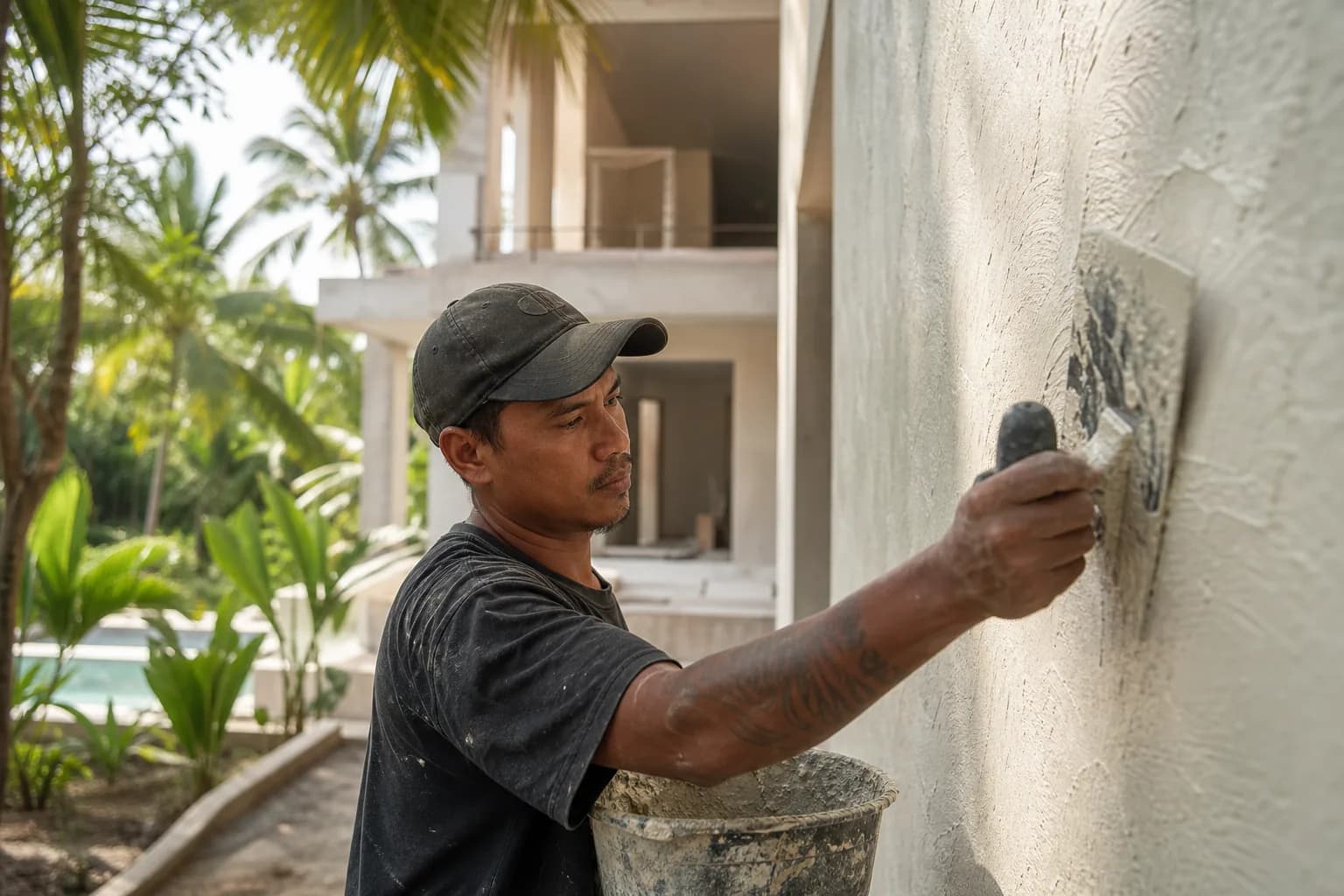
Resin-Infused Plaster Finishes: Anti-Salt Systems Bali
Expert technical guide: Resin-Infused Plaster Finishes: Anti-Salt Systems Bali
8 min read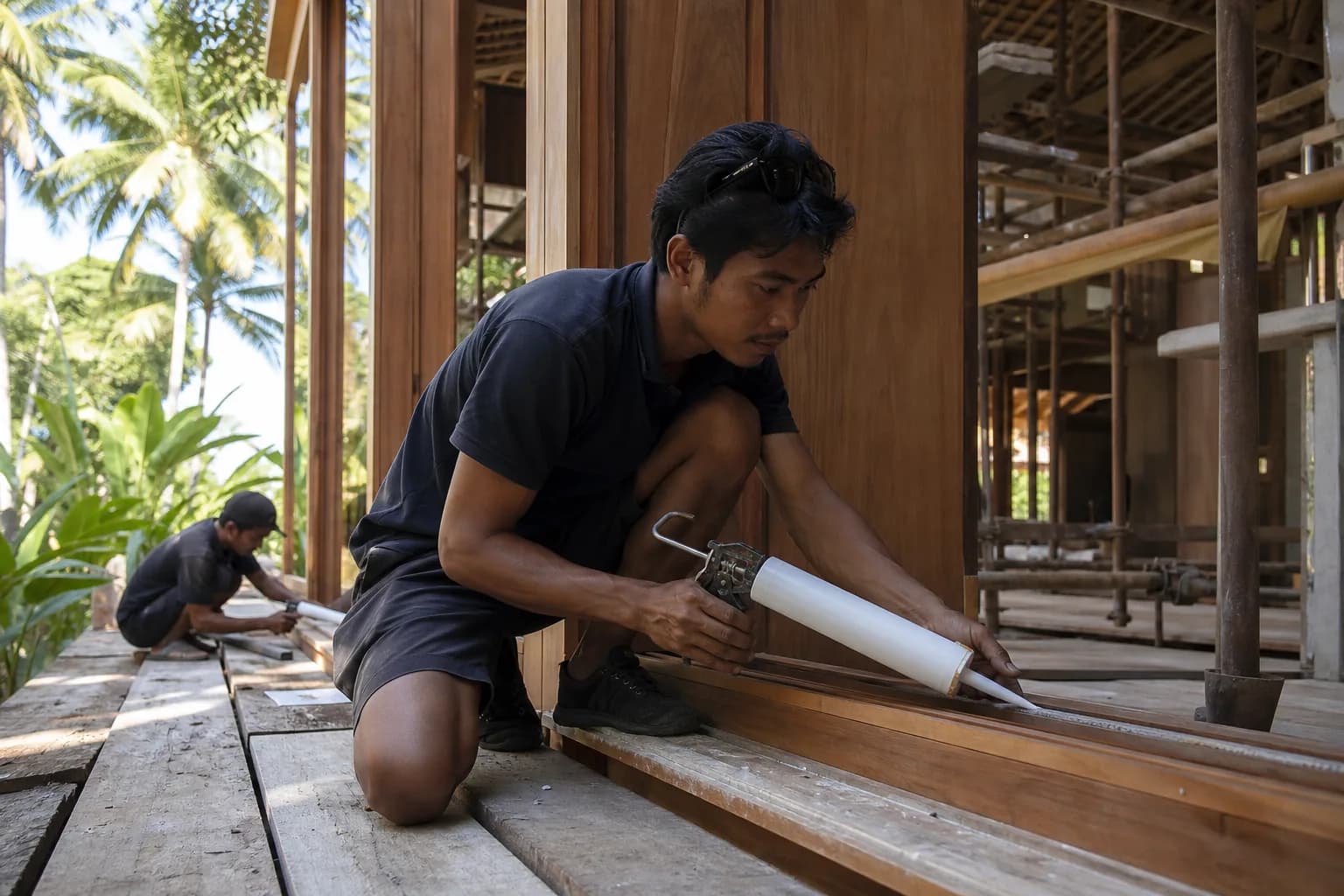
Prefinished Timber Joinery: Silicone Seals Fixings Bali
Professional prefinished timber joinery installation in Bali with silicone seals and fixings for durable weatherproof performance and a premium finish.
10 min read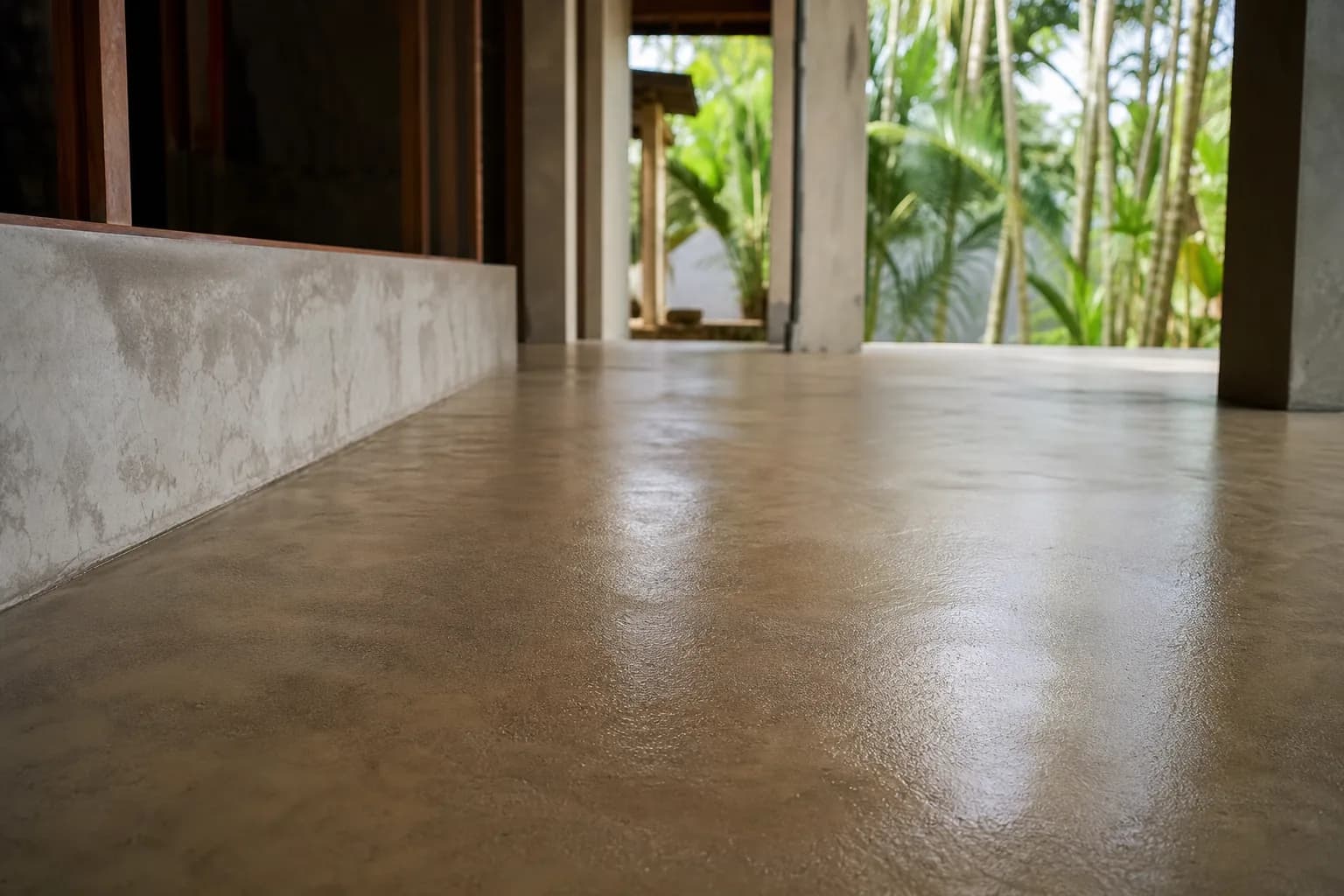
Polished Concrete Microtopping: Surface Prep Sealants Bali
Discover Bali s polished concrete microtopping: expert surface prep, durable sealants, and a flawless finish for modern floors with minimal maintenance.
9 min read