Bali Area Guide: Construction Zones Technical Insights
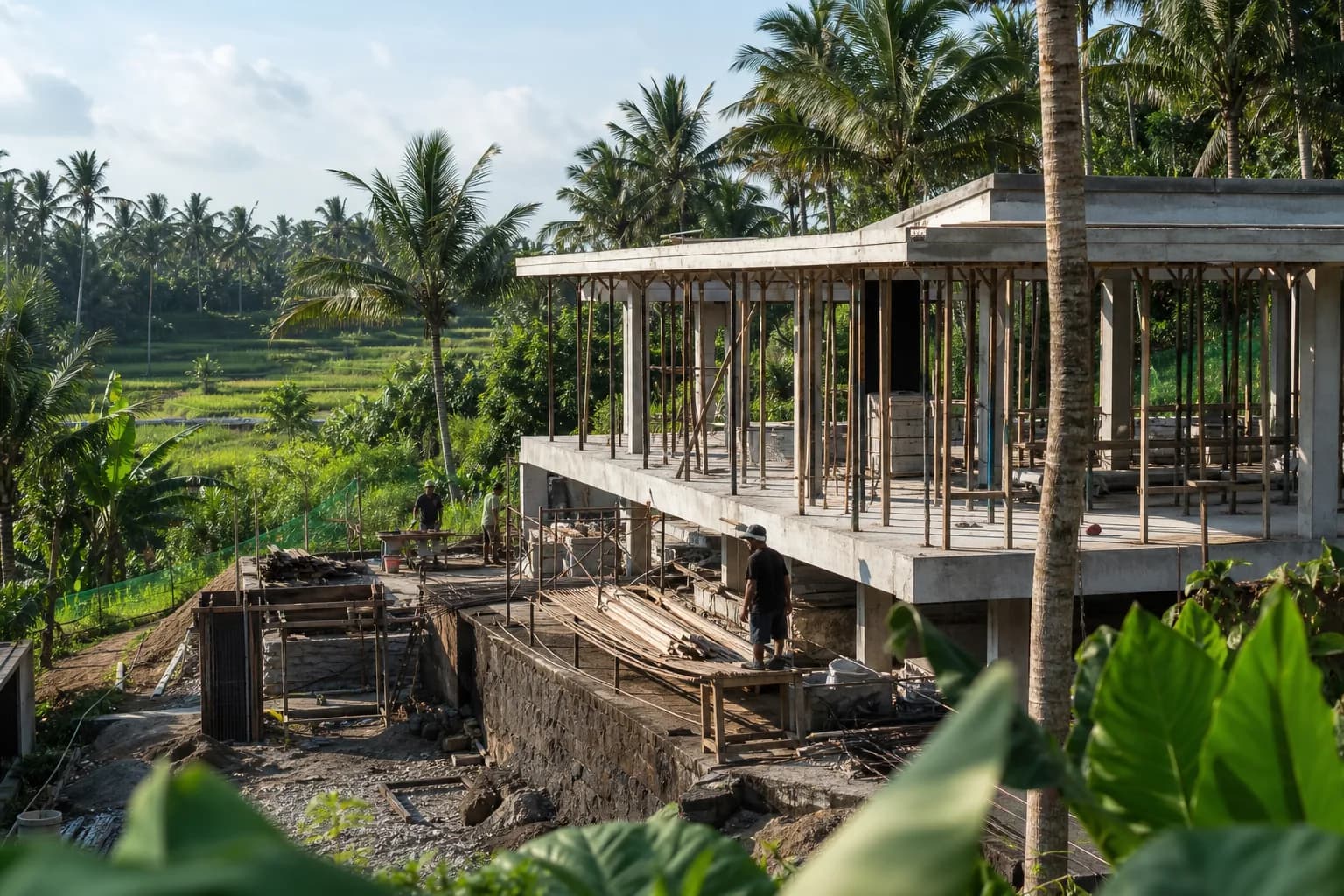
# The Complete Bali Area Guide for Construction Projects: Technical Insights for Property Developers
Bali’s diverse geographical zones present distinct construction challenges and opportunities that directly impact project feasibility, costs, and long-term structural integrity. As infrastructure development accelerates across the island—with major projects like the Bali metro system and highway expansions underway in 2026—understanding the technical nuances of each area has become critical for developers, investors, and property owners planning construction projects.
This comprehensive area guide examines Bali’s primary construction zones from an engineering and regulatory perspective, providing the technical foundation necessary for informed decision-making. Whether you’re evaluating land parcels, planning villa construction, or assessing commercial development feasibility, the geographical characteristics of your chosen location will fundamentally determine your project’s structural requirements, material specifications, and compliance obligations.
The Critical Problem: Location-Specific Construction Challenges in Bali
Bali’s tropical environment creates a complex matrix of location-dependent construction variables that many developers underestimate during initial planning phases. The island’s microclimates, soil compositions, water table variations, and proximity to coastal zones create dramatically different engineering requirements across relatively short distances.
The primary challenge lies in the intersection of three factors: environmental conditions specific to each area, evolving regulatory frameworks that vary by regency, and infrastructure accessibility that directly impacts construction logistics and costs. A villa project in Canggu faces entirely different technical requirements than an identical structure in Ubud or Amed, yet many developers apply standardized approaches that lead to premature structural degradation, regulatory complications, or cost overruns.
Recent data indicates that construction costs for investment-grade villas in 2026 range between $1,000 and $1,800 per square meter for finished properties, but this range expands significantly when location-specific factors are properly accounted for. Coastal properties require marine-grade materials and enhanced corrosion protection systems, while inland mountainous areas demand different foundation engineering and moisture management strategies.
The infrastructure development currently transforming Bali—including the Jimbaran Underpass Road project beginning in 2026 and the broader metro system planning—adds another layer of complexity. These projects will reshape accessibility patterns, potentially affecting property values and construction logistics in ways that require forward-looking planning rather than reactive adjustments.
Technical Analysis: Understanding Bali’s Construction Zones
Southern Peninsula: Bukit and Nusa Dua
The southern peninsula, encompassing Uluwatu, Pecatu, Jimbaran, and Nusa Dua, presents unique geological characteristics that significantly impact construction methodology. The limestone bedrock underlying this region provides excellent load-bearing capacity but creates specific challenges for excavation and foundation work.
Soil composition in the Bukit area typically consists of shallow topsoil layers over limestone formations, requiring specialized drilling equipment for foundation work. The porous nature of limestone creates natural drainage advantages but also necessitates careful waterproofing strategies for below-grade structures. Coastal proximity throughout this zone demands comprehensive corrosion protection protocols, with marine-grade stainless steel fixtures, hot-dip galvanized structural elements, and enhanced concrete cover specifications becoming standard requirements.
Wind exposure on clifftop sites requires structural engineering that accounts for sustained wind loads and salt spray penetration. The microclimate here tends toward lower humidity than inland areas but higher salt concentration in the air, creating a corrosive environment that accelerates material degradation without proper specification and detailing.
Regulatory considerations in Badung Regency, which governs most of the southern peninsula, include strict setback requirements from cliff edges, environmental impact assessments for coastal properties, and increasingly rigorous wastewater treatment standards. The ongoing Jimbaran infrastructure improvements will enhance accessibility but may temporarily impact construction logistics during the development phase.
West Coast: Canggu, Seminyak, and Kerobokan
The west coast construction corridor from Kerobokan through Seminyak to Canggu represents Bali’s most intensively developed zone, with corresponding regulatory complexity and infrastructure density. The alluvial soil composition in this coastal plain creates different foundation requirements compared to the southern limestone regions.
Soil bearing capacity varies significantly across short distances, with sandy coastal soils transitioning to clay-rich compositions further inland. Comprehensive soil testing becomes non-negotiable in this zone, as bearing capacity can range from 1.0 to 2.5 kg/cm² within a single development parcel. High water tables throughout the area require dewatering strategies during construction and permanent drainage solutions for completed structures.
The proximity to the ocean creates similar corrosion challenges as the southern peninsula, but the flatter topography and higher development density introduce different considerations. Setback requirements from the beach, increasingly enforced environmental regulations, and neighborhood character guidelines all impact design flexibility and construction approaches.
Infrastructure in this zone is relatively mature but strained by development intensity. Road access, utility connections, and waste management systems are established but may require upgrades or supplementary systems for larger projects. The area’s popularity creates competitive pressure on contractor availability and material delivery schedules, factors that require careful project timeline planning.
Central Ubud: Tropical Highland Construction
Ubud and the surrounding central highland region present a distinctly different construction environment characterized by steep topography, dense vegetation, year-round high humidity, and volcanic soil composition. The engineering challenges here center on slope stability, moisture management, and foundation design for uneven terrain.
Volcanic soils in the Ubud area generally provide good bearing capacity but require careful analysis of slope stability, particularly for sites with significant grade changes. Terracing and retaining wall systems become integral structural elements rather than landscape features, requiring proper engineering and drainage integration to prevent soil movement and water accumulation behind retaining structures.
The consistently high humidity and frequent rainfall create an environment where moisture management becomes the primary determinant of long-term structural performance. Ventilation strategies, vapor barriers, and material selection must address constant moisture exposure. Timber elements require treatment or species selection resistant to fungal growth and insect infestation, while metal components need enhanced corrosion protection despite the absence of salt air.
Gianyar Regency’s regulatory framework emphasizes cultural preservation and environmental protection, with height restrictions, architectural style guidelines, and environmental impact requirements that vary by specific location within the regency. Access roads in hillside locations may require improvement or construction as part of project development, adding to initial infrastructure costs.
East Coast: Sanur, Candidasa, and Amed
The east coast presents a more moderate construction environment compared to the intensive development of the west coast or the challenging topography of Ubud. Sanur offers established infrastructure and relatively straightforward construction conditions, while Candidasa and Amed provide emerging development opportunities with correspondingly less developed support systems.
Soil conditions along the east coast vary from sandy coastal compositions to volcanic soils further inland, requiring site-specific geotechnical analysis. The calmer waters and different coastal orientation create less severe salt exposure than the west coast, though marine-grade specifications remain advisable for coastal properties.
Infrastructure development in this zone is uneven, with Sanur offering mature utility systems and road networks while more remote eastern locations may require off-grid solutions or infrastructure development as part of project scope. Water supply reliability varies significantly, with some areas requiring deep wells or water storage systems to ensure consistent supply.
Regulatory environments differ between Denpasar City (Sanur), Karangasem Regency (Candidasa and Amed), and other jurisdictions along the coast. Generally, permitting processes are more straightforward than in heavily developed western areas, but infrastructure limitations may extend project timelines through logistical challenges rather than regulatory delays.
North Coast: Lovina and Singaraja
The north coast represents Bali’s least developed major region, offering construction opportunities with minimal regulatory complexity but corresponding infrastructure limitations. The drier microclimate and calmer seas create different environmental conditions than the south and west coasts.
Soil compositions range from volcanic soils in areas closer to the central mountains to coastal sandy soils near the shore. The lower rainfall and humidity reduce some moisture-related challenges but create different considerations for landscaping, water supply, and material behavior in drier conditions.
Infrastructure in Buleleng Regency remains relatively undeveloped compared to southern Bali, requiring careful assessment of utility availability, road access quality, and material delivery logistics. Construction timelines may extend due to contractor travel distances and material transportation requirements, factors that must be incorporated into project planning and budgeting.
Critical Risks: Location-Specific Construction Hazards
Coastal Corrosion and Material Degradation
Properties within three kilometers of the coastline face accelerated corrosion of metal components, concrete reinforcement, and fastening systems. Salt-laden air penetrates building envelopes and attacks structural elements, with degradation rates significantly higher than inland locations. Without proper material specification and detailing, structural integrity can be compromised within five to seven years rather than the expected multi-decade service life.
The risk extends beyond obvious metal components to include reinforcing steel within concrete, electrical systems, plumbing fixtures, and architectural hardware. Comprehensive corrosion protection requires marine-grade stainless steel (316 grade minimum), hot-dip galvanized structural steel, increased concrete cover over reinforcement, and corrosion-inhibiting admixtures in concrete mixes.
Foundation Failure from Inadequate Soil Analysis
Bali’s diverse soil conditions create significant risk when developers skip comprehensive geotechnical investigation or apply standardized foundation designs without site-specific engineering. Differential settlement, bearing capacity failure, and foundation movement can occur when soil characteristics are assumed rather than tested.
The risk is particularly acute in areas with high water tables, expansive clay soils, or locations transitioning between different geological formations. A proper geotechnical investigation, including soil boring, laboratory testing, and engineering analysis, represents a small fraction of total project cost but prevents potentially catastrophic foundation problems.
Moisture Intrusion and Structural Decay
Bali’s tropical climate creates constant moisture exposure that accelerates material degradation when buildings lack proper moisture management systems. Water intrusion through building envelopes, condensation within wall assemblies, and rising damp from ground contact all contribute to structural decay, mold growth, and premature material failure.
The risk varies by location, with highland areas experiencing constant high humidity and frequent rainfall while coastal areas face salt-laden moisture and occasional storm exposure. Effective moisture management requires integrated strategies including proper drainage, vapor barriers, ventilation systems, and material selection appropriate to the specific moisture exposure conditions.
Regulatory Non-Compliance and Permitting Delays
Bali’s evolving regulatory environment creates risk when developers proceed without thorough understanding of location-specific requirements. Permitting requirements vary by regency, with different processes, timelines, and standards in Badung, Gianyar, Denpasar, Tabanan, and other jurisdictions.
Recent regulatory emphasis on environmental protection, wastewater treatment, and cultural preservation has increased compliance requirements, particularly in sensitive areas. Projects that begin without proper permits or fail to meet regulatory standards face stop-work orders, fines, and potential demolition requirements, risks that far exceed the cost and time required for proper compliance from project inception.
Step-by-Step Process: Location Assessment and Project Planning
Step 1: Preliminary Area Evaluation
Begin with macro-level assessment of potential construction areas based on project requirements, budget parameters, and intended use. Evaluate infrastructure accessibility, regulatory environment, and general construction conditions for each candidate area. This preliminary evaluation should identify two to three priority zones for detailed investigation rather than attempting comprehensive analysis of all possible locations.
Consider proximity to existing infrastructure, including roads, utilities, and services. Assess the general development character of each area and whether it aligns with project objectives. Review available information about regulatory requirements and typical permitting timelines for each jurisdiction. For detailed area-specific insights, explore our available land parcels across different Bali regions.
Step 2: Site-Specific Geotechnical Investigation
Once specific parcels are identified within priority areas, commission comprehensive geotechnical investigation including soil boring, laboratory testing, and engineering analysis. The investigation should extend to depths below proposed foundation levels and provide data on soil bearing capacity, water table depth, soil composition, and any problematic conditions like expansive clays or organic soils.
Geotechnical reports should include specific foundation recommendations, including type (shallow footings, deep piles, or engineered fill), depth requirements, and any special construction considerations. This data becomes the foundation for structural engineering and cost estimation, making it a critical early investment that prevents costly surprises during construction.
Step 3: Regulatory and Compliance Assessment
Engage with local authorities to understand specific permitting requirements, timelines, and compliance standards for the chosen location. Requirements vary significantly between regencies and even between specific zones within a single jurisdiction. Identify all necessary permits, including building permits (IMB), environmental clearances, and any special approvals required for the specific location or project type.
Assess setback requirements, height restrictions, building coverage limitations, and architectural guidelines that may apply. Understand wastewater treatment requirements, which have become increasingly stringent across Bali. Factor permitting timelines into project schedules, recognizing that regulatory processes can extend from several weeks to several months depending on location and project complexity.
Step 4: Infrastructure and Utility Assessment
Evaluate the availability and capacity of essential infrastructure including road access, electrical supply, water sources, and telecommunications. Determine whether existing infrastructure is adequate for project requirements or whether upgrades or alternative solutions are necessary.
For electrical supply, assess whether grid connection is available and adequate or whether supplementary systems like generators or solar installations are required. Water supply evaluation should determine whether municipal water is available, whether well drilling is necessary, and what storage capacity is required to ensure reliable supply. Road access assessment should consider not only permanent access but also construction logistics including material delivery and equipment access.
Step 5: Environmental and Microclimate Analysis
Conduct detailed analysis of environmental conditions specific to the site and area, including microclimate characteristics, exposure to wind and salt air, drainage patterns, and vegetation. This analysis informs material selection, structural design, and building orientation decisions that significantly impact long-term performance and maintenance requirements.
Coastal sites require assessment of salt air exposure, wind loads, and potential storm surge or flooding risks. Highland sites need evaluation of slope stability, drainage patterns, and moisture exposure from frequent rainfall. All locations benefit from solar orientation analysis to optimize natural ventilation and daylighting while minimizing heat gain.
Step 6: Material Specification and Construction Methodology
Based on the comprehensive site and area analysis, develop material specifications and construction methodologies appropriate to the specific conditions. This includes structural systems, foundation design, building envelope specifications, and finish material selection that address the identified environmental challenges and regulatory requirements.
Coastal locations require marine-grade materials and enhanced corrosion protection. Highland locations need moisture-resistant materials and enhanced ventilation strategies. All locations benefit from tropical-appropriate specifications including proper concrete mixes, adequate reinforcement cover, and durable finish materials. Review our construction methodology for detailed technical approaches to tropical construction challenges.
Step 7: Cost Estimation and Budget Development
Develop comprehensive cost estimates that account for location-specific factors including material specifications, foundation requirements, infrastructure development, and logistical considerations. Recognize that construction costs vary significantly based on location, with remote areas incurring higher material delivery costs and potentially higher labor costs due to contractor travel requirements.
Include contingencies for location-specific risks and potential complications. Coastal projects should budget for enhanced corrosion protection systems. Sites with challenging access may require additional costs for material handling and equipment mobilization. Projects in areas with less developed infrastructure may need to budget for utility connections, road improvements, or alternative systems.
Step 8: Project Timeline Development
Create realistic project timelines that account for location-specific factors including permitting processes, material delivery logistics, and seasonal weather patterns. Permitting timelines vary by jurisdiction, with some areas processing applications in weeks while others require months. Material delivery to remote locations may extend lead times compared to well-served areas.
Consider seasonal factors including the rainy season, which can impact construction schedules particularly for sites with challenging access or significant earthwork requirements. Build in appropriate buffers for weather delays, permitting processes, and potential complications specific to the location and project type.
Construction Costs and Financial Considerations by Area
Baseline Construction Costs
Current data for 2026 indicates that construction costs for investment-grade villas in Bali range between $1,000 and $1,800 per square meter for finished properties. This range reflects variations in specification levels, finishes, and construction quality, but location-specific factors can push costs beyond this range when properly accounting for area-specific requirements.
The baseline range assumes standard tropical construction specifications including proper foundation engineering, adequate structural systems, and durable materials appropriate to Bali’s climate. Projects that cut costs through inadequate specifications or substandard materials may show lower initial costs but face significantly higher long-term maintenance expenses and premature structural problems.
Location-Specific Cost Factors
Coastal properties within three kilometers of the ocean typically add 10-15% to baseline construction costs due to marine-grade material requirements and enhanced corrosion protection systems. This includes upgraded stainless steel specifications, hot-dip galvanized structural elements, increased concrete cover over reinforcement, and corrosion-inhibiting concrete admixtures.
Highland properties with significant slope or challenging topography may add 15-25% to baseline costs due to terracing requirements, retaining wall systems, and foundation engineering for uneven terrain. Access road construction or improvement can add substantial costs depending on distance and terrain difficulty.
Remote locations with limited infrastructure access typically add 8-12% to material costs due to transportation requirements and may increase labor costs by 5-10% due to contractor travel and accommodation requirements. These locations may also require investment in temporary infrastructure including site access roads, material storage facilities, and worker accommodations.
Infrastructure Development Costs
Properties requiring infrastructure development beyond the building itself must budget for these additional costs. Utility connections including electrical supply, water systems, and telecommunications can range from minimal costs in well-served areas to $15,000-$30,000 or more in remote locations requiring significant infrastructure extension.
Water supply systems for properties without municipal connections require well drilling, storage tanks, and distribution systems. Well drilling costs vary by depth requirements and geological conditions, typically ranging from $3,000 to $8,000 for adequate residential supply. Storage systems and distribution infrastructure add $2,000 to $5,000 depending on capacity and system complexity.
Wastewater treatment systems, increasingly required across Bali, range from $5,000 for basic septic systems to $15,000 or more for advanced treatment systems required in environmentally sensitive areas or by specific regulatory requirements. Proper system sizing and installation is critical for regulatory compliance and environmental protection.
Permitting and Compliance Costs
Permitting costs vary by location and project scope but typically range from $3,000 to $8,000 for standard residential projects. This includes building permits (IMB), environmental clearances, and associated documentation. More complex projects or those in sensitive areas may incur higher permitting costs due to additional studies or approvals required.
Professional fees for architects, engineers, and consultants typically represent 8-12% of construction costs, with higher percentages for smaller projects or those with complex technical requirements. These fees cover design development, engineering analysis, permitting documentation, and construction oversight—all critical for successful project execution.
Frequently Asked Questions
How do I determine which Bali area is most suitable for my construction project?
Area selection should be driven by a combination of project objectives, budget parameters, and technical feasibility rather than purely aesthetic or investment considerations. Begin by defining your project requirements including intended use, size, budget range, and timeline. Then evaluate candidate areas based on infrastructure accessibility, regulatory environment, construction conditions, and alignment with project objectives.
Coastal areas like Canggu or the Bukit Peninsula offer established infrastructure and proximity to amenities but come with higher land costs, more complex regulatory environments, and specific technical requirements for marine environments. Highland areas like Ubud provide different aesthetic and cultural contexts but present challenges related to topography, access, and moisture management. Eastern and northern coastal areas offer emerging opportunities with less development pressure but correspondingly less infrastructure support.
The most suitable area is the one where your project objectives can be achieved within budget while meeting all technical and regulatory requirements
 3127 m²9 month(s)from 177.000 USD
Mukunda
 3104 m²11 month(s)from 99.000 USD
TALA 100
 164 m²7 month(s)from 79.000 USD
TALA TWO
 4344 m²16 month(s)from 290.000 USD
Radha
 1from 198.000 USD
Private: Haridas Villas

Want to calculate?
 172 m²8 month(s)from 120.000 USD
Keshava
164 m²7 month(s)from 79.000 USDPrivate: Haridas Villas, Tegallalang
 3173 m²6 month(s)from 125.000 USD
TALA FOUR
 2144 m²11 month(s)from 104.000 USD
Narayana
 3180 m²7 month(s)from 142.000 USD
Vasudeva
 3124 m²6 month(s)from 123.000 USD
TALA 8
Start With Real Numbers, Not Guesses
Before buying land or finalizing a design, check the realistic build cost range for your project in Bali.
Our team reviews your inputs and gives a grounded estimate.
Available lands
 2500 m²5 min$ 609606Bali, Kedungu
 550 m²15 min$ 164594Bali, Mengwi
 911 m²15 min$ 248217Bali, Pererenan
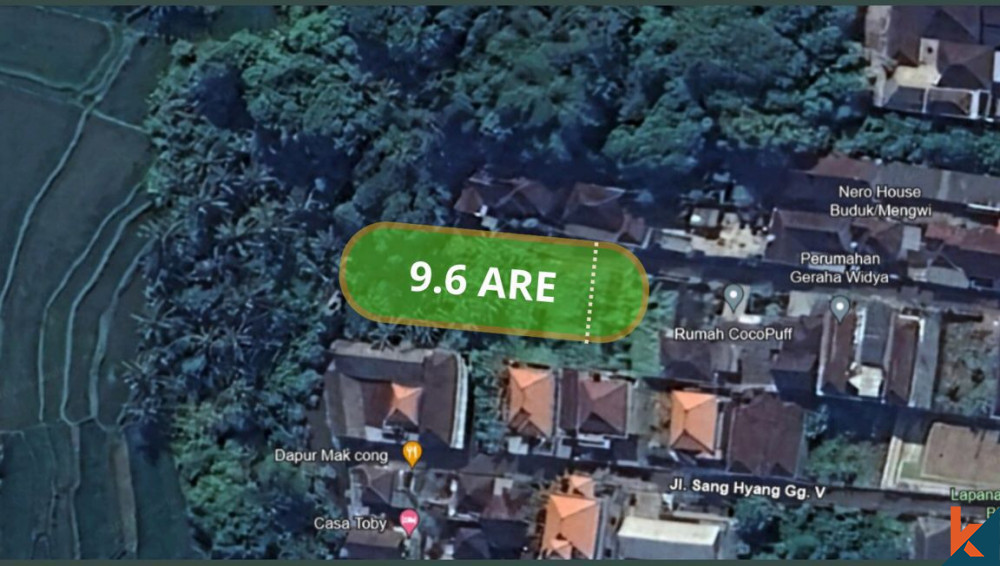 960 m²15 min$ 91034Bali, Mengwi
 2000 m²15 min$ 110837Bali, Karangasem
 600 m²10 min$ 206897Bali, Canggu
 1950 m²7 min$ 150092Bali, Tabanan
 1660 m²10 min$ 343448Bali, Kerobokan
 3100 m²15 min$ 257697Bali, Tegallalang
 260 m²5 min$ 51872Bali, Kedungu
 2000 m²5 min$ 1440887Bali, Pecatu
 700 m²15 min$ 162500Bali, Tabanan
 600 m²12 min$ 101970Bali, Mengwi
 700 m²20 min$ 90517Bali, Cepaka
 2000 m²15 min$ 523000Bali, Canggu
Essential Bali build & buy guides
- Bali villa construction cost per m² in 2026
- How much will your villa cost? Calculator
- Building a villa in Bali: the complete guide
- Buying land in Bali: step-by-step for foreigners
- Bali villa investment: yields, risks, returns
- Leasehold vs freehold: what foreigners can own
- Construction defect liability & 10-year warranty
- Bali building codes and construction standards
Related guides
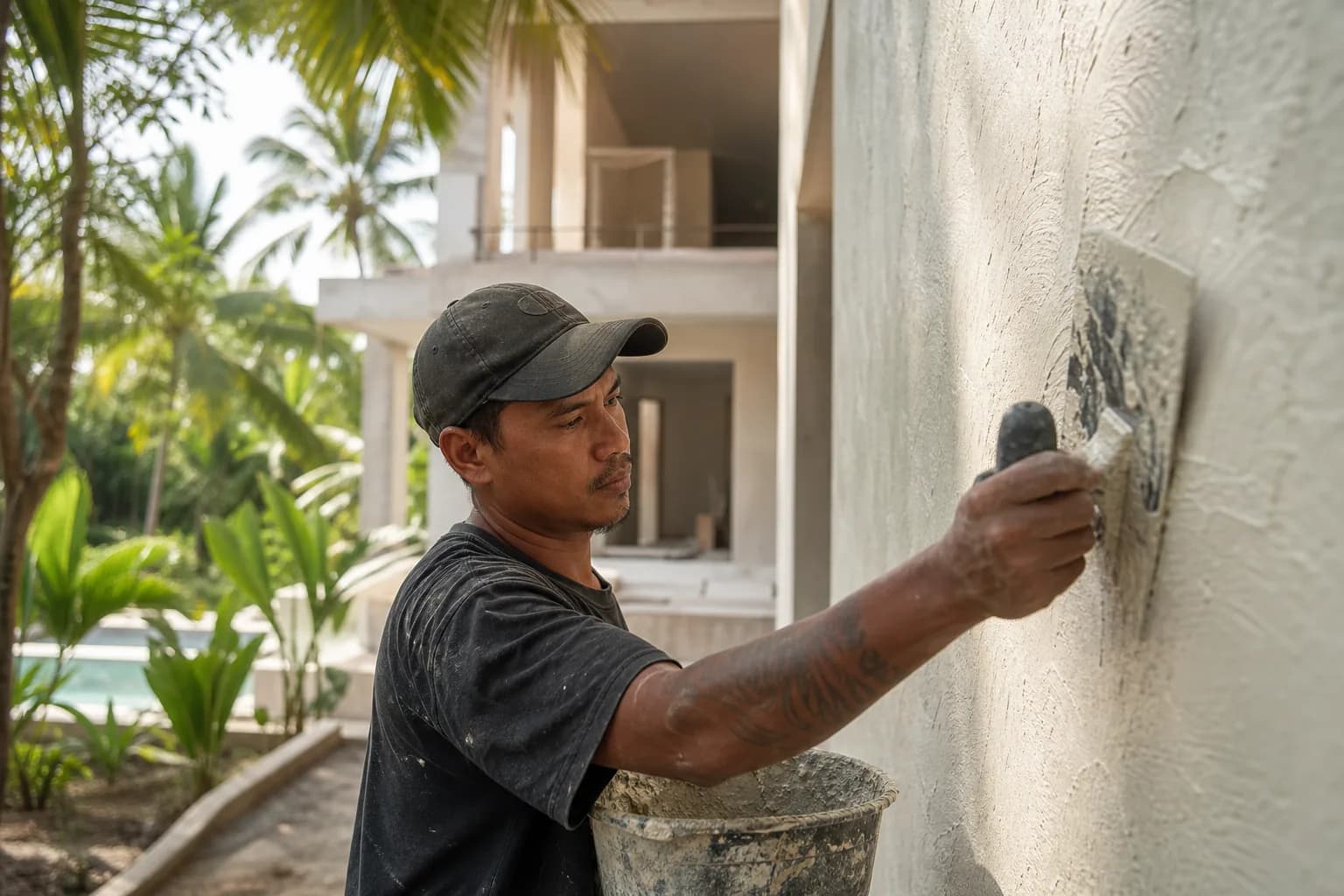
Resin-Infused Plaster Finishes: Anti-Salt Systems Bali
Expert technical guide: Resin-Infused Plaster Finishes: Anti-Salt Systems Bali
8 min read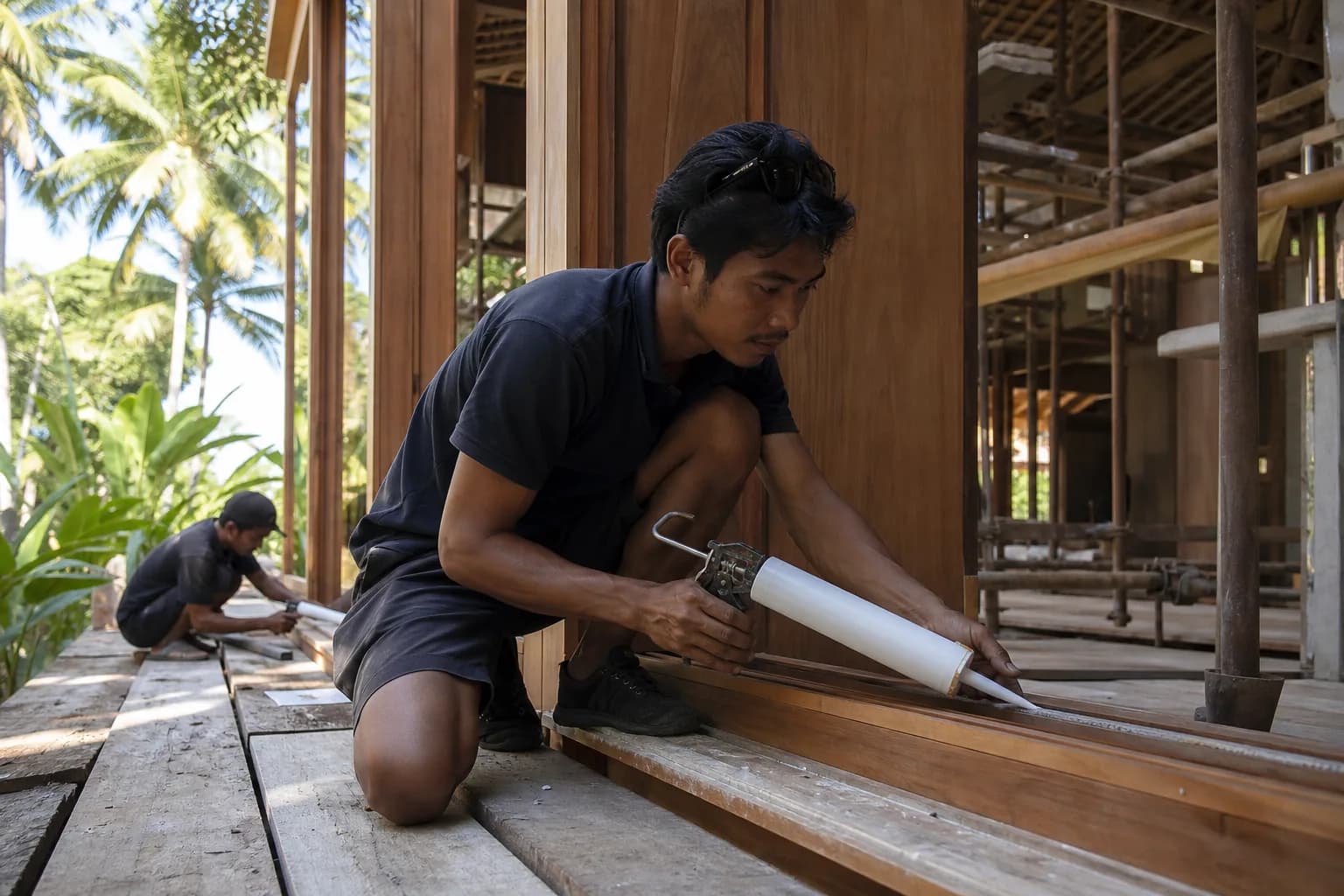
Prefinished Timber Joinery: Silicone Seals Fixings Bali
Professional prefinished timber joinery installation in Bali with silicone seals and fixings for durable weatherproof performance and a premium finish.
10 min read
Polished Concrete Microtopping: Surface Prep Sealants Bali
Discover Bali s polished concrete microtopping: expert surface prep, durable sealants, and a flawless finish for modern floors with minimal maintenance.
9 min read