Amed Black Sand Concrete Mix: Volcanic Aggregate Costs Bali
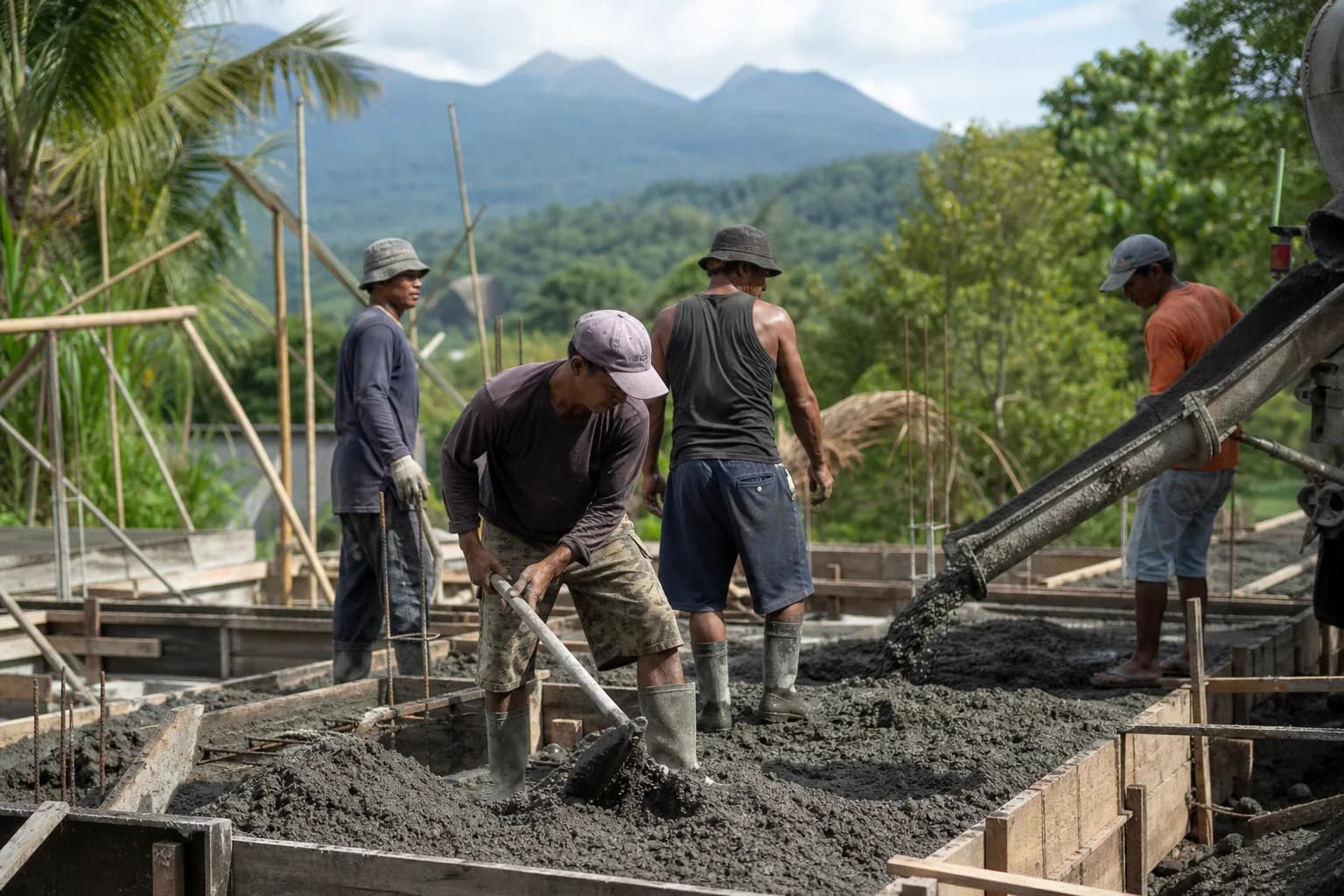
The Amed Black Sand Concrete Dilemma: Why Volcanic Aggregate Pricing Determines Your East Bali Build Budget
When planning construction in Amed, East Bali, you face a critical material decision that directly impacts structural integrity and project costs: whether to use locally-sourced black volcanic sand as concrete aggregate. Unlike the standardized river sand used in southern Bali, Amed’s distinctive black sand—formed from Mount Agung’s volcanic activity—presents unique engineering properties and cost variables that most foreign developers completely misunderstand. The question isn’t simply “how much does concrete cost in Amed?” but rather “what are the structural performance characteristics, sourcing logistics, and true delivered costs of volcanic aggregate concrete mixes in this remote coastal region?” This material choice affects foundation design, structural load calculations, corrosion resistance in the salt-air environment, and ultimately whether your villa withstands decades of tropical exposure or requires premature remediation.
Engineering Properties of Amed Volcanic Black Sand Aggregate
Amed’s black sand originates from basaltic volcanic material, primarily andesite and basalt compositions from Mount Agung’s eruption cycles. This volcanic aggregate exhibits fundamentally different characteristics compared to conventional silica-based river sand used in standard Indonesian concrete mixes (SNI 2847 specifications).
Particle Morphology and Gradation
Volcanic black sand particles are typically angular to sub-angular with rough surface textures, contrasting sharply with the rounded profiles of river-transported aggregates. This angularity increases inter-particle friction and mechanical interlocking within the concrete matrix. Laboratory testing on Indonesian volcanic aggregates shows particle size distributions often skewed toward finer fractions (passing 2.36mm sieve), requiring careful gradation adjustments to meet ASTM C33 or equivalent standards. The specific gravity of Amed volcanic sand ranges between 2.45-2.75 g/cm³, slightly lower than conventional silica sand (2.65 g/cm³), affecting mix design water-cement ratios and final concrete density.
Chemical Composition and Durability Concerns
Volcanic aggregates contain varying percentages of reactive silica, iron oxides, and aluminum compounds. The iron oxide content gives black sand its distinctive color but introduces potential oxidation concerns in reinforced concrete applications. When combined with Amed’s coastal salt-air environment (chloride exposure class XS2-XS3 per Eurocode 2), this creates accelerated corrosion risk for steel reinforcement unless proper concrete cover depths (minimum 50mm) and supplementary cementitious materials are specified.
Research published in Indonesian construction journals indicates volcanic aggregate concrete can achieve compressive strengths of 25-35 MPa at 28 days with proper mix optimization—adequate for residential villa construction but requiring more precise quality control than standard mixes. The porous nature of some volcanic particles increases water absorption rates (5-8% by mass versus 1-2% for dense river sand), necessitating pre-wetting procedures before batching to prevent the aggregate from stealing mix water and compromising workability.
Thermal and Acoustic Performance
Volcanic aggregate concrete demonstrates superior thermal mass properties compared to lightweight alternatives, beneficial for Bali’s tropical climate where thermal lag reduces cooling loads. The material’s cellular structure also provides modest acoustic dampening—relevant for villas near Amed’s fishing boat activity and coastal wave action. However, these benefits must be weighed against the increased dead load on foundation systems, particularly important on Amed’s sloping coastal topography where soil bearing capacity varies significantly.
Hidden Risks Foreign Developers Miss With Volcanic Aggregate Sourcing
The primary mistake foreign villa developers make in Amed is assuming black sand concrete is simply a cheaper local alternative without understanding the supply chain complexities and quality control requirements that determine whether you save money or create expensive structural problems.
Unregulated Extraction and Inconsistent Quality
Unlike commercial quarries in southern Bali with established quality testing protocols, much of Amed’s black sand comes from small-scale coastal extraction operations with zero material certification. Batches vary dramatically in particle size distribution, organic content (seaweed fragments, shell pieces), and salt contamination levels. Using unwashed marine-extracted sand introduces chlorides directly into your concrete mix, accelerating reinforcement corrosion from day one. Teville’s construction process includes mandatory aggregate testing and washing protocols specifically because we’ve remediated multiple Amed villas where contractors used untreated beach sand to “save costs.”
Transportation Economics That Reverse Cost Advantages
While black sand may cost IDR 150,000-250,000 per cubic meter at the extraction point in Amed, the remote location means limited ready-mix concrete suppliers and higher transportation costs for materials. Most Amed construction relies on site-mixed concrete using portable mixers rather than truck-delivered ready-mix, introducing quality control variables that affect structural performance. The apparent savings of local aggregate disappear when you factor in the additional cement required to compensate for higher water absorption, the labor costs of proper washing and gradation, and the engineering oversight needed to ensure mix consistency across multiple batches.
Regulatory Ambiguity on Coastal Sand Extraction
Indonesian environmental regulations (UU No. 32/2009) restrict coastal sand mining in many areas, but enforcement in remote regions like Amed remains inconsistent. Developers who source black sand without verifying the supplier’s extraction permits risk project delays if authorities intervene, plus potential liability for environmental violations. This regulatory uncertainty doesn’t exist with licensed aggregate suppliers in southern Bali, even if their materials cost more per cubic meter.
Step-by-Step Process for Volcanic Aggregate Concrete Specification in Amed
Step 1: Geotechnical and Material Baseline Assessment
Before specifying any concrete mix, commission soil testing on your Amed site to determine bearing capacity, groundwater salinity, and soil corrosivity. Simultaneously, collect representative samples of locally-available black sand from your intended supplier. Send samples to an accredited laboratory (such as Balai Besar Bahan dan Barang Teknik in Surabaya) for sieve analysis, specific gravity, water absorption, organic impurity testing, and chloride content analysis. This baseline data costs approximately IDR 3,500,000-5,000,000 but prevents catastrophic mix design errors.
Step 2: Mix Design Optimization With Trial Batches
Engage a qualified concrete technologist to develop site-specific mix designs using your tested volcanic aggregate. Typical Amed black sand mixes require cement contents of 350-400 kg/m³ (versus 300-325 kg/m³ for standard mixes) to achieve equivalent strength due to higher water absorption. Specify supplementary cementitious materials—10-15% fly ash replacement or silica fume addition—to improve durability and reduce permeability in the coastal environment. Produce trial batches of minimum 0.5m³, test slump, air content, and cast cylinders for 7-day and 28-day compressive strength testing. Budget IDR 8,000,000-12,000,000 for comprehensive trial batch programs including laboratory testing.
Step 3: Supplier Qualification and Washing Protocols
Establish written agreements with black sand suppliers specifying maximum chloride content (≤0.4% by mass of cement per ACI 318), maximum organic impurity levels, and required particle size distribution. Implement mandatory washing procedures using fresh water to remove salt and organic matter—this typically requires on-site settling tanks and adds IDR 50,000-80,000 per cubic meter to material costs but is non-negotiable for durability. Verify supplier extraction permits and environmental compliance documentation to avoid regulatory complications.
Step 4: Enhanced Reinforcement Protection Measures
Given the combined challenges of volcanic aggregate chemistry and coastal exposure, specify corrosion-resistant reinforcement strategies: increase concrete cover to 50mm minimum (60mm for elements in direct salt spray), use epoxy-coated rebar for critical structural elements, and apply crystalline waterproofing admixtures to the concrete mix. These protective measures add 15-20% to reinforcement costs but extend structural service life from 20-30 years to 50+ years in Amed’s aggressive environment.
Step 5: Quality Control During Construction
Implement batch-by-batch quality control for site-mixed concrete: verify aggregate moisture content before batching (adjust mix water accordingly), maintain consistent mixing times (minimum 3 minutes after all materials added), test slump every 2-3 batches, and cast test cylinders for every 10m³ of concrete placed. Assign a dedicated quality control technician for concrete pours—this labor cost (IDR 250,000-350,000 per day) is minimal compared to the cost of demolishing and replacing failed structural elements. Review Teville’s completed projects to see how systematic quality control delivers long-term structural performance even in challenging coastal environments.
Realistic Cost Analysis: Volcanic Aggregate Concrete in Amed Versus Alternatives
As of early 2026, the delivered cost structure for concrete in Amed breaks down significantly differently than in southern Bali’s construction hubs:
Locally-Sourced Black Sand Concrete (Site-Mixed): Raw black sand aggregate costs IDR 150,000-250,000/m³ at source, but after mandatory washing, transportation to hillside sites, and quality control measures, effective aggregate cost reaches IDR 350,000-450,000/m³. Combined with cement (IDR 1,400,000-1,600,000 per ton, higher than southern Bali due to transportation), admixtures, and increased cement content requirements, total material cost for 1m³ of structural-grade volcanic aggregate concrete reaches IDR 1,200,000-1,500,000. Add labor for site mixing and placement (IDR 400,000-550,000/m³), and total installed cost is IDR 1,600,000-2,050,000 per cubic meter.
Imported River Sand Concrete (Ready-Mix): Trucking ready-mix concrete from Amlapura or Karangasem suppliers to Amed sites costs IDR 1,800,000-2,200,000/m³ delivered, but includes consistent quality control, certified mix designs, and reduced on-site labor requirements. For projects requiring more than 50m³ of concrete, the premium for ready-mix often proves cost-effective when factoring in reduced construction timeline and eliminated quality control risks.
Hybrid Approach: Many experienced Amed builders use volcanic aggregate concrete for non-structural elements (retaining walls, paving, non-load-bearing walls) where cost savings justify additional oversight, while specifying certified ready-mix for critical structural elements (foundations, columns, beams, slabs). This hybrid strategy typically reduces total concrete costs by 12-18% compared to all-ready-mix approaches while maintaining structural integrity.
For a typical 250m² two-bedroom villa in Amed requiring approximately 80m³ of concrete, choosing optimized volcanic aggregate mixes for appropriate applications can save IDR 25,000,000-40,000,000 in material costs—but only if implemented with proper engineering oversight and quality control. Without these safeguards, the same approach creates structural deficiencies costing IDR 150,000,000+ to remediate. Request detailed cost modeling for your specific Amed project through Teville’s build cost estimation service.
Frequently Asked Questions: Amed Black Sand Concrete
Does using Amed black sand concrete affect villa resale value or structural certification?
Properly engineered volcanic aggregate concrete meeting Indonesian structural standards (SNI 2847) does not negatively impact property value or certification—the key qualifier is “properly engineered.” Villas built with untested, unwashed black sand concrete often exhibit visible corrosion staining, spalling, and cracking within 5-7 years, severely impacting marketability. International buyers and their surveyors increasingly request concrete core sampling and reinforcement cover depth verification for Amed properties due to widespread quality issues. Buildings constructed with documented mix designs, laboratory-tested aggregates, and proper corrosion protection maintain full structural certification and resale value equivalent to conventional concrete construction.
Can I use black sand concrete for swimming pools in Amed’s coastal environment?
Swimming pool construction in Amed requires enhanced durability specifications beyond standard structural concrete due to combined chloride exposure from both coastal air and pool water chemistry. While volcanic aggregate can be used in pool structures, you must specify: minimum 400 kg/m³ cement content, supplementary cementitious materials (silica fume or metakaolin), crystalline waterproofing admixtures, and 60mm minimum concrete cover over reinforcement. Additionally, apply a high-quality cementitious waterproofing system or membrane liner rather than relying solely on concrete impermeability. These enhanced specifications increase pool shell costs by 30-40% compared to standard concrete but prevent the catastrophic leaks and reinforcement corrosion common in Amed pools built without proper engineering. Teville’s villa projects include multiple infinity pools in coastal Amed locations engineered specifically for long-term durability in this challenging environment.
What testing frequency is required for site-mixed volcanic aggregate concrete in Amed?
Indonesian construction standards (SNI 03-2847) require compressive strength testing for every 50m³ of concrete or every day of placement, whichever is more frequent. For site-mixed volcanic aggregate concrete in Amed, best practice exceeds these minimums: test aggregate gradation and moisture content daily before batching, verify slump for every 3-5m³ produ
 164 m²7 month(s)from 79.000 USD
TALA TWO
 172 m²8 month(s)from 120.000 USD
Keshava
 3104 m²11 month(s)from 99.000 USD
TALA 100
 4344 m²16 month(s)from 290.000 USD
Radha
 3127 m²9 month(s)from 177.000 USD
Mukunda
 2144 m²11 month(s)from 104.000 USD
Narayana
 1from 198.000 USD
Private: Haridas Villas
 3173 m²6 month(s)from 125.000 USD
TALA FOUR
 3124 m²6 month(s)from 123.000 USD
TALA 8
164 m²7 month(s)from 79.000 USDPrivate: Haridas Villas, Tegallalang

Want to calculate?
 3180 m²7 month(s)from 142.000 USD
Vasudeva
Start With Real Numbers, Not Guesses
Before buying land or finalizing a design, check the realistic build cost range for your project in Bali.
Our team reviews your inputs and gives a grounded estimate.
Available lands
 550 m²5 min$ 217629Bali, Tabanan
 1350 m²5 min$ 283467Bali, Pecatu
 2800 m²15 min$ 310345Bali, Tabanan
 250 m²15 min$ 40025Bali, Munggu
 400 m²15 min$ 67192Bali, Tabanan
 2000 m²5 min$ 1440887Bali, Pecatu
 1000 m²10 min$ 280788Bali, Pecatu
 10000 m²19 min$ 232759Bali, Buleleng
 770 m²5 min$ 163578Bali, Kedungu
 5000 m²8 min$ 424877Bali, Ungasan
 1158 m²12 min$ 291996Bali, Mengwi
 5028 m²10 min$ 361000Bali, Ubud
 1720 m²2 min$ 241478Bali, Tabanan
 2115 m²5 min$ 1139547Bali, Pererenan
 6000 m²30 min$ 55419Bali, Tabanan
Essential Bali build & buy guides
- Bali villa construction cost per m² in 2026
- How much will your villa cost? Calculator
- Building a villa in Bali: the complete guide
- Buying land in Bali: step-by-step for foreigners
- Bali villa investment: yields, risks, returns
- Leasehold vs freehold: what foreigners can own
- Construction defect liability & 10-year warranty
- Bali building codes and construction standards
Related guides
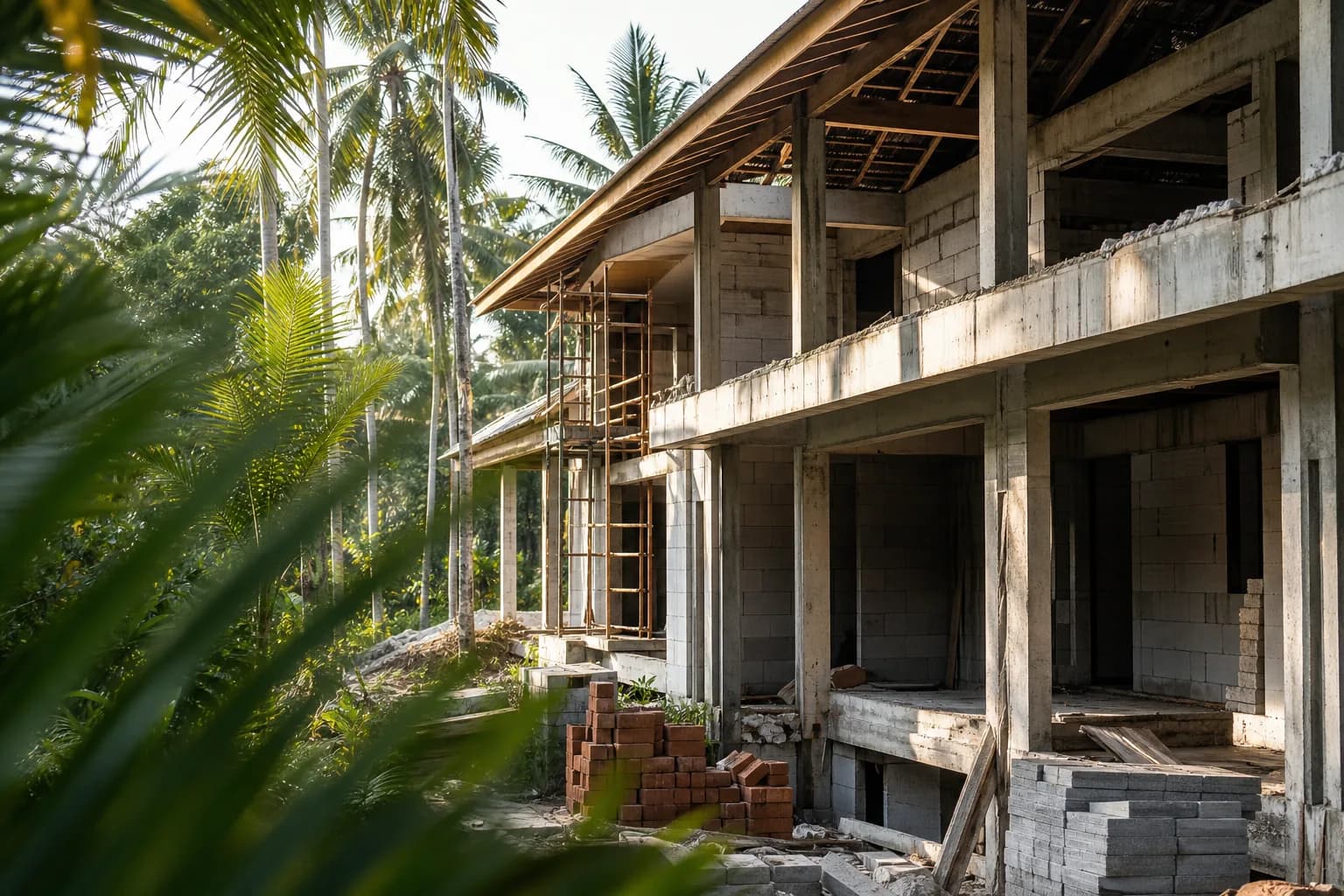
Sanur and Nusa Dua vs Canggu: Stability Plays vs Hype
Canggu gets the headlines; Sanur and Nusa Dua quietly deliver steadier returns to a different kind of buyer. An honest 2026 comparison of the stability markets against the hype market — prices, demand drivers, oversupply risk, and who should buy where.
7 min read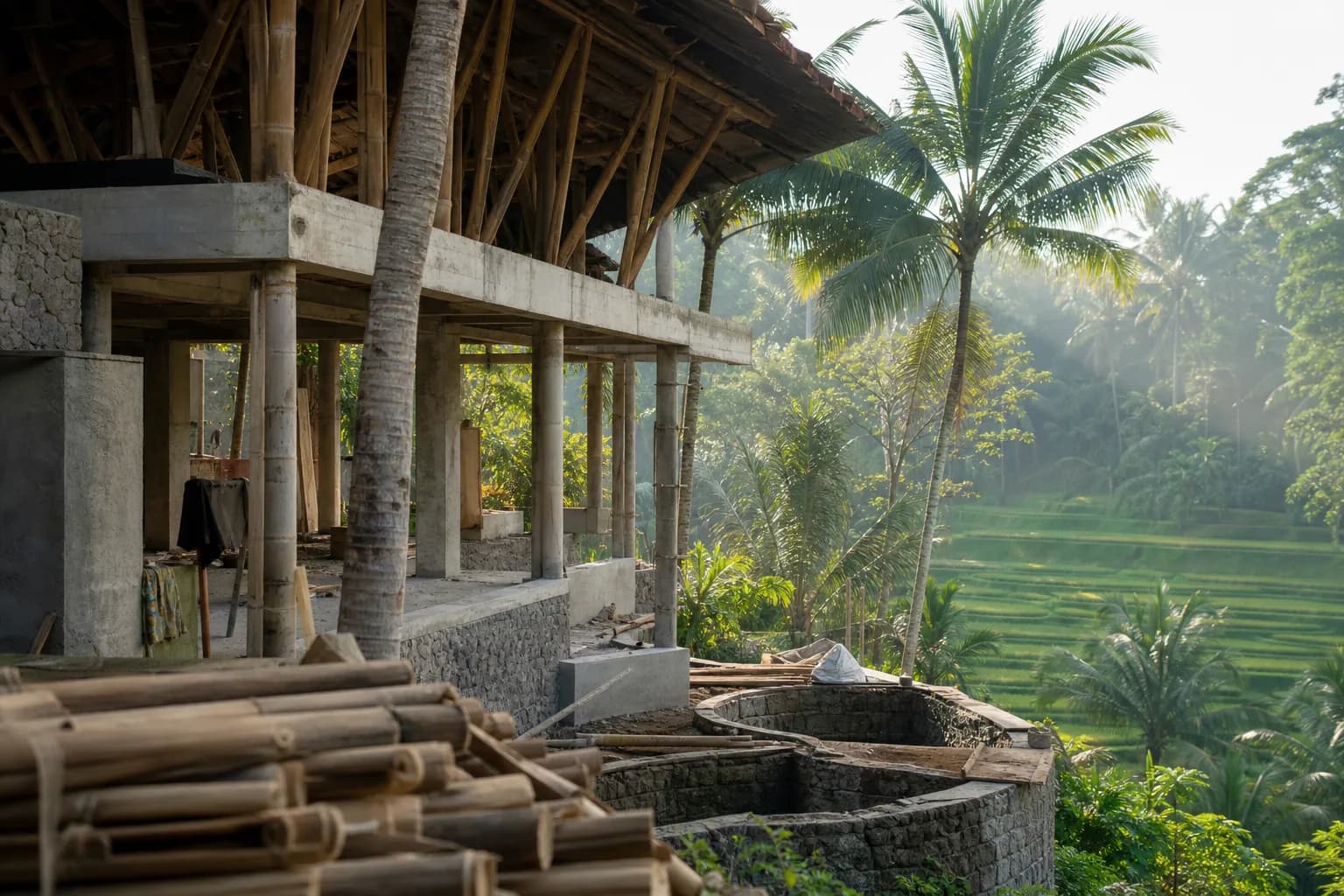
Ubud and the Wellness Market: Buying or Building for Retreats
Ubud is Bali's wellness capital, and retreat-focused property behaves differently from beach villas: longer stays, group bookings, lower volatility. Here is what the market rewards, what zoning allows, and what it costs to buy or build a retreat property in 2026.
8 min read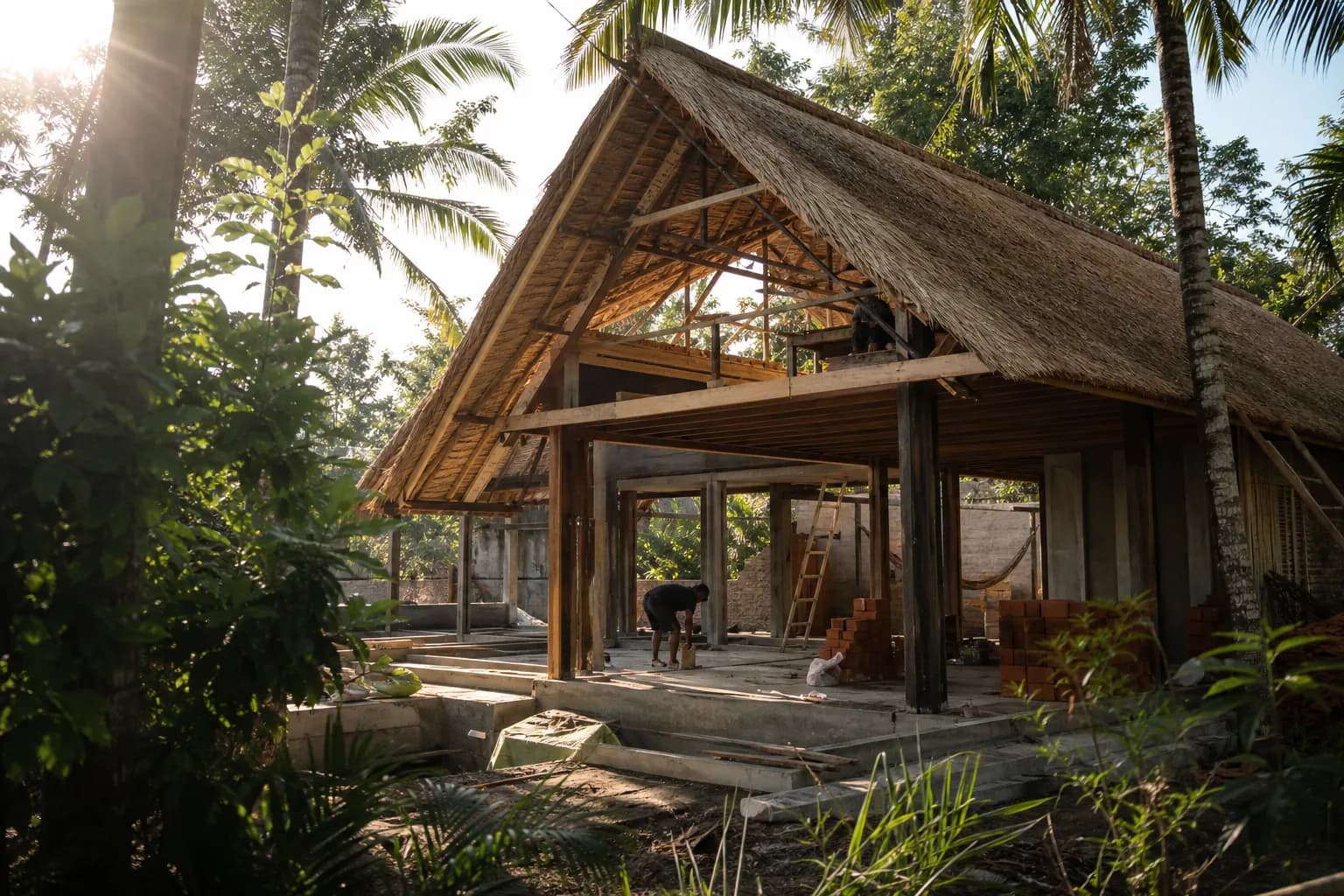
Buying and Building on the Bukit: Uluwatu, Bingin and Balangan from a Buyer's Seat
A buyer's-seat 2026 guide to the Bukit peninsula — Uluwatu, Bingin and Balangan land prices, the water problem nobody budgets, cliff setbacks after the 2025 Bingin demolitions, and how to build there properly.
7 min read